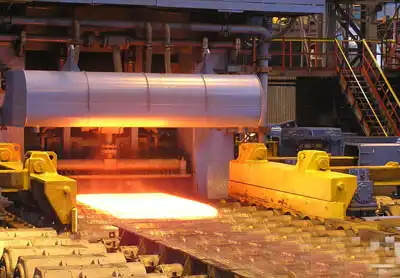
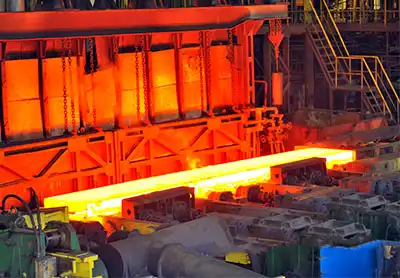
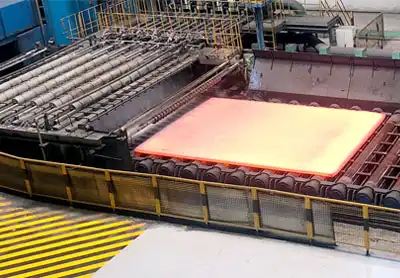
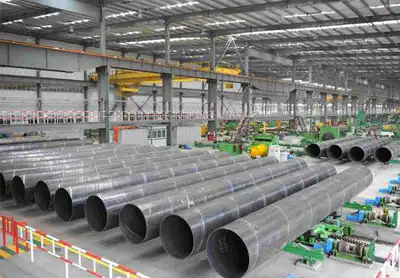
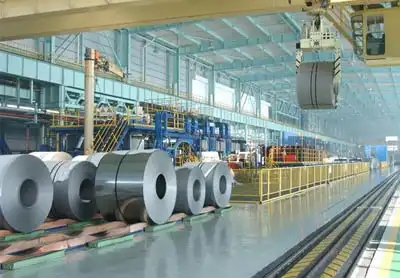
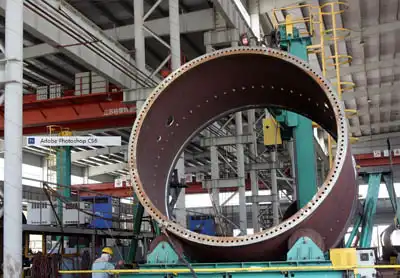
Description: BBN steel is a well-known steel manufacturer and service provider in China, ASTM A573 Grade 70 Steel Plate is our superior product, we are favored by customers with high quality, competitive price and excellent service
Payment Terms: L/C, T/T, D/P, Western Union, Paypal, Money Gram
ASTM A573 Grade 70 is an improved-toughness carbon-manganese-silicon structural steel — a killed, fine-grain-practice plate made for welded storage tanks, pressure-free vessels and structures that must keep reliable notch toughness at ambient temperature. The grade name is a full specification: it belongs to ASTM A573 / A573M, the US standard for structural carbon steel plates of improved toughness, and the “70” is the minimum tensile strength in ksi (70–90 ksi = 485–620 MPa) — it is not the yield. The ASTM minimum yield for Grade 70 is 260 MPa (38 ksi). This is the single most important correction to the old listing: several commercial pages wrongly print a 290 MPa (42 ksi) yield, which is actually the ASTM A572 Gr. 42 yield, not A573 Gr. 70. A573 Gr. 70 is a plain improved-toughness carbon steel, not a quenched & tempered or low-alloy grade — its strength sits in the ordinary carbon range; what you pay for is the toughness.
The toughness comes from two deliberate choices: a higher silicon content (0.15–0.40 %) than ordinary carbon plate, and a fully-killed, fine-grain practice (aluminium total ≥ 0.020 %). That combination gives better Charpy impact behaviour across the welded fabrication, which is exactly why tanks and cold-ambient welded structures specify it. It is supplied as-rolled (hot rolled) or normalized — never quenched & tempered — and it welds with ordinary methods under normal carbon-steel procedures (much simpler than a high-strength Q&T grade such as S690QL or A514).
485-620 MPaTensile Strength70-90 ksi — the “70” in the name
What this page publishes, and what must be confirmed on the mill certificate when you enquire.
Item
Specification
Executive Standard
ASTM A573 / A573M (American standard for structural carbon steel plates of improved toughness).
Steel Grade
A573 Grade 70
Steel Category
Improved-toughness carbon-manganese-silicon structural steel, fully killed, fine-grain practice — a plain carbon grade (not low-alloy, not quenched & tempered); the strength is in the ordinary carbon range and the value is the notch toughness.
Product Forms Covered
Steel Platehot-rolled plate and sheet for welded tanks and structures on this page
Thickness / Width / Length
Confirmed per rolling programme— A573 is a medium-to-heavy structural plate; the exact envelopes are confirmed against the mill schedule on enquiry, not published as a fixed band
Production Way
Hot-rolled plate; supplied as-rolled or normalized (normalizing further improves toughness).
Delivery Condition
As-rolled (hot rolled) or normalized — see section 07
Heat Treatment
None required by the spec for the base condition; normalized only when specified. (Contrast with quenched & tempered grades.)
MOQ
1 tsmall-batch orders supported
Lead Time by Quantity
Stock items shipped promptly; custom production typically 10 – 40 working days by quantity
Payment Terms
T/TL/C at sight
Processing Services
Cutting to length and width, profiling, bevelling, bending, drilling, welding with standard carbon-steel procedures, and surface treatment.
Certification
Mill Test Certificate to EN 10204 3.1, or 3.2 with third-party endorsement; heat analysis and mechanical test report.
Two things worth clearing up about this table. First, A573 Grade 70 is a plain improved-toughness carbon steel — not low-alloy and not quenched & tempered. Its strength (260 MPa yield / 485–620 MPa tensile) is ordinary carbon-steel territory; the grade is bought for toughness, not for high strength. Second, the yield is 260 MPa (38 ksi) per ASTM A573; the 290 MPa (42 ksi) figure seen on some listings is the A572 Gr. 42 yield mis-attributed to A573 Gr. 70 — confirm the value on the mill certificate. Normalizing is optional and only specified when the designer wants the extra toughness margin.
03How to Read the Grade
Every part of A573 Grade 70 is a specification, not a marketing name.
Part
Meaning
ASTM A573 / A573M
The US standard for structural carbon steel plates of improved toughness. The “M” denotes the metric (SI) version of the same requirements.
Grade 70
The number is the minimum tensile strength in ksi: 70 ksi (485 MPa) minimum, up to 90 ksi (620 MPa). Unlike EN grades, A573 numbers a grade by its tensile strength, not its yield — so do not read “70” as a yield figure.
260 MPa / 38 ksi
The ASTM minimum yield for Grade 70. (The 290 MPa / 42 ksi value circulated online is the A572 Gr. 42 yield, not this grade — see the note on section 02 and the FAQ.)
Improved toughness
The defining feature: carbon-manganese-silicon chemistry plus fully-killed, fine-grain practice (Al ≥ 0.020 %) gives better Charpy impact across welded fabrication than ordinary carbon plate.
Carbon-manganese-silicon
Chemistry family: C ≤ 0.28 %, Mn 0.85–1.20 %, Si 0.15–0.40 %. The elevated silicon is the visible fingerprint of the improved-toughness grade.
The A573 improved-toughness ladder — the grade number is the tensile rung.
Grade
Standard
Min. yield
Tensile (min-max)
A573 Grade 58
ASTM A573
220 MPa
400–490 MPa
A573 Grade 65
ASTM A573
240 MPa
450–530 MPa
A573 Grade 70 (this page)
ASTM A573
260 MPa
485–620 MPa
Pick the rung by the toughness and yield you actually need. Grade 70 is the strongest rung of the A573 ladder (highest tensile, but only 260 MPa yield) and the right call for the toughest welded-tank duty. For less demanding service, step down to A573 Grade 65 (240 MPa) or Grade 58 (220 MPa); each keeps the improved-toughness practice at a lower cost. None of the three is a high-strength grade — for 355 MPa-plus yields look at the S355 / SM490 / Q355 neighbours in section 04.
04Equivalent Grades
A573 Grade 70 is an improved-toughness carbon steel whose 260 MPa yield sits below the 355 MPa-class European/Japanese/Chinese grades. The table maps the nearest grades — a similar application is not a licence to substitute; check chemistry, yield, toughness and thickness before swapping. Linked grades open their own page.
The Chinese low-alloy structural grade (renamed Q355 from Q345) — higher yield, the usual PRC-spec neighbour. Open the linked page.
DIN 17100 (legacy)
St52-3
355 MPa
The old German structural grade — superseded by S355; named for cross-reference.
ISO 630
E355
355 MPa
The ISO structural grade — named for cross-reference.
Strength proximity is not interchangeability. A573 Grade 70’s defining property is its improved notch toughness at ambient temperature, and its yield (260 MPa) is below the 355 MPa European/Japanese/Chinese neighbours. A substitution into an S355 / SM490 / Q355 design must be signed off by the designer against the governing code — the yield gap alone can invalidate a structural calculation. The most common near-match on Asian projects is JIS SM490 or GB Q355; both are higher-yield and must be checked grade-by-grade. Within ASTM, the honest “equivalent” is simply a lighter A573 rung (Grade 65 / 58) or, for genuinely high strength, a different grade altogether (A572 / A709).
05Chemical Composition
Ladle (cast) analysis limits in weight percent, per ASTM A573/A573M. A573 is a plain carbon grade, but the limits are written around the toughness goal: silicon is held 0.15–0.40 % and the steel is fully killed and fine-grain treated (Al ≥ 0.020 %). Carbon and manganese are thickness-dependent.
Element
Ladle analysis (max %, unless noted)
Carbon, C
≤ 0.28 (≤ 25 mm) ; ≤ 0.30 (> 25 mm)
Manganese, Mn
0.85 – 1.20 (≤ 25 mm) ; 0.85 – 1.50 (> 25 mm)
Silicon, Si
0.15 – 0.40
Phosphorus, P
≤ 0.035
Sulphur, S
≤ 0.040
Aluminium, Al (total)
≥ 0.020 (fine-grain practice)
Read the certificate against this table, not against a one-line data sheet. A573 is a plain carbon-manganese-silicon steel, so the chemistry is short and there is no Cr / Ni / Mo / Nb alloying like a low-alloy Q&T grade. The two things that make it “improved toughness” are the elevated silicon (0.15–0.40 %) and the fully-killed, fine-grain practice (Al ≥ 0.020 %). Carbon and manganese are thickness-dependent: above 25 mm the ceilings relax to C 0.30 % and Mn 1.50 %, and the carbon-manganese offset rule allows Mn to rise further when carbon is reduced below its maximum — which is why some mill certificates show a slightly different but compliant Mn. Some commercial sheets quote looser P/S (0.04 / 0.05); the ASTM limits used here are 0.035 / 0.040.
06Mechanical Properties
Minimum room-temperature values, per ASTM A573/A573M. A573 Grade 70 carries a single set of values across the covered thickness (it is not thickness-graded like a Q&T grade). The tensile band is the headline: 485–620 MPa (70–90 ksi).
Property
ASTM A573 Grade 70
Yield strength, min
260 MPa (38 ksi)
Tensile strength
485 – 620 MPa (70 – 90 ksi) — this is the “70” in the grade name
Elongation, min (200 mm / 8 in gauge)
17 %
Elongation, min (50 mm / 2 in gauge)
20 %
Three points on reading the table — and one common error to avoid. First, the tensile band 485–620 MPa is the defining number; the grade name “70” literally means a 70 ksi minimum tensile. Second, the ASTM minimum yield is 260 MPa (38 ksi), not 290 MPa — the 290 MPa / 42 ksi figure circulating online is the A572 Grade 42 yield mis-attributed to A573 Gr. 70, so always confirm the yield on the mill certificate. Third, elongation is given for two gauge lengths (17 % at 200 mm, 20 % at 50 mm); the shorter gauge gives the higher number. Because A573 is a plain carbon grade, the values apply across the plate thicknesses the standard covers — there is no thickness ladder.
A573 Grade 70 is defined by its improved-toughness chemistry and killed, fine-grain practice — the base condition is as-rolled or normalized, not quenched & tempered.
Item
Options
Delivery Condition
As-rolled (hot rolled)Normalized
Heat Treatment (base)
None required by A573; normalized only when specified (normalizing further improves toughness)
What the specification sets, and what has to be added by the order.
Item
Status in ASTM A573
How it is obtained
Delivery condition
As-rolled or normalized
Specify “normalized” only if you want the extra toughness margin; otherwise as-rolled is the standard supply.
Improved toughness
Built into the grade (Si 0.15–0.40 %, killed, fine-grain)
Confirmed by the heat analysis and, when requested, by Charpy testing.
Charpy impact
Not specified as a default
Add as a supplementary requirement (temperature and energy to be agreed) when the structure sees cold-ambient service.
Ultrasonic testing
Not specified
EN 10160 (or SEL / ASTM A578) at an agreed acceptance level, by agreement — recommended on thicker plate for tank shells.
Through-thickness (Z) properties
Not specified
Z15 / Z25 / Z35 by agreement where the joint pulls through the plate thickness (nozzle and shell intersections).
Third-party inspection
Not specified
SGS, BV, TUV or Intertek at the mill before shipment.
Certificate
MTC per the specification
EN 10204 3.1 as standard, 3.2 with third-party endorsement on request.
Keep the grade and the extras in the enquiry. A573 Grade 70 is delivered as-rolled or normalized and killed / fine-grain treated by the standard; anything beyond that — UT, Z-direction, Charpy, third-party inspection, surface treatment — has to be written into the order before rolling. Because the grade name already carries the improved-toughness practice, just name the standard (ASTM A573 / A573M) and the grade (Grade 70, tensile 485–620 MPa). And remember: there is no quenching and tempering on this grade, so there is none of the welding discipline a Q&T plate demands.
08Typical Applications
Where an improved-toughness carbon plate is welded and must stay safe in cold-ambient service.
Storage Tanks
The primary use of A573 Gr. 70 — above-ground and shop-built storage tanks, tank shells and bottoms where welded seams need reliable notch toughness at ambient temperature.
Pressure-Free Vessels
Low-pressure receivers, bins, silos and similar welded vessels where the improved-toughness grade gives a safer, more ductile weldment than ordinary carbon plate.
Welded Structures
Building frames, industrial structures and general welded fabrication that must keep toughness through the welds — the reason A573 exists at all.
Bridges & Cold Climates
Bridge members and outdoor structures in cold-ambient regions where ordinary carbon plate would be marginal on impact toughness — A573’s fine-grain practice is the safeguard.
Industrial Equipment
Fabricated machinery frames, support structures and components for the oil, gas, chemical and manufacturing industries where weld ductility matters.
Why specify A573 Grade 70 rather than ordinary carbon or a high-strength grade: it gives the same ordinary carbon-steel strength (260 MPa yield) but with a deliberately better Charpy toughness from its silicon and fine-grain practice — ideal for welded tanks and cold-ambient structures. What it does not give you is high strength: if you need 355 MPa-plus yield, step up to S355 / SM490 / Q355; if you only need lighter duty, the cheaper A573 Grade 65 / 58 will do. Because it is a plain carbon grade, it also welds with ordinary procedures — no preheat discipline like a Q&T plate.
09Processing, Testing & Supply
From as-rolled plate to a cut, certified, ready-to-fabricate item — with the simpler welding discipline a plain carbon grade allows.
1
Cutting & Profiling
Plate cut to length and width, profiled to drawing and bevelled for weld preparation. Oxy-fuel, plasma or laser cutting are all routine on this carbon grade.
2
Forming & Welding
Cold forming within standard carbon-steel practice. Welding uses ordinary carbon-steel procedures and consumables — no controlled preheat or heat-input regime is required (unlike a Q&T high-strength grade). Normalizing is applied only when specified.
3
Surface Treatment
Shot blasting to remove mill scale, then shop primer or full paint system, followed by export marking and seaworthy packing.
4
Inspection & Certified Delivery
Chemical analysis and tensile testing per heat, elongation and Charpy (when specified), UT and Z-direction testing when required, then the MTC carrying the grade, the ASTM A573 / A573M standard and any third-party report.
Mill Test Certificate to EN 10204 3.1, or 3.2 with third-party endorsement
MTC stating the grade (A573 Grade 70) and standard (ASTM A573 / A573M)
Heat analysis and mechanical test report (yield, tensile, elongation)
Carbon, manganese, silicon, phosphorus, sulphur and aluminium (fine-grain) reported
Charpy impact report when the supplemental impact requirement is specified
Ultrasonic testing report to the agreed acceptance level (EN 10160 / ASTM A578)
Z-direction (through-thickness) test report where Z15/Z25/Z35 is ordered
Third-party inspection by SGS, BV, Intertek or another nominated agency
Export packing, marking and loading supervision
Quote checklist — you get a faster, comparable price if you send: thickness × width × length, quantity, whether you need as-rolled or normalized, any supplemental Charpy temperature and energy, UT acceptance level and any Z-direction requirement, surface treatment, MTC type, destination port and payment terms. MOQ is 1 t. Because A573 is a plain carbon grade, also tell us your welding procedure — it affects only the cut-edge treatment and any normalizing we recommend, not a preheat regime.
10Frequently Asked Questions
Q1What is ASTM A573 Grade 70?
A573 Grade 70 is an improved-toughness carbon-manganese-silicon structural steel to ASTM A573 / A573M. It is a fully-killed, fine-grain-practice plate made for welded storage tanks, vessels and structures that need reliable notch toughness at ambient temperature. The “70” is the minimum tensile strength (70–90 ksi = 485–620 MPa); the ASTM minimum yield is 260 MPa (38 ksi). It is a plain carbon grade — not low-alloy, not quenched & tempered.
Q2Is the “70” the yield, and is the yield 260 or 290 MPa?
The “70” is the minimum tensile in ksi (485–620 MPa), not the yield. The ASTM A573 minimum yield for Grade 70 is 260 MPa (38 ksi). The 290 MPa (42 ksi) figure seen on some listings is the A572 Grade 42 yield mis-attributed to A573 Gr. 70 — always confirm the actual yield on the mill certificate. The two numbers are easy to confuse because both grades sit in the ordinary carbon-strength range.
Q3What is the chemical composition of A573 Grade 70?
Ladle-analysis maxima per ASTM A573: C ≤ 0.28 % (≤ 25 mm) / ≤ 0.30 % (> 25 mm); Mn 0.85–1.20 % (≤ 25 mm) / 0.85–1.50 % (> 25 mm); Si 0.15–0.40 %; P ≤ 0.035 %; S ≤ 0.040 %; Al (total) ≥ 0.020 % (fine-grain practice). It is a plain carbon-manganese-silicon steel — no Cr / Ni / Mo / Nb alloying. The elevated silicon and the killed, fine-grain practice are what make it “improved toughness”.
Q4What are the mechanical properties of A573 Grade 70?
Minimum values per ASTM A573: yield ≥ 260 MPa (38 ksi); tensile 485–620 MPa (70–90 ksi); elongation ≥ 17 % (200 mm gauge) and ≥ 20 % (50 mm gauge). A573 Grade 70 carries a single set of values across the covered thickness — it is not thickness-graded like a quenched & tempered grade.
Q5Is A573 Grade 70 welded and heat-treated like a high-strength plate?
No. A573 Grade 70 is a plain carbon steel with ordinary carbon-steel weldability — it uses standard procedures and consumables with no controlled preheat or heat-input regime. There is no quenching and tempering on this grade (the base condition is as-rolled or normalized), so there is none of the post-weld heat-treatment caution a Q&T plate demands. Normalizing is applied only when the order specifies it for an extra toughness margin.
Q6What is A573 Grade 70 equivalent to in EN / JIS / GB and where is it used?
A573 Grade 70’s closest neighbours by application are EN 10025 S355JR/J0/J2 (higher 355 MPa yield), JIS G3106 SM490YA/YB (325 MPa) and GB/T 1591 Q355C/Q345C (345 MPa) — but all three are higher-yield than A573 Gr. 70’s 260 MPa, so a substitution must be signed off by the designer. The honest in-family equivalents are the lighter A573 rungs, Grade 65 and Grade 58. The primary application is welded storage tanks, then pressure-free vessels, welded structures, bridges in cold-ambient service and general industrial fabrication — anywhere a welded carbon-steel plate needs better impact toughness than ordinary carbon plate.
Sources and limits: the figures on this page are reference information drawn from ASTM A573 / A573M (Grade 70) and published steel data sheets. A573 Grade 70 is a plain improved-toughness carbon-manganese-silicon structural steel (fully killed, fine-grain practice); the chemistry limits (C, Mn, Si 0.15–0.40 %, P, S, Al ≥ 0.020 %) and the tensile / yield / elongation floors are the standard requirements, while actual heat values are recorded on the EN 10204 certificate of the lot supplied. We have corrected the old listing’s data and re-organised it into the standard’s chemistry and mechanical tables, and added the grade-designation, equivalent-grade and delivery-condition chapters. BBN supplies, cuts and processes the plate — and we flag that the 290 MPa yield sometimes printed for this grade is the A572 Gr. 42 yield, not the A573 Gr. 70 (ASTM) minimum of 260 MPa.
Get Your ASTM A573 Grade 70 Quotation Now
Send us your standard (ASTM A573 / A573M), grade (Grade 70, tensile 485–620 MPa), thickness, width and length, quantity, whether you need as-rolled or normalized, any supplemental Charpy temperature and energy, UT acceptance level and any Z-direction requirement, and your welding procedure. We will reply with what the mill can roll and certify, plate or cut-length options, mill price and production lead time — and tell you plainly if an S355 / Q355 (higher yield) is a better fit, or if a lighter A573 Grade 65 / 58 would save cost on lighter duty.
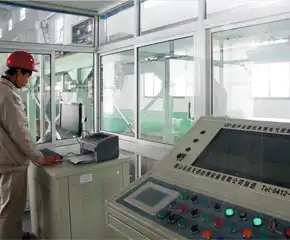
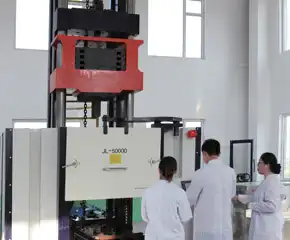
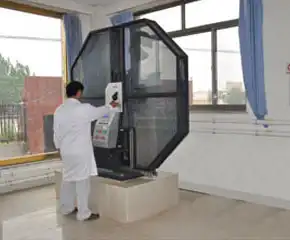
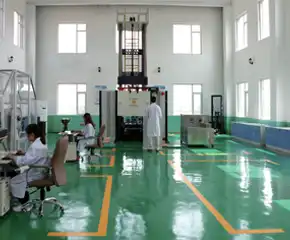
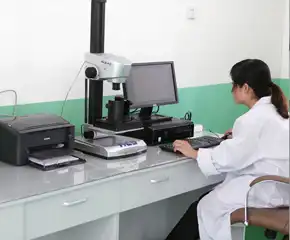
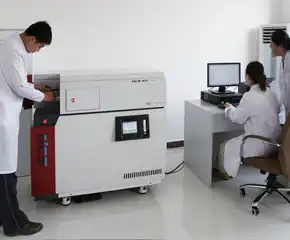
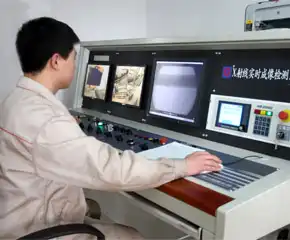
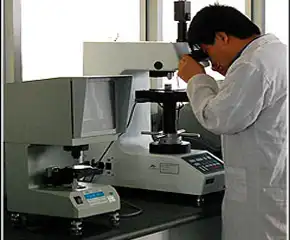
BBN Steel has established a complete set of production and supplier management system processes to ensure the improvement of product quality and better service to users.
Production Control
BBN Steel has established a complete production quality control process to ensure every link from research and development to mass production.
Supplier management
Our supplier selection will consider factors such as health and safety, ethics, environmental protection, price and quality to better serve customers.
Certification & Patent
We have successively won various international authoritative certifications, GB /T19001-ISO9001: 2000 quality management system was implemented.
After sales service
We provide booking space, shipping tracking service and after-sales service, we will always be first-class products and perfect pre-sale and after-sales service.
Get in Touch
Welcome to contact us through online consulting, emails and hotline if you are interested in our company or products. Our staff will reply you within 24 hours.
Address: HIGH-TECH DEVELOPMENT ZONE, ZHENGZHOU, CHINA