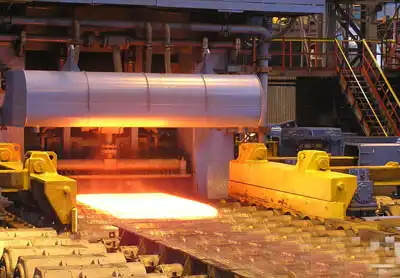
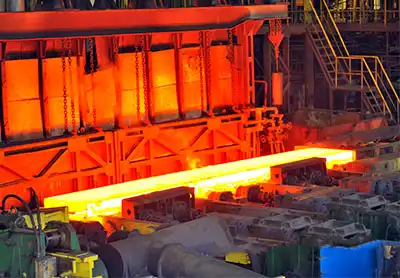
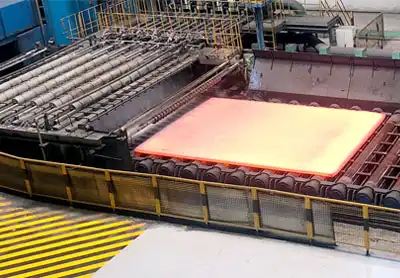
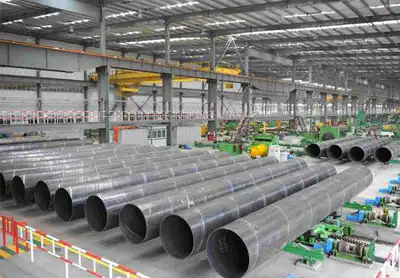
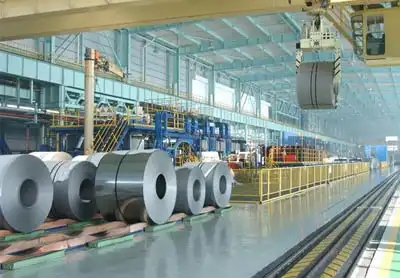
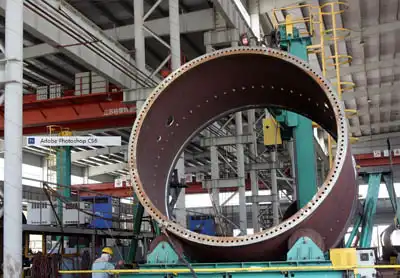
Description: BBN steel is a well-known steel manufacturer and service provider in China, TB/T 1979 05CuPCrNi Weathering steel plate is our superior product, we are favored by customers with high quality, competitive price and excellent service
Payment Terms: L/C, T/T, D/P, Western Union, Paypal, Money Gram
05CuPCrNi Weather Resistant Steel Plate | TB/T 1979 Railway Weathering Steel, 310 MPa Min Yield, No Painting Required
05CuPCrNi | TB/T 1979 Railway Weathering Steel | Yield 310 MPa Min (cold rolled ≤4 mm), Tensile 440 MPa, Elongation 26% Min | Thickness 1.2–150 mm (some mills to 300 mm), Width 1220–4200 mm, Length 5000–18000 mm | Self-Protecting Rust Patina for Railway Rolling Stock, Bridges, Facades & Outdoor Structures
Self-Protecting Patina, No CoatingCopper, phosphorus, chromium and nickel drive the surface to a dense adherent oxide layer that blocks further corrosion — no paint system and no repainting cycle.
310 MPa Min Yield, 440 MPa TensileLow-carbon railway grade with 26% minimum elongation, so wagon body and structural plate can be loaded, formed and welded.
Full Size Programme, Cut to DrawingThickness 1.2–150 mm with width up to 4200 mm and length up to 18000 mm; hot rolled and cold rolled both available.
01Product Overview
05CuPCrNi is a weathering (atmospheric-corrosion-resistant) steel for railway rolling stock under TB/T 1979, the Chinese railway industry standard. The designation itself is the specification: 05 is the average carbon content of about 0.05% (carbon is capped at 0.090% max to keep the plate weldable), while Cu, P, Cr and Ni are the alloying elements that give the grade its weather resistance.
Low carbon keeps the plate weldable, and the copper-phosphorus-chromium-nickel system forms a dense, self-protecting rust patina that stops further corrosion once the steel is exposed to the weather — so unlike ordinary carbon steel it needs no paint and no coating. The grade was developed specifically for railway rolling stock (wagon bodies and freight cars) and is also used for bridges, building facades, containers, chimneys and outdoor industrial structures. It belongs to the same Cu-P-Cr-Ni weathering-steel family as GB/T 4171 09CuPCrNi-A/B.
We stock full-size 05CuPCrNi steel plates to TB/T 1979 with complete certification, and custom cutting, bending and forming is available to meet railway, bridge and architectural project requirements.
Item
Specification Details
Steel Grade
05CuPCrNi
Executive Standard
TB/T 1979 (Chinese Railway Industry Standard); the same Cu-P-Cr-Ni family is also covered by GB/T 4171 (09CuPCrNi-A/B)
Smooth surface, uniform texture, no cracks, no lamination
Core Advantage
Self-protecting weather resistance, no coating required, good structural strength, excellent weldability
Main Application
Railway wagons and rolling stock, bridges, building facade, containers, chimneys, outdoor industrial structures
MOQ
1 Ton / Negotiable
Lead Time
5 days (1–10 t); 10 days (10–50 t); Negotiable (>50 t)
Certification
MTC / Third-party inspection supported
Custom Service
Custom size cutting, bending, forming, surface treatment and deep processing
Payment Terms
L/C, T/T, D/P, Western Union, Paypal, Money Gram
Note: The thickness, width and length above reflect the rolling programme for 05CuPCrNi — not every combination inside those limits rolls in every thickness or at every mill. Send us your required thickness, width, length, quantity and delivery state (hot or cold rolled), and we will confirm stock status, the exact lead time and the certificate package before you order. Thicker plates (above 150 mm) are available from selected mills and are quoted on a case-by-case basis.
03Grade Designation & Standards
The 05CuPCrNi name is a coded specification under the railway standard TB/T 1979. Understanding it tells you exactly what the steel is and where it sits in the weathering-steel family.
Code Segment
Meaning
05
Average carbon content of about 0.05% (carbon is capped at 0.090% max to keep the plate weldable).
Cu
Copper — the primary element that promotes the protective rust layer.
P
Phosphorus — added (0.06–0.12%) to enhance atmospheric corrosion resistance; this is a high-phosphorus weathering steel.
Nickel (0.12–0.65%) — improves toughness and patina stability.
Standard
TB/T 1979 — the Chinese railway industry standard for weathering steel used in rolling stock. The same chemistry is part of the broader Cu-P-Cr-Ni weathering family (GB/T 4171 09CuPCrNi-A/B, ASTM Corten A, JIS SPA-H, EN S355J0W).
Note: 05CuPCrNi is covered by TB/T 1979 for railway use. It is the lower-carbon sister grade of 09CuPCrNi-A (GB/T 4171) — same alloy system, lower carbon and slightly different strength values. Tell us which standard your drawings call up and we will supply the plate with the matching certificate.
04Chemical Composition
05CuPCrNi is a low-alloy weathering steel formulated with precise copper, phosphorus, chromium and nickel content. This optimised composition delivers stable atmospheric corrosion resistance and reliable structural performance for long-term outdoor service.
Grade
C (Max)
Si
Mn
P
S (Max)
Cr
Ni
Cu
RE
05CuPCrNi
≤0.090
0.25–0.50
0.20–0.50
0.06–0.12
≤0.020
0.30–1.25
0.12–0.65
0.25–0.50
added
Note: The figures above follow TB/T 1979. Phosphorus at 0.06–0.12% is the characteristic high-phosphorus range and, together with copper 0.25–0.50%, chromium 0.30–1.25% and nickel 0.12–0.65%, is what builds the protective patina — carbon is held to 0.090% max to keep the plate weldable. A small rare-earth (RE) addition refines the inclusions; the exact RE level is confirmed on the mill certificate. Where a project sets its own limits for sulphur or other elements, the applicable figures are confirmed on the mill certificate.
05Weathering Performance & Patina Formation
The patina is not a defect — it is the protection system. Understanding how it develops is what decides whether a weathering grade is right for your structure.
1
Initial Exposure
Freshly descaled plate begins to oxidise on site. Runoff staining of adjacent concrete, stone or cladding is normal during this first phase.
2
Wet & Dry Cycling
Alternating wetting and drying drives the copper, phosphorus, chromium and nickel into a dense, tightly bonded oxide layer (primarily FeOOH).
3
Patina Densification
The layer becomes adherent and non-porous, self-healing at scratches, cutting off the transport of oxygen and moisture to the base steel underneath.
4
Stabilised Protection
The corrosion rate falls away and the plate is protected for its service life with no paint and no coating — corrosion rates are typically about one-third to one-eighth of those of ordinary carbon steel.
Note: The patina only stabilises under alternating wet and dry conditions. In continuously humid or shaded locations, in marine salt-spray exposure, in buried or immersed service, or where de-icing salt runoff collects, the layer does not stabilise and a coating system is required instead. The practical service life is commonly quoted in the range of 40–80 years for properly detailed exposed structures. Design drainage so the plate can dry out, and detail the surrounding materials for initial runoff staining. Tell us the exposure condition and we will confirm whether a bare weathering grade is the right call for your project.
06Mechanical Properties
05CuPCrNi offers stable tensile properties and good ductility. TB/T 1979 publishes the mechanical values for the cold-rolled, 4 mm and below condition; we report that line exactly and confirm thicker, hot-rolled plates per order.
Grade
Delivery State
Thickness (mm)
Yield Strength (MPa, Min)
Tensile Strength (MPa)
Elongation (%, Min)
05CuPCrNi
Cold rolled
≤4
310
440
26
Note: TB/T 1979 lists the cold-rolled ≤4 mm properties only: 310 MPa minimum yield, 440 MPa tensile and 26% minimum elongation. The standard does not publish a single hot-rolled / thicker-plate table value, so for hot-rolled plate we confirm the mechanical properties by thickness at the time of order rather than quoting a fabricated number. The carbon equivalent is estimated as Ceq = C + Mn/6 + (Cr+Mo+V)/5 + (Ni+Cu)/15, kept low by the 0.090% carbon cap so the plate welds without special preheat in normal thicknesses. The values above are the room-temperature figures for the as-supplied cold-rolled plate; if material is supplied in a heavier thickness, confirm the mechanical values from the mill certificate for your specific item.
07Processing & Fabrication Parameters
05CuPCrNi features excellent machinability. All common processing methods are applicable, with the standardised parameters shown below.
Processing Item
Technical Parameters & Operation Notes
Hot Forming
Standard temperature range 800 °C – 1050 °C. Normalizing treatment is recommended if a non-standard forming temperature is adopted, to keep the mechanical performance stable.
Flame Cutting
Conventional flame cutting methods apply and no preheating is required. Do not cut plate whose surface temperature is below 10 °C, to avoid brittleness and cutting defects.
Drawing & Forming
Balanced strength and ductility support moderate cold drawing and bend forming for customised structural shapes.
Welding Performance
Low carbon and low carbon equivalent give good weldability with no special preheat in normal thicknesses. Use low-hydrogen electrodes such as J507CrNiCu (GB/T 5117) or the equivalent AWS E7016-G; control the welding linear energy ratio to avoid softening the heat-affected zone. Post-weld stress relief is generally unnecessary.
Note: These are the shop parameters we work to for 05CuPCrNi. The 10 °C minimum surface temperature before flame cutting is the one that is most often missed on winter site work — cold plate is the usual cause of cut-edge cracking. Where a weld procedure qualification is required, we supply the heat analysis so your Pcm and Ceq can be calculated from the actual plate rather than from a typical value.
08Applications & Typical Uses
From railway rolling stock to architectural cladding, 05CuPCrNi is chosen wherever long outdoor life and a controlled rust appearance are both required — with railway wagons as its primary, standard-defined application.
Railway Rolling Stock
Railway wagons, freight cars and car-body structures — the original application the grade was developed for under TB/T 1979.
Infrastructure Engineering
Urban bridges, viaducts, outdoor structural supports and municipal corrosion-resistant facilities.
Architectural Decoration
Building exterior facades, curtain wall, landscape art structures and retro architectural decoration projects.
Containers & Chimneys
Shipping containers, power-plant chimneys, flues and industrial exhaust structures exposed to the atmosphere.
Outdoor Industrial Facilities
Outdoor storage tanks, oil tanks and pipelines, equipment supports and steel structures in long-term atmospheric exposure.
09Core Advantages
Five reasons specifiers keep coming back to 05CuPCrNi for outdoor and railway work.
1
Superior Weather Resistance
Forms a dense self-protective rust patina that blocks further corrosion — corrosion rates about one-third to one-eighth of ordinary carbon steel, with no anti-corrosion coating.
2
Railway-Grade Pedigree
Developed to the Chinese railway standard TB/T 1979, with a low-carbon chemistry tuned for the welded, formed body structures of rolling stock.
3
Excellent Processability
Supports hot forming, cold bending, flame cutting and all conventional welding processes, with good weldability and no special preheat in normal thicknesses.
4
Aesthetic Surface Effect
A unique retro rust surface texture that combines structural durability with architectural decorative value.
5
Cost-Effective
No regular painting maintenance is required, which greatly reduces the long-term operation and maintenance cost of the steel structure.
We supply high-quality 05CuPCrNi weathering steel plates to TB/T 1979 with full specifications, complete certification and strict factory inspection. We provide one-stop custom fabrication including cutting, bending, forming and surface treatment, plus deep processing to your drawings. All products are delivered with MTC documentation and third-party inspection is supported. Contact us for technical support and competitive wholesale pricing!
10Frequently Asked Questions
Short answers to the questions we are asked most often about 05CuPCrNi. For anything not covered here, send us your drawings and specification.
Q1What is 05CuPCrNi, and how is it different from ordinary carbon steel?
05CuPCrNi is a weathering steel for railway rolling stock under TB/T 1979, alloyed with copper, phosphorus, chromium and nickel. Left exposed to the weather it forms a dense, self-protecting rust patina that stops further corrosion, so unlike regular carbon steel it needs no paint or coating and delivers far lower corrosion rates. It also carries 310 MPa minimum yield and 440 MPa tensile strength, so it is a structural plate, not just a cladding material.
Q2What does the 05CuPCrNi designation mean?
The name is a coded specification: 05 is the average carbon of about 0.05% (capped at 0.090% max), Cu, P, Cr and Ni are the weather-resisting alloying elements. The grade is defined by the railway standard TB/T 1979. It is the lower-carbon sister grade of 09CuPCrNi-A (GB/T 4171), sharing the same Cu-P-Cr-Ni alloy system.
Q3Does 05CuPCrNi really need no painting at all?
It needs no painting when it can dry out. The patina only stabilises under alternating wet and dry conditions. In continuously humid or shaded locations, in marine salt-spray exposure, where de-icing salt runoff collects, or in buried and immersed service, the layer does not stabilise and a coating system should be specified instead. Design the detail so water drains and the plate can dry, and allow for runoff staining of adjacent concrete or stone during the initial weathering period. Tell us the exposure and we will tell you honestly whether a bare weathering grade suits the job.
Q4Which grades are equivalent to 05CuPCrNi?
05CuPCrNi is the Chinese TB/T 1979 counterpart of GB/T 4171 09CuPCrNi-A / 09CuPCrNi-B, ASTM Corten A (A242 Type 1 / A588 Grade A), JIS SPA-H / SPA-C and EN S355J0W / S355J0WP / S355J2W. Within China it is also related to GB/T 4171 Q355NH / Q295NH. They differ slightly in composition and in the mechanical limits each standard sets, so verify against your design code before substituting. If your project is specified directly to one of these, we also supply those plates — tell us which standard your drawings call up and we will match it.
Q5What are the mechanical properties and what sizes can you supply?
TB/T 1979 lists the cold-rolled (≤4 mm) properties: 310 MPa minimum yield, 440 MPa tensile strength and 26% minimum elongation. The standard does not give a single hot-rolled table value, so for thicker, hot-rolled plate we confirm the mechanical properties per order by thickness. The size programme is thickness 1.2–150 mm (some mills to 300 mm), width 1220–4200 mm and length 5000–18000 mm. Not every width and length combination rolls at every thickness or mill, so send us the three dimensions and the quantity and we will confirm what is actually available.
Q6How is 05CuPCrNi cut, formed and welded?
Hot forming is done at 800–1050 °C, with normalizing recommended if a non-standard temperature is used. Flame cutting needs no preheating, but do not cut plate below 10 °C surface temperature — that is the usual cause of cut-edge cracking on winter site work. Moderate cold drawing and bend forming are supported. It has good weldability with low carbon equivalent; use low-hydrogen electrodes such as J507CrNiCu (GB/T 5117) or AWS E7016-G, and control the welding linear energy ratio to avoid softening the heat-affected zone. Post-weld stress relief is generally unnecessary.
Get Your 05CuPCrNi Weather Resistant Steel Plate Quotation
Send us your plate dimensions (thickness / width / length), quantity, delivery state (hot or cold rolled) and certification requirement. We will reply with the latest stock status, competitive wholesale price and complete certification documents within 24 hours.
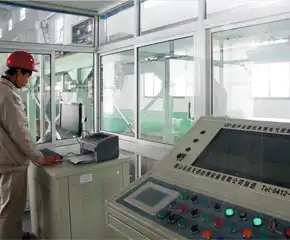
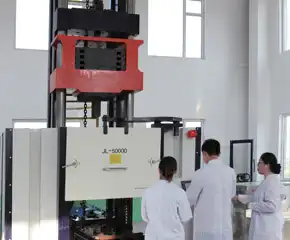
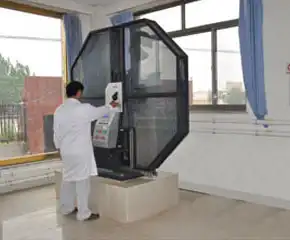
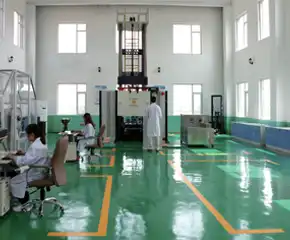
BBN Steel has established a complete set of production and supplier management system processes to ensure the improvement of product quality and better service to users.
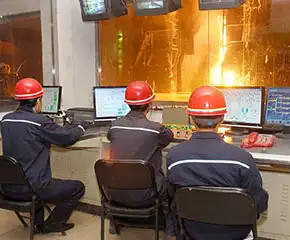
Production Control
BBN Steel has established a complete production quality control process to ensure every link from research and development to mass production.
Supplier management
Our supplier selection will consider factors such as health and safety, ethics, environmental protection, price and quality to better serve customers.
Certification & Patent
We have successively won various international authoritative certifications, GB /T19001-ISO9001: 2000 quality management system was implemented.
After sales service
We provide booking space, shipping tracking service and after-sales service, we will always be first-class products and perfect pre-sale and after-sales service.
Get in Touch
Welcome to contact us through online consulting, emails and hotline if you are interested in our company or products. Our staff will reply you within 24 hours.
Address: HIGH-TECH DEVELOPMENT ZONE, ZHENGZHOU, CHINA