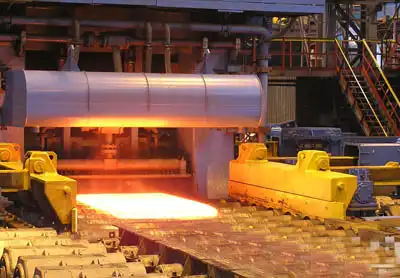
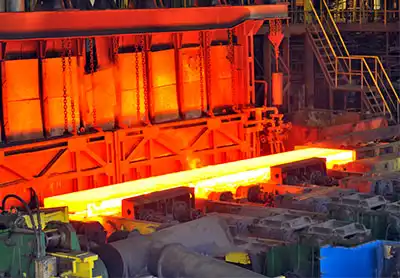
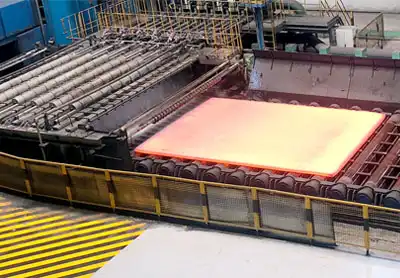
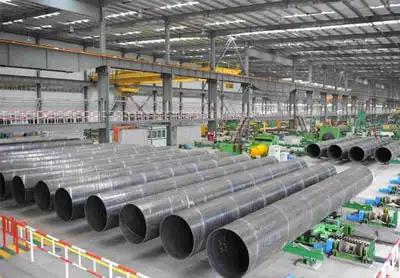
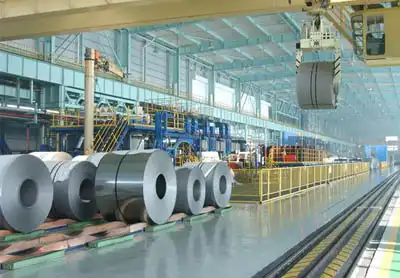
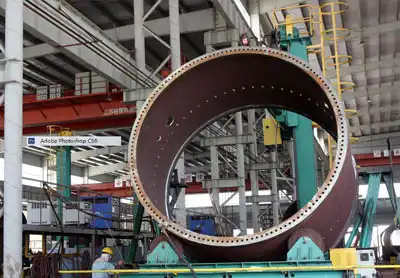
Description: BBN steel is a well-known steel manufacturer and service provider in China, Weather Resistant Steel Plate is our superior product, we are favored by customers with high quality, competitive price and excellent service
Payment Terms: L/C, T/T, D/P, Western Union, Paypal, Money Gram
Weathering steel supplied to CORTEN, ASTM A588 / ASME SA588, EN 10025-5, EN 10155, JIS G 3114, JIS G 3125, GB/T 4171, TB/T 1979 and A242 — as plate, sheet, coil, flat bar and section steel.
Plate size1.5–120 mm × 1000–3000 mm × 2000–12000 mm
DocumentationMill test certificate · Heat number traceable · Third-party inspection on request
A rust layer that protects itself — in a suitable atmosphere the surface builds a dense, adherent patina that seals out air and moisture, so the structure can be left unpainted.
Ten standards, 10 grade designations — the CORTEN, ASTM / ASME A588, EN, JIS, GB/T, TB/T and A242 families from one mill programme, with 18 grades opening their own detail page.
We also tell you where not to use it — the six service environments in which the patina never stabilises are set out in section 06, before you commit to a specification.
01What Weather Resistant Steel Is
Weather resistant steel, usually called weathering steel, is a high-performance low-alloy structural steel. Unlike ordinary carbon steel, it builds a dense, stable oxide film on its own surface when it is exposed to a suitable atmosphere. That film — the patina — clings to the steel, cuts off air and moisture, and slows electrochemical corrosion to a small fraction of the rate plain carbon steel suffers.
The difference comes from a small, deliberate alloy addition: copper, chromium, nickel and phosphorus migrate into the rust that forms in the first months of exposure and turn a porous, flaking scale into a tight, adherent layer. Because the protection is built into the material rather than painted on, weathering steel is chosen for bridge engineering, landscape architecture, landmark buildings and outdoor structures where repainting is expensive or impractical. The New River Gorge Bridge is the best-known structure built with weathering steel as its main structural material.
10Standard SystemsCORTEN · A588 · SA588 · EN · JIS · GB/T · TB/T · A242
6Excluded EnvironmentsWhere the patina will not stabilise
What weathering steel is not: it is not stainless steel, and it is not maintenance-free. It still rusts — the point is that the rust forms a sealed layer instead of eating through the section. In the wrong atmosphere (section 06) that layer never forms and the steel corrodes at the same rate as ordinary carbon steel.
02Product Forms & Size Range
Five product forms are supplied from the same programme. The ranges below are the standard mill windows; anything outside them is reviewed against the rolling schedule.
Product Form
Item
Range / Standard Sizes
Remarks
Steel Plate & Sheet
Thickness
1.5 mm – 120 mm
Thin plate 1.5–10 mm · medium plate 10–40 mm · thick plate 40–120 mm · custom ultra-thick plate available
Width
1000 mm – 3000 mm
Common widths: 1250, 1500, 1800, 2000, 2500, 3000 mm
Length
2000 mm – 12000 mm
Custom fixed lengths; unlimited cutting for special lengths
Steel Coil
Thickness
1.2 mm – 20 mm
—
Width
1000, 1250, 1500, 1800, 2000 mm
Standard widths
Coil weight
3 – 15 tonnes per coil
Custom coil weight supported
Flat Bar
Thickness
3 – 60 mm
—
Width
20 – 300 mm
—
Length
3000 – 6000 mm
—
Section Steel
Types
Angle steel, channel steel, H-beam, I-beam
Full range of national & international standard specifications
On sizes: not every thickness is available in every width, and the achievable combination depends on the grade and the rolling programme — send the form, grade, dimensions and quantity and we confirm what the mill can roll. Composition limits, mechanical values and impact requirements are set by the standard and grade, not by the size range, and are stated on the MTC for each order.
03Available Grades & Standards
The full grade range of all 10 standards is listed below. Click any linked grade to open its dedicated page with composition, mechanical properties and supply details.
Grades shown without a link are supplied to order — send the standard, grade, product form, dimensions, quantity and any inspection requirement and we will confirm availability and lead time. Certification and third-party inspection (SGS, BV, DNV or your nominated inspector) can be arranged on request.
04How to Read the Grade Designation
Every family encodes the chemistry or the strength in its name, so the designation already tells you what you are buying.
EN
EN 10025-5: Yield + Toughness + W
In S355J2W, S means structural steel, 355 is the minimum yield strength in MPa, J2 is the impact quality class (27 J at −20 °C; J0 is 0 °C and K2 is 40 J at −20 °C), and W marks the steel as atmospheric corrosion resisting. So S235J2W, S355J0WP, S355J2WP and S355K2W read straight off the name.
EN
EN 10155: The Older European Form
S355J2G1W, S355J2G2W, S355K2G1W and S355K2G2W carry an extra G suffix beyond the EN 10025-5 form. EN 10155 has largely been superseded by EN 10025-5 in new specifications, so where a drawing still calls for an EN 10155 grade we confirm the current equivalent before quoting.
ASTM
ASTM A588 / ASME SA588 Grade A, B, C, K
The four grades are composition variants within the same 50 ksi / 345 MPa class, differing mainly in how the corrosion-resisting elements are balanced and in the thickness range each covers. SA588 is the ASME boiler and pressure vessel adoption of the same ASTM specification — same grade letters, ASME documentation route.
JIS
JIS G 3114 SMA: Strength + Route
The number is the minimum tensile strength in MPa — SMA400, SMA490, SMA570. The leading A / B / C is the composition class, and the trailing letter separates the two routes of the standard: W grades are the weathering grades intended for bare exposure, while P grades carry a phosphorus addition and are normally supplied for coated service.
JIS
JIS G 3125 SPA-H and SPA-C
The high-strength weathering grades used where the section is thin and the corrosion demand is high — rolling stock, containers and vehicle bodies — supplied as plate and sheet. SPA-H is the higher-strength of the pair; SPA-C is the cold-forming grade.
GB/T
GB/T 4171 Q355NH and the NH / GNH Families
Q is the yield-strength prefix, the number is the minimum yield in MPa, and NH marks a weathering grade. GNH grades (Q295GNH, Q355GNH, Q265GNH, Q310GNH) are the higher-phosphorus “high weathering” variants, which is why the same strength level appears in two families.
TB/T
TB/T 1979: Carbon in Ten-Thousandths
The Chinese railway weathering grades read the chemistry directly — 09CuPTiRE is a 0.09% carbon steel carrying copper, phosphorus, titanium and a rare-earth treatment (RE), 08CuPVRE adds vanadium, and 05CuPCrNi is the leaner chromium-nickel variant.
Trade
CORTEN and A242 Type 1–5
Corten A and Corten B are the original trade designations that the whole family is named after, and remain the most commonly asked-for names on site. A242 is the older ASTM atmospheric-corrosion specification, called out by Type number rather than grade letter.
Equivalence warning: grades in different standards that share a strength level — S355J2W, A588 Grade A and Q355NH, for example — are counterparts, not automatic substitutes. Composition limits, impact requirements and thickness coverage all differ. Confirm any substitution against your design code and the MTC.
05How the Patina Forms & Protects
The protection is not there on delivery — it is built by exposure. These are the four stages the surface goes through.
1
Initial Oxidation
For the first weeks the surface rusts much like ordinary carbon steel. Runoff in this phase is loose and will stain adjacent concrete, stone and cladding, so drainage and detailing matter from day one.
2
Wet–Dry Cycling
Alternate wetting and drying is what drives the change. Each cycle dissolves and re-precipitates the oxide, and copper, chromium, nickel and phosphorus concentrate in the layer that stays attached to the steel.
3
Densification
Over repeated cycles the outer scale converts into a fine-grained, tightly adherent inner layer. Porosity closes, the layer stops flaking, and the corrosion rate begins to fall away from that of carbon steel.
4
Stable Protection
Once stabilised the patina acts as a barrier: the steel underneath corrodes only slowly, and the surface needs no paint system. The time this takes depends on the atmosphere, the orientation of the surface and how quickly it dries after rain.
Two conditions have to be met. First, the steel must actually dry out between wet periods — continuous damp, constant spray, buried or immersed service never develop a stable patina, and in those cases a coated carbon or low-alloy steel with a maintained paint system is the right call. Second, expect early runoff: until the layer stabilises it will stain whatever it drains onto, which is why we offer rust stabilisation and patina pretreatment before delivery (section 08).
06Where Weathering Steel Must Not Be Used
Weathering steel depends on atmospheric oxidation. In the six environments below the patina will not stabilise and the steel corrodes at the rate of ordinary carbon steel — or worse.
Environment
Threshold We Work To
Why the Patina Fails
Highly corrosive industrial
Industrial pollution above ISO 9223 class P3 — SO₂ above 250 μg/m³, or a deposition rate above 200 mg/m² per day
Concentrated corrosive fumes attack the oxide faster than it can densify, so the layer never seals.
Persistently wet or damp
Long-term continuous wetting or dampness, with no drying period
Without wet–dry alternation the protective film cannot form; corrosion then proceeds at the same rate as plain carbon steel.
High chloride / coastal
Salinity above ISO 9223 class S2 — Cl⁻ above 300 mg/m² per day; extra caution within 2 km of the coastline
Chloride breaks the layer down locally and drives pitting rather than uniform patina.
De-icing salt contamination
Frequent de-icing salt use; salt-laden water running directly over the steel; tunnel-like bridge spaces where road salt spray collects
Chloride deposits build up on the surface faster than rainfall can wash them away.
Buried
Steel buried in soil, and underground structures generally
There is no atmospheric wet–dry cycle; soil-side corrosion governs instead and the alloy addition gives no benefit.
Low clearance over water
Steel headroom below 2.5 m above water; the applicable minimum headroom for weathering steel overwater bridges is 5.3 m
Spray and constant moisture keep the surface wet, so the patina cannot stabilise.
How we use this table: these thresholds are the values we check an enquiry against, and they are the point at which we will say no and propose a coated alternative instead. Where your project specification, the responsible engineer or a local code sets different limits, those govern. If your site sits anywhere near one of these boundaries, send us the location and exposure conditions with the enquiry.
07Typical Applications
Where weathering steel earns its cost — structures that are expensive to repaint, exposed to open air, and detailed so that they dry out.
Bridges & Highway Structures
Plate girders, box girders, cross frames, parapets and sign gantries. This is the largest single use of weathering steel and the reason the material exists — no repainting of a structure over live traffic. The New River Gorge Bridge is the reference example.
Building Facades & Cladding
Rainscreen panels, louvres, entrance structures and feature walls, where the colour of the patina is the finish. Usually supplied with a stabilised pretreatment so the building arrives at its intended appearance instead of staining the paving below.
Landscape & Public Art
Sculpture, retaining edges, planters, bollards, benches and wayfinding structures. The thinner sections are usually plate or sheet, cut and formed to drawing, and chosen because the surface weathers into the setting instead of needing maintenance.
Containers, Rolling Stock & Vehicle Bodies
The thin-gauge end of the range, where JIS G 3125 SPA-H and SPA-C and the GB/T 4171 grades are specified for freight containers, wagon bodies, hopper cars and site containers.
Towers, Silos & Outdoor Plant
Transmission and communication towers, silos and hoppers, conveyor gantries, stack supports and outdoor plant structures that are inspected rather than repainted. Section steel and plate are usually supplied together for these.
08Processing, Patina Pretreatment & Supply
Weathering steel is usually bought cut, formed and pre-treated rather than as raw plate — these are the services that go with it.
1
Cutting to Size
Laser cutting to your nesting plan or drawing, including profile and shaped parts, so what arrives on site goes straight into fabrication.
2
Forming & Finishing
Bending, drilling and polishing, plus non-standard sizes and special-shaped parts produced to your drawings and engineering requirements.
3
Rust Stabilisation & Patina Pretreatment
The oxide layer is accelerated and stabilised before delivery, so the steel arrives closer to its final appearance and the early runoff that stains concrete and stone is greatly reduced.
4
Inspection & Certified Delivery
Chemical analysis, tensile, hardness and impact testing, ultrasonic examination on request, third-party inspection by your nominated agency, and an MTC carrying the heat number.
Ordering: payment terms L/C, T/T, D/P, Western Union, Paypal and Money Gram. Indicative lead time is 5 days for 1–10 tonnes and 10 days for 10–50 tonnes, with larger quantities negotiated — confirmed against the rolling programme and any pretreatment when you enquire.
09Frequently Asked Questions
Q1What is the difference between weathering steel and ordinary carbon steel?
The alloy addition. Weathering steel carries small amounts of copper, chromium, nickel and phosphorus that migrate into the rust layer and turn it into a dense, adherent patina that seals the surface. Ordinary carbon steel forms a porous scale that flakes off and exposes fresh metal, so it keeps corroding. The practical result is that a weathering structure can be left unpainted in the right atmosphere, while a carbon steel one has to be coated and recoated.
Q2How long does the patina take to stabilise, and is the structure really maintenance-free?
Stabilisation takes a number of years of exposure, and the period depends on the atmosphere, the orientation of the surface and how quickly it dries after rain — a sheltered soffit that stays damp behaves very differently from a well-drained vertical face. “Low maintenance” is the accurate description, not “no maintenance”: the patina removes the repainting cycle, but the structure still has to be inspected, drained and kept free of debris and salt deposits.
Q3Can I use weathering steel near the coast or on a bridge over water?
Only with care. Above ISO 9223 class S2 — chloride deposition above 300 mg/m² per day — the patina does not stabilise, and we treat anything within 2 km of the coastline as needing review. Over water, steel headroom below 2.5 m is out; the applicable minimum for a weathering steel overwater bridge is 5.3 m. Section 06 lists all six excluded environments — if your site is close to any of them, send us the location and we will say so rather than quote.
Q4Which standards and grades can you supply?
10 standard systems and 64 grade designations: CORTEN, ASTM A588/A588M, ASME SA588/SA588M, EN 10025-5, EN 10155, TB/T 1979, GB/T 4171, JIS G 3114, JIS G 3125 and A242/A242M. Section 03 lists the full range — grades shown as links have their own page with composition and mechanical data, and the rest are supplied to order.
Q5Can you pre-form the patina, and will it stain the concrete below?
Both are handled by pretreatment. We carry out rust stabilisation and patina pretreatment so the surface arrives close to its final colour and the loose early runoff is largely removed. Staining risk is not only a material question though — drainage, drip details and the protection of adjacent concrete and stone during the first wet season matter just as much, and are worth designing in before the steel is ordered.
Q6What information do you need for a quotation?
The standard and grade, the product form (plate, sheet, coil, flat bar or section), dimensions and quantity, the delivery condition and any mechanical or impact requirement, the service environment or site location, whether you want patina pretreatment, any inspection or certification needed including third-party inspection, and the destination port.
Get Your Weathering Steel Plate Quotation
Send us your standard and grade, product form, dimensions, quantity, service environment and inspection requirements. We will reply with available sizes, pretreatment options, mill price and production lead time — and tell you plainly if the site is one where weathering steel should not be used.
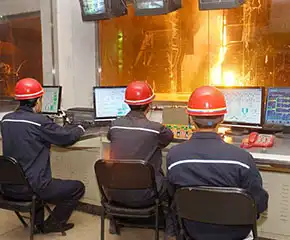
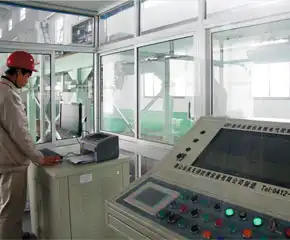
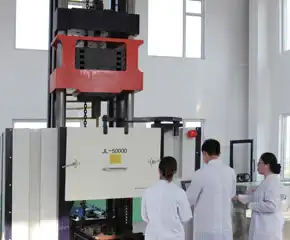
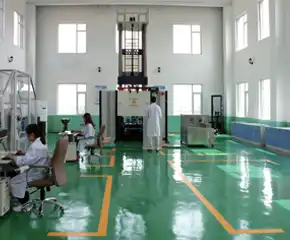
BBN Steel has established a complete set of production and supplier management system processes to ensure the improvement of product quality and better service to users.
Production Control
BBN Steel has established a complete production quality control process to ensure every link from research and development to mass production.
Supplier management
Our supplier selection will consider factors such as health and safety, ethics, environmental protection, price and quality to better serve customers.
Certification & Patent
We have successively won various international authoritative certifications, GB /T19001-ISO9001: 2000 quality management system was implemented.
After sales service
We provide booking space, shipping tracking service and after-sales service, we will always be first-class products and perfect pre-sale and after-sales service.
Get in Touch
Welcome to contact us through online consulting, emails and hotline if you are interested in our company or products. Our staff will reply you within 24 hours.
Address: HIGH-TECH DEVELOPMENT ZONE, ZHENGZHOU, CHINA