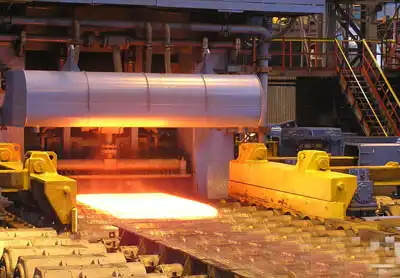
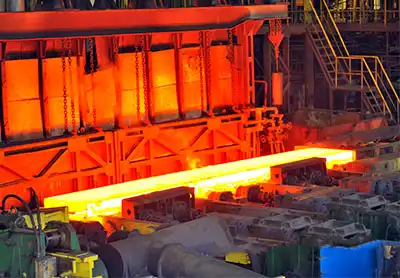
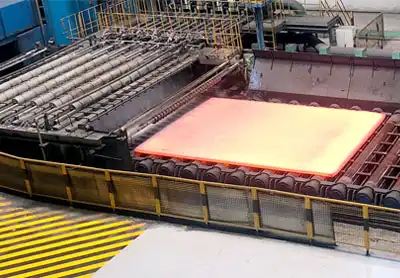
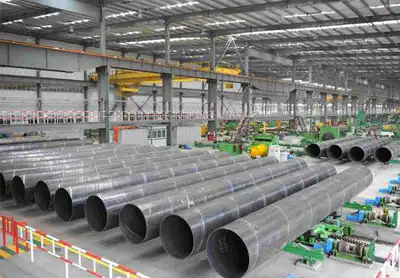
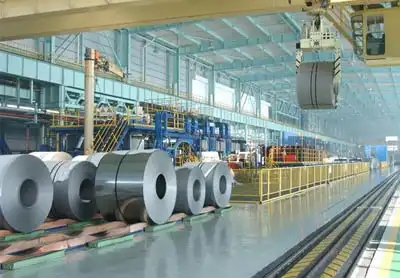
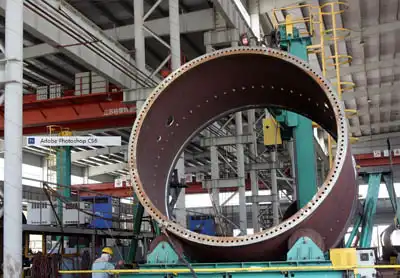
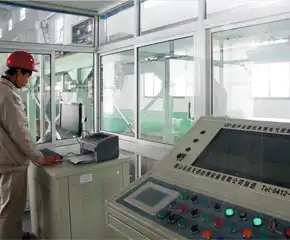
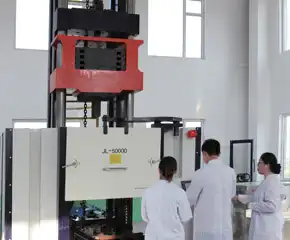
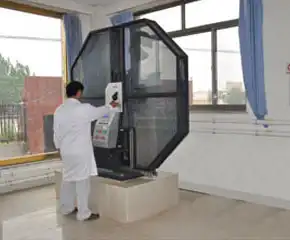
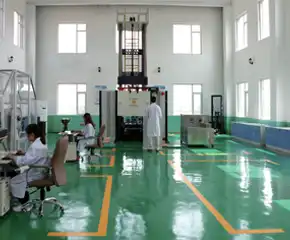
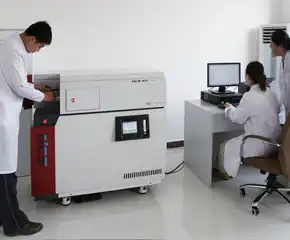
Description: BBN steel is a well-known steel manufacturer and service provider in China, EN10025-5 S355J2W Weather Resistant Steel Plate is our superior product, we are favored by customers with high quality, competitive price and excellent service
Payment Terms: L/C, T/T, D/P, Western Union, Paypal, Money Gram
S355J2W is a hot rolled structural steel with improved atmospheric corrosion resistance, supplied to EN 10025-5. It is the European equivalent buyers reach for when a drawing says Corten B or an older German note says WTSt 52-3: a copper-chromium weathering plate that builds its own dense protective patina instead of relying on a paint film.
Two things sit inside the name. The W means the alloying route is corrosion-driven — chromium 0.40–0.80 % and copper 0.25–0.55 %, optionally backed by nickel, do the patina work while phosphorus stays at an ordinary maximum. That is exactly what separates it from its phosphorus-alloyed cousins: in S355J2WP phosphorus is specified as a working range of 0.06–0.15 %, whereas here it is simply capped at 0.030 %. The practical consequence is that this grade welds to normal S355 structural practice — no elevated-phosphorus procedure needed.
The J2 is the toughness class, and it is the other half of the value: 27 J minimum at −20 °C. That makes this the plate to specify when the structure actually sees winter — bridges, transmission towers railway rolling stock — rather than the J0 variants verified only at 0 °C. Mechanically it is otherwise a full member of the 355 MPa family: 355 MPa minimum yield to 16 mm, 470–630 MPa tensile, and the EN 10025-5 property table carries guaranteed figures all the way to 150 mm.
355 MPaMin Yield, t ≤ 16 mm295 MPa still guaranteed at 150 mm
470–630Tensile Strength (MPa)510–680 below 3 mm
27 JCharpy V-Notch at −20 °Clongitudinal, J2 subgrade
1.8965Material Numberfully killed (FF)
Note: This page is written against EN 10025-5 and material number 1.8965. Several values below are standard minimum values, not typical mill results — every figure should be read off the mill test certificate (EN 10204 3.1) for the actual heat and thickness you receive. Two things to watch when comparing sources: this standard has been issued as :2004 and :2019 editions and some property tables differ between them, and a few commercial tables quote figures belonging to the WP grade or to plain S355J2. Where published sources genuinely disagree we say so in the chapter note rather than pick one number for you.
02Technical Specifications
Ordering information, supply conditions and the commercial terms published for this item.
Item
Specification Details
Steel Grade
EN 10025-5 S355J2W
Material Number
1.8965
Executive Standard
EN 10025-5 — Technical delivery conditions for structural steels with improved atmospheric corrosion resistance. Published editions include 2004 and 2019; tell us which your drawing calls up.
Product Type
Hot rolled flat products (plate, sheet, strip in coil). The standard also covers long products — sections and bars — which this page does not cover.
Thickness
Confirmed per rolling programme — no fixed published band, see the note below
Width / Length
Confirmed per rolling programme; cut to drawing available
Thickness Coverage of the Property Table
The EN 10025-5 property table carries guaranteed figures for plate from 1.5 mm to 150 mm — see section 07. This is the range the values cover, not a promise of what we can roll; please confirm availability separately.
Deoxidation
FF — fully killed steel (aluminium or another nitrogen-binding element is mandatory, see section 05)
Delivery Condition
As Rolled (+AR)Normalizing Rolled (+N)NormalizedThermo-Mechanical Rolled (TMCP)
Surface Condition
Mill finish; shot blasted, primed or pre-weathered available on request
Applicable Tolerances
EN 10029 (thickness, width, length, flatness) as the ordered class
Inspection Options
EN 10204 3.1 MTCEN 10204 3.2UT (Ultrasonic examination)EN 10160HIC testNDTPWHT simulatedNACE MR0175Z15 / Z25 / Z35The Third Party Test (such as SGS)
MOQ
From 1 ton — the lowest bracket of the quantity schedule below
Lead Time
1–10 t: 5 days · 10–50 t: 10 days · above 50 t: negotiable
Payment Terms
L/C, T/T, D/P, Western Union, Paypal, Money Gram
Custom Service
Cutting to length, flame / plasma cutting, bending, forming, drilling, welding, machining, coated or shot blasting and painting, deep processing to drawing
Note: We deliberately do not print a thickness / width / length band for this item — what actually rolls follows the rolling programme and your quantity, and we would rather confirm it against your order than publish a range we cannot stand behind. Send the three dimensions, the quantity and the delivery condition and we will tell you what rolls. Two further points: (1) the published properties apply to the as-delivered condition — anything beyond as-rolled and normalizing rolled, including quenching and tempering, has to be agreed at enquiry because it changes what the certificate can certify; (2) barely a third of the inspection and supplementary items listed above are included by default. Ultrasonic examination, Z-direction testing, HIC, PWHT simulation, NACE compliance and third-party witness are all order-dependent additions — write them on the enquiry and the purchase order, because they cannot be added after the plate has shipped.
03Grade Designation & the EN 10025-5 Family
Every character in S355J2W carries a specification. Reading it correctly is what separates this grade from the three it is most often confused with.
Symbol
Meaning
S
Structural steel — the EN 10025 series for construction steels
355
Specified minimum yield strength of 355 MPa at nominal thickness ≤ 16 mm
J2
Impact quality class — 27 J minimum at −20 °C, Charpy V-notch, longitudinal test pieces
W
Improved atmospheric corrosion resistance — delivered by chromium and copper, not by phosphorus
Two comparisons decide almost every substitution question. The first is the alloying route:
S355J2W (this page)
S355J2WP
Phosphorus
Held to a maximum of 0.030 %
Specified working range 0.06–0.15 %
Weathering alloy
Cr 0.40–0.80 %, Cu 0.25–0.55 %
Cr 0.30–1.25 %, Cu 0.25–0.55 % plus the higher P
Strength level
355 MPa family
355 MPa family — the P does not add strength
Impact class
J2 — 27 J at −20 °C
J2 — 27 J at −20 °C
Welding
Normal S355 structural practice
Sound, but the elevated P calls for low-hydrogen practice and a tightly controlled procedure
The second is the temperature. It is asked about more often, and it is the one a purchase order most often gets wrong:
Quality Class
Charpy Test Temperature
Minimum Energy
Think of it as
JR
+20 °C
27 J
Room temperature only
J0
0 °C
27 J
S355J0W — mild winters
J2
−20 °C
27 J
This page — real winter service
K2
−20 °C
Higher energy class
S355K2W — we confirm the current edition figure on enquiry rather than quote unverified numbers
Note: These two questions are independent, and mixing them up costs money. W versus WP is an alloying question — how the plate weathers and how carefully it has to be welded. J0 versus J2 is a temperature question — how cold the detail actually gets. You can need −20 °C and still not want the phosphorus, which is precisely what this grade is for. Whichever you choose, write the full designation on the purchase order: a PO that says S355J2W cannot be swapped to S355J2WP without your agreement, and inspection will not accept the substitution after the fact. One note on our own page history — an earlier version of this listing printed the impact line as "+20, 0, −20 °C", which is simply the JR / J0 / J2 ladder printed as though all three applied to one grade. S355J2W is −20 °C, full stop; the other two temperatures belong to other classes.
04Equivalent & Cross-Standard Grades
The names this grade answers to — the ones buyers already have printed on a drawing.
System
Nearest Grade
EN material number
1.8965
Germany — superseded notation
WTSt 52-3WSt 52-3 — the old German weathering designation this material is quoted against
Italy UNI EU 155
Fe 510 D2K1
France NFA 35-502
E 36 WB 4
United Kingdom BS 4360
WR 50 C
Japan JIS G3114
SMA 50 AWSMA 570 W — note these are JIS G3114 welding grades, not the JIS G3125 SPA family
China GB / GBT 4171
Q355NHQ355NHDQ355GNH
ISO
Fe 510 D2K1 — shared with the UNI entry, as both derive from the same European strength notation
Trade name / ASTM concept
Corten B is the trade name this grade corresponds to in commercial use. ASTM A588 Grade A and A242 are the nearest US specifications — the same weathering idea, not the same document.
Note: Nearest is not identical. These are trades across national numbering systems that line up closely on strength level and corrosion concept, but the tensile band, the impact temperature, the analysis basis (ladle versus product) and the thickness limits each system sets are genuinely different. Corten B is a trade name rather than a specification, and the ASTM entries are a conceptual match. Substitution has to be approved against your design code and backed by a certificate written to the standard you are actually buying. One housekeeping point: some published tables circulate the material number for this grade as 1.8963. The number carried by the standard references and by both manufacturer declarations of performance we checked is 1.8965 — use 1.8965 and ask for it to be printed on the certificate.
05Chemical Composition
Ladle analysis limits for S355J2W under EN 10025-5, alongside the product-analysis figures several published tables quote. Product analysis limits are wider because they are measured on the finished piece, not the heat.
Element
Ladle Analysis (heat)
Product Analysis (published figures)
C
≤ 0.16 %
≤ 0.19 %
Si
≤ 0.50 %
≤ 0.55 %
Mn
0.50 – 1.50 %
0.45 – 1.60 %
P
≤ 0.030 %
≤ 0.035 %
S
≤ 0.030 %
≤ 0.035 %
Cr
0.40 – 0.80 %
0.35 – 0.85 %
Cu
0.25 – 0.55 %
0.20 – 0.60 %
Ni
≤ 0.65 % (permitted maximum)
≤ 0.70 %
Mo
≤ 0.30 % (permitted maximum)
≤ 0.35 %
Zr
≤ 0.15 % (permitted maximum)
≤ 0.17 %
N
See note below
≤ 0.010 %
CEV (carbon equivalent)
≤ 0.52 % max
—
Deoxidation
FF — fully killed steel. The steel must contain at least one of the following nitrogen-binding elements: total Al ≥ 0.020 %, Nb 0.015–0.060 %, V 0.020–0.120 %, Ti 0.020–0.100 %; where they are used in combination, at least one must reach the stated minimum.
Note: Three things worth knowing before you read anyone's composition table. (1) Chromium and copper are the point of this grade — they are what makes it a weathering steel. The composition table published on this page until now listed only C, Mn, Si, P and S, which describes an ordinary structural plate and left out the defining elements entirely; we have restored them here and flagged the omission rather than quietly editing history. (2) Nitrogen has no single answer. Under EN 10025-5 the nitrogen maximum does not apply where the analysis shows total aluminium of at least 0.020 % or other nitrogen-binding elements are present — and those binding elements must be recorded on the inspection document. Published tables therefore quote 0.009 %, 0.010 % or 0.012 % depending on which edition and which route they assume. Ask for the binding elements rather than chasing the number. (3) Long products may run 0.005 % higher on phosphorus and sulphur than the flat product figures above, so confirm the product form when comparing certificates.
06Weathering Performance & Patina Formation
The rust is not damage — it is the protection system. How it develops decides whether this material belongs on your structure.
1
Initial Exposure
Freshly descaled plate oxidises on site. Runoff staining of adjacent concrete, stone or paving is normal in this first phase and needs detailing for.
2
Wet & Dry Cycling
Repeated wetting and drying drives the copper and chromium into a dense, tightly bonded oxide layer rather than the flaky scale plain carbon steel forms.
3
Patina Densification
The layer becomes adherent and non-porous, cutting off the transport of oxygen and moisture to the base steel.
4
Stabilised Protection
Corrosion rate falls away and the plate is protected for its service life with no paint and no coating — which removes the repainting cycle from the maintenance budget.
Note: The patina only stabilises where the surface genuinely gets to dry out. In continuously humid or permanently shaded positions, in marine salt-spray exposure, where de-icing salt runoff collects, and in buried or immersed service, it does not stabilise and a coating system should be specified instead. Two practical consequences follow: detail the drainage so the plate can dry, and protect surrounding concrete, stone and paving from the initial runoff staining — that staining is expected behaviour, not a defect. Because this grade keeps phosphorus low, it builds the patina a little more slowly than the phosphorus-alloyed WP variants; the pay-off is easier welding rather than faster colouring. Tell us the exposure condition and we will say honestly whether bare weathering plate suits your job.
07Mechanical Properties
Minimum values by nominal thickness. Yield falls in steps as the section gets thicker — that is normal, and it is why your drawing has to state a thickness.
Nominal Thickness t (mm)
Min Yield Strength ReH (MPa)
Tensile Strength Rm (MPa)
t ≤ 3
355
510 – 680
3 < t ≤ 16
355
470 – 630
16 < t ≤ 40
345
470 – 630
40 < t ≤ 63
335
470 – 630
63 < t ≤ 80
325
470 – 630
80 < t ≤ 100
315
470 – 630
100 < t ≤ 150
295
450 – 600
Elongation is measured on two different specimen geometries, which is why the figures appear to jump rather than drift:
Nominal Thickness t (mm)
Gauge Length
Min Elongation A (%)
1.5 < t ≤ 2
Lo = 80 mm
16
2 < t ≤ 2.5
Lo = 80 mm
17
2.5 < t ≤ 3
Lo = 80 mm
18
3 < t ≤ 40
Lo = 5.65 √So
22
40 < t ≤ 63
Lo = 5.65 √So
21
63 < t ≤ 100
Lo = 5.65 √So
20
100 < t ≤ 150
Lo = 5.65 √So
18
Toughness, which is the J2 guarantee itself:
Property
Specified Value
Charpy V-notch energy
27 J minimum, longitudinal test pieces
Test temperature
−20 °C
Thickness range covered
3 – 150 mm
Transverse pieces
Lower energies apply in the thinner thickness bands — see the note below
Note: Four cautions, and we would rather you read them than find them later. (1) The apparent jump in elongation is a change of specimen, not a change of material. Below 3 mm the figure is measured on an 80 mm gauge length; from 3 mm up it is proportional, Lo = 5.65 √So. The old version of this page published a single "16 %" figure with no thickness attached — that number is the thinnest band's 80 mm value, and quoting it as the general elongation understates the 3–40 mm range badly. (2) On the 3 mm-and-up rows our sources split. This table publishes the values carried by most published references — 22 / 21 / 20 / 18 %. Two manufacturers' own EU declarations of performance for 1.8965 publish 20 / 19 / 18 / 18 % instead, and the thin-sheet 80 mm rows as 14 / 15 / 16 % rather than 16 / 17 / 18 %. We have not reconciled them for you; confirm which edition and which route your project cites. (3) Impact figures above are longitudinal. At least one manufacturer declaration publishes transverse energies that step down in the thin bands — roughly 14 J below about 8.5 mm and 21 J up to about 11 mm before reaching the full 27 J — so specify direction, temperature and energy on the order. (4) Because yield steps down with thickness, always state the nominal thickness when asking for a strength figure.
08Processing & Fabrication Parameters
How the plate behaves in the shop, and the supplementary conditions available against order.
Item
Parameter
Delivery Condition
AR — As RolledN — Normalized / Normalizing RolledTMCPQ+T — Quenched and Tempered (on agreement)
Carbon Equivalent CEV
≤ 0.52 % maximum. We supply the actual heat analysis so Pcm and CEV are calculated from your plate rather than from a typical value.
Welding Consumables, SMAW
E7018, E7016 — low-hydrogen practice
Welding Consumables, GMAW
ER70S-6
Welding Consumables, FCAW
E71T-1
Welding Consumables, SAW
EM12K with a suitable flux
Preheat
Generally not required for light and medium thicknesses. Heavier sections and restrained joints should be assessed against the CEV from the actual certificate.
Colour-Matched Welds
Where the weld must weather to the same colour as the parent plate, specify weathering-grade consumables
Cold Forming
Well supported. Where forming significantly changes mechanical properties, apply stress-relief annealing or normalizing.
Cutting
Flame, plasma and laser cutting, shearing and sawing; cut to length and cut to drawing
Dimensional Tolerances
EN 10029 for thickness, width, length and flatness to the ordered class
Note: The additional condition list published with this item is long — UT, TMCP, normalizing, quenching and tempering, Z-direction testing Z15 / Z25 / Z35, Charpy V-notch impact testing, HIC testing, NDT, simulated PWHT, NACE MR0175, third-party inspection such as SGS, and coating or shot blasting and painting. These are capabilities offered against order, not properties the standard gives you for free. If your project needs one of them, name it on the enquiry and the purchase order; once the plate has shipped it is too late to add.
09Applications & Typical Uses
Specified where structural strength, low-temperature toughness and a controlled rust appearance are all wanted, and where nobody wants to pay for a repainting cycle.
Bridges & Highway Structures
Plate girder and box members, parapets, barriers and pedestrian structures, where winter toughness and the absence of a repainting cycle both matter.
Architecture & Facades
Building facades, curtain wall panels, screens, landscaping walls and sculptural work where the weathered surface is the intended finish.
Stacks, Flues & Air Preheaters
Chimney shells, flue gas housings, industrial ducting and air preheater or economiser casings in continuous atmospheric exposure.
Railway Wagons & Containers
Freight wagon bodies, bogie structures, container shells and vehicle frames — the market where this chemistry originated and paint life is the cost being removed.
Note: We should correct something carried on the old version of this page. Its application paragraph described S355J2W as being used for pressure vessels, boilers, storage tanks and heat exchangers in oil and gas projects — wording that belongs to our boiler and pressure vessel plate pages, not to a weathering grade. S355J2W is an atmospheric corrosion resistant structural steel: it is chosen for structures standing in open air, not for contained pressure service. If your requirement really is a boiler or pressure vessel plate, tell us and we will point you to the correct grade — or see the full weathering range linked in section 11.
10Core Advantages
Five reasons this grade keeps being specified for outdoor structural work.
1
Cr + Cu Do the Weathering
Chromium 0.40–0.80 % and copper 0.25–0.55 % build the dense protective oxide. Phosphorus stays at an ordinary maximum, so no phosphorus-driven restrictions follow.
2
Verified Toughness at −20 °C
The J2 class carries 27 J minimum at −20 °C — written into the designation, so the guarantee is in the specification rather than implied by it.
3
Strength Held All the Way to 150 mm
355 MPa minimum yield to 16 mm, stepping down through 345, 335, 325, 315 and still 295 MPa at 150 mm — published figures across the whole property range, not just thin plate.
4
The Repainting Cycle Is Removed
No initial paint system and no periodic repainting in suitable environments. The saving lands on the operating budget, not only on the construction budget.
5
Welds Like Normal S355
CEV no more than 0.52 %, no elevated phosphorus to manage. Conventional equipment, low-hydrogen consumables and standard practice handle it in most shops.
11Other Weathering Steel Grades We Supply
Comparing families rather than guessing a substitution? These are the related grades, grouped the way they are actually specified.
Note: These are related, not interchangeable. W and WP differ in phosphorus, J0 and J2 differ in test temperature, and each national system sets its own tensile band and thickness limits. Choose on the two questions that matter — how cold the detail gets, and whether you want the phosphorus route — then confirm the substitution against your design code and the certificate for the item you actually order.
12Frequently Asked Questions
Short answers to the questions we are asked most often about S355J2W. Anything not covered here — send us the drawing.
Q1What does S355J2W mean, and how is it different from S355J0W and S355J2WP?
Read it in four parts: S = structural steel, 355 = 355 MPa minimum yield at thickness ≤ 16 mm, J2 = 27 J minimum Charpy energy at −20 °C, and W = improved atmospheric corrosion resistance delivered by chromium and copper. Against S355J0W, the only difference is the test temperature — 0 °C versus −20 °C — so this is the one to specify for genuine winter service. Against S355J2WP, the temperature is the same and the difference is alloying: WP specifies phosphorus as a working range of 0.06–0.15 %, while this grade simply caps it at 0.030 % and relies on Cr and Cu. Strength is identical across all three; only the welding practice and the verified temperature change.
Q2Why do I see −20 °C, 0 °C and even +20 °C quoted for this grade?
Because those are three different quality classes, not three values for one grade. The EN 10025 series uses JR = +20 °C, J0 = 0 °C, J2 = −20 °C. This page's own previous version printed the impact line as "+20, 0, −20 °C", which was the whole ladder printed as though it applied to S355J2W. S355J2W is J2, so −20 °C with 27 J minimum, longitudinal. There is also a K2 class at higher energy, whose figure we will confirm against the current edition on enquiry rather than quote something we have not verified. If your structure does not get that cold, S355J0W may well be the cheaper correct choice — tell us the design temperature.
Q3Can S355J2W really be left unpainted?
It can, provided the surface is allowed to dry out. The patina stabilises under alternating wet and dry conditions. In permanently humid or shaded positions, in marine salt-spray exposure, where de-icing salt runoff collects, and in buried or immersed service, it does not stabilise and a coating system should be specified instead. Detail the drainage so the plate can dry, and protect adjacent concrete, stone or paving from the runoff staining that occurs in the first months — that staining is expected behaviour, not a defect. This grade colours a little more slowly than the phosphorus-alloyed WP variants; the trade is easier welding. Tell us the exposure and we will say honestly whether bare weathering plate suits the job.
Q4How does it weld, and what consumables should we use?
It welds like a normal S355 structural plate — that is one of the reasons to prefer it over a WP grade. CEV is no more than 0.52 % and phosphorus sits below 0.030 %, so there is no elevated-phosphorus restriction to design around. Consumables commonly recommended for this family are E7018 / E7016 for SMAW, ER70S-6 for GMAW, E71T-1 for FCAW and EM12K with a suitable flux for SAW. Preheat is generally not needed for light and medium thicknesses; heavier sections and restrained joints should be assessed against the CEV from the actual heat analysis, which we supply. Use weathering-grade consumables where the weld has to develop a patina matching the parent plate, and note that Nb, V and Ti may be present as nitrogen-binding elements and must be recorded on the inspection document — useful information for anyone writing the WPS.
Q5Which strength and elongation figures should I design to?
State the thickness first, because everything moves with it. Yield is 355 MPa minimum to 16 mm, then 345 / 335 / 325 / 315 MPa through the succeeding bands, reaching 295 MPa at 100–150 mm. Tensile is 510–680 MPa up to 3 mm and 470–630 MPa above it, becoming 450–600 MPa above 100 mm. Impact is 27 J minimum at −20 °C. Elongation is 22 % minimum from 3 to 40 mm on a proportional specimen, stepping to 21 / 20 / 18 %, and 16 / 17 / 18 % below 3 mm on an 80 mm gauge length. Two honest caveats: our table publishes the values most references carry, while two manufacturers' own EU declarations list 20 / 19 / 18 / 18 % for the thick rows — confirm which applies to your edition; and the old version of this page quoted a flat "16 %" with no thickness or gauge attached, which understates the thicker range. Design against the certificate for the heat you receive.
Q6What sizes, MOQ, lead time, inspection and certificates do you supply?
The available size follows the rolling programme — we do not publish a fixed band for this item, so send thickness, width, length and quantity and we will confirm what rolls. The EN 10025-5 property table covers 1.5 to 150 mm, which is the range the values are defined over. MOQ is 1 ton, from the lowest bracket of our quantity schedule; lead time is 5 days for 1–10 t, 10 days for 10–50 t and negotiable above that. Delivery is as rolled, normalizing rolled or TMCP by agreement. Certification is EN 10204 3.1 as standard, with 3.2, ultrasonic examination to EN 10160, Z15 / Z25 / Z35, HIC, NDT, NACE MR0175, simulated PWHT and third-party inspection such as SGS available — but all of them must be named on the order. Payment is by L/C, T/T, D/P, Western Union, Paypal or Money Gram.
Get Your EN 10025-5 S355J2W Weathering Steel Quotation
Send us your thickness, width and length, quantity, delivery condition, design temperature, exposure situation and certificate requirement. We will reply with what rolls, the latest stock status, competitive wholesale pricing and complete certification within 24 hours.
BBN Steel has established a complete set of production and supplier management system processes to ensure the improvement of product quality and better service to users.
Production Control
BBN Steel has established a complete production quality control process to ensure every link from research and development to mass production.
Supplier management
Our supplier selection will consider factors such as health and safety, ethics, environmental protection, price and quality to better serve customers.
Certification & Patent
We have successively won various international authoritative certifications, GB /T19001-ISO9001: 2000 quality management system was implemented.
After sales service
We provide booking space, shipping tracking service and after-sales service, we will always be first-class products and perfect pre-sale and after-sales service.
Get in Touch
Welcome to contact us through online consulting, emails and hotline if you are interested in our company or products. Our staff will reply you within 24 hours.
Address: HIGH-TECH DEVELOPMENT ZONE, ZHENGZHOU, CHINA