Welcome to contact us through online consulting, emails and hotline if you are interested in our company or products. Our staff will reply you within 24 hours.
FOB Reference Price: Get Latest Price
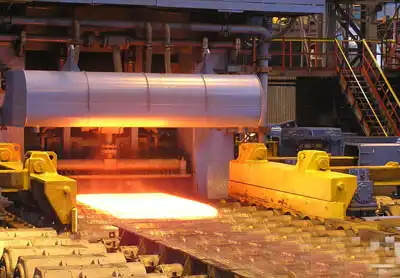
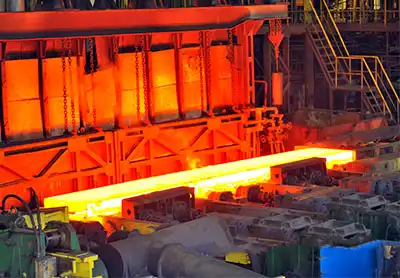
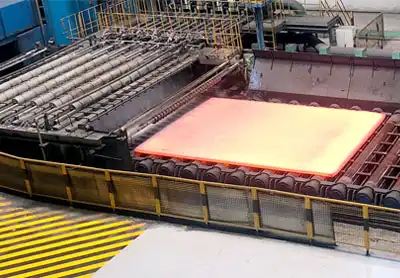
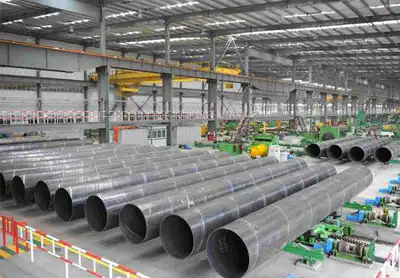
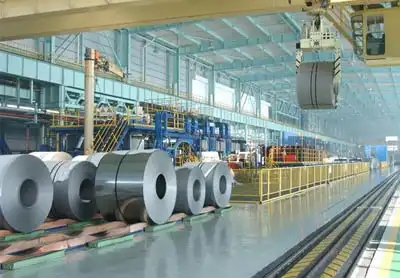
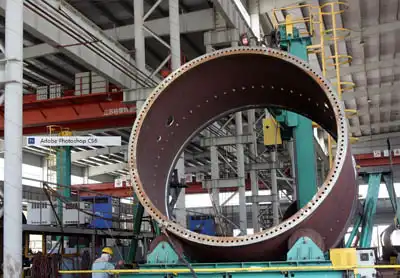
Description: BBN steel is a well-known steel manufacturer and service provider in China, EN 10149-2 S355MC automobile structure steel plate and coil is our superior product, we are favored by customers with high quality, competitive price and excellent service
Payment Terms: L/C, T/T, D/P, Western Union, Paypal, Money Gram
Lead Time:
| Quantity(Metric Tons) | 1 - 10 | 10 - 50 | >50 |
| Est. Time(days) | 5 | 10 | Negotiable |
EN 10149-2 S355MC is a hot-rolled flat steel made for one job: reach 355 MPa of yield strength and still survive being bent, roll formed or drawn cold. It is the grade that sits at the bottom of the thermomechanically rolled high-yield family in EN 10149-2, and it is the one most chassis, bracket and frame work in Europe is drawn around.
The strength does not come from carbon. Carbon stays at 0.12 % maximum, which keeps the steel weldable and keeps the carbon equivalent low; the strength comes from microalloying with niobium, vanadium and titanium combined with a tightly controlled rolling and cooling schedule. That is what the M in the name records, and it is the reason the properties are tied to the as-delivered condition rather than to a heat treatment you can repeat later.
The C is the other half of the name and it is the half buyers forget: this is a cold-forming grade. EN 10149-2 does not only give you a yield figure, it gives you a guaranteed minimum elongation and a minimum bend mandrel diameter, because those two are what decide whether the part cracks on the press. A general structural steel with the same yield number has neither guarantee.
Steel number 1.0976. That is the EN 10027 number for S355MC and it sits next to the name on a European mill certificate. Quote both — the name alone is often read as S355JR, S355J2 or S355NL, which are different standards.
What the standard covers for the grade, what we can roll and prepare, and the commercial terms this page is quoted on.
| Category | Item | Specification |
|---|---|---|
| EN 10149-2 S355MC — supply range | Designation | EN 10149-2 S355MC · steel number 1.0976 · thermomechanically rolled steel for cold forming |
| Thickness | 1.5–20 mm — the range EN 10149-2 covers for this grade | |
| Width & Length | Confirmed per rolling programme | |
| Product Form | Plate Sheet Strip Coil Slit coil Cut-to-length | |
| Delivery Condition | +M thermomechanical rolled — the condition the mechanical values belong to | |
| Surface Condition | As-rolled Pickled Pickled & oiled | |
| Commercial terms | MOQ | From 1 tonne — the lowest bracket of the published quantity schedule |
| Lead Time | 1–10 t: 5 days · 10–50 t: 10 days · above 50 t: negotiable | |
| Payment Terms | L/C, T/T, D/P, Western Union, Paypal, Money Gram | |
| Inspection Document | Mill test certificate to EN 10204 with heat-number traceability; type stated on the order |
Fix two things before you enquire. The 1.5–20 mm band is what the standard covers, not a promise that every gauge is on the rolling programme today — send the gauge you press. On coil, ID, OD and weight decide whether it fits your uncoiler, so agree them before rolling.
Four characters, and each one tells you something you can act on at the enquiry stage.
The EN 10027-1 symbol for structural steel, as opposed to the tool, stainless or pressure-vessel families. It tells you nothing about strength by itself; the number that follows does.
355 MPa minimum yield strength (ReH), measured on a longitudinal test piece. This is the single most misread character in the whole family — see the box below, because half the other standards in this product group number their grades on tensile instead.
The properties are produced by controlled rolling followed by accelerated cooling, not by alloy content and not by a subsequent heat treatment. It is why the grade is delivered in the as-rolled thermomechanical condition and why re-heating it later changes the numbers.
The intended use, and the reason the standard also fixes a minimum elongation and a minimum bend mandrel diameter. A grade without the C carries a yield figure and no promise that it will take the bend.
The number means different things. EN 10149-2 S…MC, SEW 092 QStE and DIN 17102 StE are numbered on minimum yield; JIS G3113 SAPH and SPFH on minimum tensile. SAPH440 is 440 MPa tensile but only about 305 MPa yield — the softer steel. Quote the standard, not the number.
Cast analysis limits from EN 10149-2 for S355MC, steel number 1.0976.
| Element | Limit, cast analysis (% by mass) |
|---|---|
| C | 0.12 max. |
| Si | 0.50 max. |
| Mn | 1.50 max. |
| P | 0.025 max. |
| S | 0.020 max. |
| Al (total) | 0.015 min. |
| Nb | 0.09 max. |
| V | 0.20 max. |
| Ti | 0.15 max. |
| Nb + V + Ti | 0.22 max. |
How to read the table. C is capped at 0.12 % so the grade stays weldable — the strength comes from Nb, V and Ti instead, with a 0.22 % combined limit. S is held at 0.020 % because sulphides are where a tight bend tears, and can be tightened to 0.010 % by agreement. Al is a minimum, for grain refining.
The requirements EN 10149-2 sets for S355MC, and where the grade sits in the rest of the family.
| Property | Requirement |
|---|---|
| Minimum yield strength ReH | 355 MPa — longitudinal test piece |
| Tensile strength Rm | 430–550 MPa — a band with both a floor and a ceiling |
| Elongation A, L₀ = 80 mm | 19 % min. — nominal thickness below 3 mm |
| Elongation A, L₀ = 5.65√S₀ | 23 % min. — nominal thickness 3 mm and above |
| Bend test, 180° | Minimum mandrel diameter 0.5 t — transverse test piece |
| Thickness covered | 1.5–20 mm |
| Impact (Charpy) energy | Not specified in the EN 10149-2 property table — order it as a supplementary requirement, with the temperature and the value written on the order |
The same table across the whole thermomechanically rolled family, so you can see what one step up or down actually buys.
| Steel name | Steel number | ReH min. (MPa) | Rm (MPa) | A min. < 3 mm | A min. ≥ 3 mm | Bend mandrel |
|---|---|---|---|---|---|---|
| S315MC | 1.0972 | 315 | 390–510 | 20 | 24 | 0 t |
| S355MC (this page) | 1.0976 | 355 | 430–550 | 19 | 23 | 0.5 t |
| S420MC | 1.0980 | 420 | 480–620 | 16 | 19 | 0.5 t |
| S460MC | 1.0982 | 460 | 520–670 | 14 | 17 | 1 t |
| S500MC | 1.0984 | 500 | 550–700 | 12 | 14 | 1 t |
| S550MC | 1.0986 | 550 | 600–760 | 12 | 14 | 1.5 t |
| S600MC | 1.8969 | 600 | 650–820 | 11 | 13 | 1.5 t |
| S650MC | 1.8976 | 650 | 700–880 | 10 | 12 | 2 t |
| S700MC | 1.8974 | 700 | 750–950 | 10 | 12 | 2 t |
| S900MC | 1.8798 | 900 | 930–1200 | 7 | 8 | 8 t |
| S960MC | 1.8799 | 960 | 980–1250 | 6 | 7 | 9 t |
Correction to an earlier version of this page. The old property table headed its data row S700MC, while the figures under it — 355 / 430–550 / 19 and 23 % — are S355MC. S700MC is 700 MPa yield and 750–950 MPa tensile. The numbers were right; the label was not.
Two details decide whether a result is valid. Tensile is guaranteed longitudinal, bend transverse. And the two elongation figures use different gauge lengths: 19 % over 80 mm below 3 mm, 23 % over L₀ = 5.65√S₀ at 3 mm and above.
Practical guidance for the shop floor, and the one thing about this grade that most surprises people who are used to ordinary S355.
| Item | Guidance |
|---|---|
| Bending | The standard's minimum mandrel diameter for a 180° bend is 0.5 t, so the grade takes a genuinely tight bend. Production radii are set by the part, not by the test piece: springback grows with strength, and die compensation is normal. |
| Rolling direction | Strength is guaranteed along the rolling direction, bending across it. Orient the critical bend line with that in mind, and tell us the bend geometry if the part is tight. |
| Welding | Low carbon and a low carbon equivalent make the grade straightforward to weld by the usual arc and resistance processes. Do not assume the as-delivered properties survive a subsequent heat treatment. |
| Heat after delivery | The strength comes from the rolling schedule, not from chemistry you can restore. Hot-dip galvanising, stress relieving or normalising after delivery can move the yield figure — if the part sees any of them, say so before you order, not after. |
| Surface | Mill scale left on the surface shortens tool life and telegraphs through coatings. Pickled or pickled-and-oiled material needs protection in transit and storage in return. |
| Tolerances & documents | Dimensional and shape tolerances to EN 10051, surface condition to EN 10163-2, inspection documents to EN 10204 — as typically supplied; state the ones you need on the order. |
Not the same steel as S355JR. Both carry 355 MPa of minimum yield, which is why they get swapped. S355JR is an EN 10025-2 grade with a mandatory 27 J Charpy at +20 °C but no bend mandrel and no cold-forming elongation guarantee. S355MC is built around them — the right choice for pressed, drawn or roll-formed parts.
The cross-references this grade has historically been published against, and the nearest designations in the other systems — with the reason neither list is a substitution table.
| System | Designation |
|---|---|
| EN 10149-2 | S355MC · 1.0976 (this page) |
| NFA 36-231 | E 355 D |
| BS | HR 43 F 35 |
| System | Nearest designation |
|---|---|
| SEW 092 | QStE380TM — 380 MPa yield basis, the closest German works-standard neighbour |
| DIN 17102 | StE355 — 355 MPa yield basis |
| JIS G3113 | SAPH440 — 440 MPa tensile basis, so a much lower yield; not a like-for-like swap |
| Q/BQB 310 | QStE380TM — supplied by the Chinese mills under that works standard |
Nearest is not interchangeable. Each specification keeps its own chemistry, thickness steps and test directions, and a cross-system swap changes coating, welding and fatigue behaviour. We quote against the standard you name; if you want an alternative, we quote both with both sets of numbers.
Parts that are cold formed at a strength level high enough to take metal out of the section.
Longitudinal frame rails, cross members, gussets and mounting brackets — the largest single use of the grade, and the reason the guaranteed bend radius matters as much as the yield figure.
Automobile beams and the structural parts hung off them — bumper reinforcements, seat frames, subframe members and wheel arches — where a formed section replaces a fabricated one.
Booms, arms, chassis frames and guarding on excavators and loaders, where the part is formed rather than built up from separate pieces.
Frames, hoppers, cultivator and harvester structures — work that sees repeated flexing and is usually welded, so the low carbon equivalent earns its keep.
Boom sections, outrigger boxes and lifting structures where gauge reduction turns directly into reach and payload.
Where the grade stops being the right answer. Every step up the ladder costs elongation and needs a bigger bend radius. S355MC suits parts that form easily and are sized by stiffness or the weld; once the design is strength-limited and the geometry allows a larger radius, S420MC to S500MC usually save weight.
Supplied as plate, sheet or coil, and prepared to feed a press or roll-forming line rather than a general fabrication shop.
Coil is decoiled, slit to the strip width the line needs and cut to length; sheet and plate are supplied cut to size. Coil ID, OD and weight are agreed before rolling so the material loads onto the uncoiler you run.
Cutting, welding, grinding, drilling and forming to drawing. Bend radii and forming method are worth telling us up front: the grade takes a 0.5 t mandrel, but the die has to be set for the springback that comes with it.
As-rolled, pickled, or pickled and oiled, packed against handling damage and marked by heat and coil number so traceability survives into your production records.
Mill test certificate to the ordered standard with heat-number traceability, chemical analysis, tensile and bend results and dimensional inspection. Third-party inspection can be arranged on request.
What to put in the first enquiry. Standard with edition and grade — EN 10149-2 S355MC, 1.0976 — thickness, sheet size or coil width with ID, OD and weight, quantity, surface, how you form and join it including bend radii, extra tests such as Charpy with temperature, inspection document, destination port. Lead time 5 days (1–10 t) / 10 days (10–50 t), confirmed against the rolling programme.
Send us your standard and grade, thickness, coil or sheet dimensions, quantity, product form and surface condition. We will reply with available gauge and width, what the mill can certify at that thickness including bend and elongation, coil or cut-to-length options, mill price and production lead time — and tell you plainly if a step up the ladder would save more weight than it costs in tooling.
Other automobile structure grades we supply: EN 10149-2 S355MC (this page) · EN 10149-2 S500MC · EN 10149-2 S700MC · SEW 092 QStE380TM · SEW 092 QStE340TM · Q/BQB 310 QStE380TM · Q/BQB 310 QStE340TM · Q/BQB 310-2009 QStE500TM · Automobile Structure Steel Plate/Coil overview
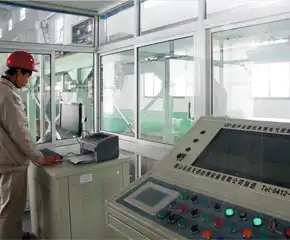
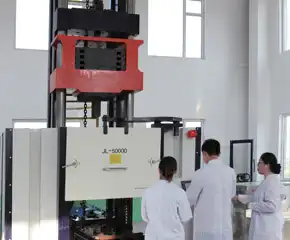
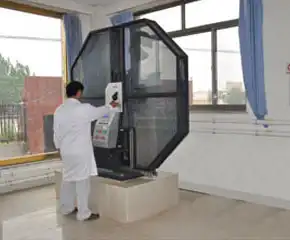
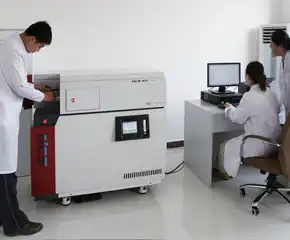
BBN Steel has established a complete set of production and supplier management system processes to ensure the improvement of product quality and better service to users.
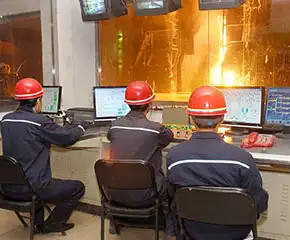
BBN Steel has established a complete production quality control process to ensure every link from research and development to mass production.
Our supplier selection will consider factors such as health and safety, ethics, environmental protection, price and quality to better serve customers.
We have successively won various international authoritative certifications, GB /T19001-ISO9001: 2000 quality management system was implemented.
We provide booking space, shipping tracking service and after-sales service, we will always be first-class products and perfect pre-sale and after-sales service.
Welcome to contact us through online consulting, emails and hotline if you are interested in our company or products. Our staff will reply you within 24 hours.

Address: HIGH-TECH DEVELOPMENT ZONE, ZHENGZHOU, CHINA

Whatsapp: +8617398960706

Mail Us: sales@bebonchina.com