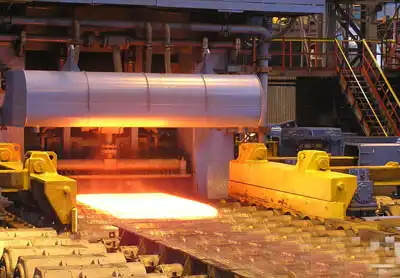
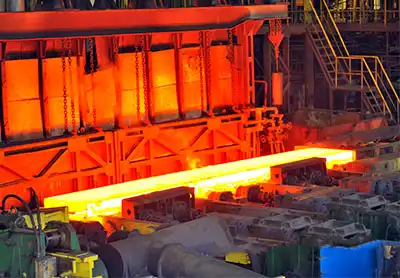
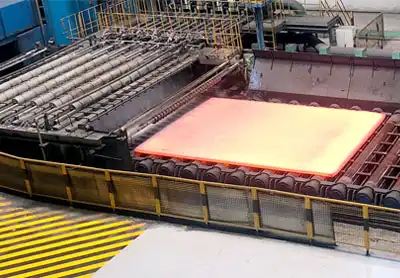
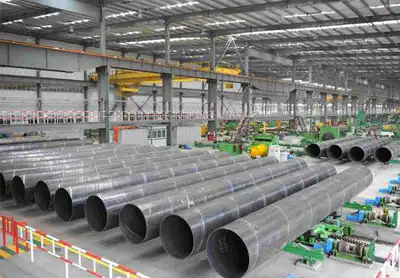
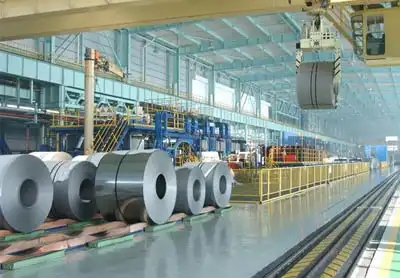
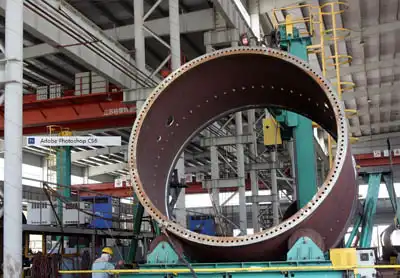
Description: BBN steel is a well-known steel manufacturer and service provider in China, DIN 17155 HI carbon alloy steel is our superior product, we are favored by customers with high quality, competitive price and excellent service
Payment Terms: L/C, T/T, D/P, Western Union, Paypal, Money Gram
DIN 17155 HI is a carbon-manganese steel for boiler and pressure-vessel service. The name tells you its job: the H marks it as a warmfest (“elevated-temperature”) quality steel in the DIN 17155 system, and I is the lower-strength of the two basic unalloyed grades (the higher one being HII). Its German material number is 1.0345. It is the general-purpose plate you reach for when a boiler shell, a pressure vessel or a heat exchanger has to carry pressure at moderately elevated temperature, where the steel keeps its strength and welds cleanly.
DIN 17155 has been withdrawn and the grade carried forward into EN 10028-2 as P235GH — identical material number 1.0345, essentially the same chemistry and strength. BBN supplies the plate (normalised) and cuts and processes it for boiler and pressure-equipment fabrication; most new enquiries now reference P235GH, but both names reach the same heat. Note: HI is a pressure-vessel steel, not a gas-cylinder grade — portable gas cylinders use dedicated grades such as EN 10120 P245NB / P265NB.
360-480 MPaTensile Strengthmin-max band, not a single value
235 MPa minYield Strengthup to 16 mm; steps down with thickness
1.0345 / P235GHMaterial No. & EN GradeDIN 17155 carried into EN 10028-2
02Technical Specifications
What this page publishes, and what must be confirmed on the mill certificate when you enquire.
Item
Specification
Executive Standard
DIN 17155 (weldable steels for pressure vessels, elevated-temperature quality). The standard is withdrawn; the grade is now supplied to EN 10028-2 as P235GH. German material number 1.0345
Steel Grade
HI (DIN 17155); P235GH (EN 10028-2)
Steel Category
Non-alloy (carbon-manganese) boiler & pressure-vessel steel for elevated-temperature service
Product Form
Hot-rolled plate, supplied normalised; also available as sheet for forming into shells and drums
Thickness Range
Confirmed with the mill per rolling programme; the published mechanical values cover the standard thickness scope (up to 250 mm)
Width & Length
Per mill rolling programme; cut-to-length and cut-to-shape available
Carbon Equivalent (Ceq)
Low — it is a C-Mn steel, not an alloy grade; preheat is driven by thickness and welding process, not by high alloying. Confirm per WPS
MOQ
1 ton (mixed sizes negotiable)
Lead Time by Quantity
1 – 10 t: about 5 days; 10 – 50 t: about 10 days; > 50 t: negotiable
EN 10204 3.1 / 3.2; tensile, impact, UT, HIC / SSC on request
HI is a standard grade, but only its tested values are guaranteed. DIN 17155 (and the EN 10028-2 P235GH replacement) fix the chemistry limits and the tensile / yield / elongation floor. Actual heat analysis and mechanical results are recorded on the EN 10204 certificate of the lot you buy — confirm the exact figures against that document.
03How to Read the Grade
Every part of HI is a specification, not a marketing name.
Part
Meaning
H
Warmfest (“elevated-temperature”) quality steel in the DIN 17155 system — a steel qualified for pressure-bearing service at moderately elevated temperature, not a creep-resistant alloy steel
I / II
The two basic unalloyed grades of the system; I is the lower-strength of the two (HII is the higher). Higher-Mn and alloyed DIN 17155 grades continue as 17Mn4, 19Mn6, 15Mo3, 13CrMo44, 10CrMo910
1.0345
The German material number (Werkstoffnummer) — the unambiguous way to call up this exact steel in European procurement; identical for EN 10028-2 P235GH
04Equivalent Grades
Where HI sits among DIN 17155 and its modern replacement, and the grades you can switch to.
HI is the lower-strength carbon-manganese grade in the DIN 17155 family — below HII, and well below the higher-Mn or low-alloy grades (17Mn4, 19Mn6, 15Mo3, 13CrMo44). DIN 17155 has been withdrawn; the same steel is now ordered as EN 10028-2 P235GH (identical material number 1.0345). If you need more strength, step up to HII / P265GH; for hotter or thicker duty, a low-alloy grade such as 16Mo3 or 13CrMo44.
Pick the grade by the temperature and thickness your design demands. HI / P235GH is the general-purpose, lower-strength carbon-manganese boiler and pressure-vessel steel. If you need more strength, move up to the higher-strength sibling HII / P265GH or, for thicker or hotter duty, to a higher-Mn grade such as 17Mn4 / 19Mn6 or a low-alloy grade such as 16Mo3 (0.5Mo) or 13CrMo44 (1Cr-0.5Mo). Tell us the design temperature and thickness and we will point to the right grade — and remind us if you are really after a gas-cylinder grade (EN 10120 P245NB / P265NB), which HI is not.
05Chemical Composition
Ladle (cast) analysis limits in weight percent, per DIN 17155 HI (the same grade is carried into EN 10028-2 P235GH with a slightly wider Mn range). Product-analysis tolerances apply when ordered.
Element
Limit (% by mass)
C
≤ 0.16
Si
≤ 0.35
Mn
0.40 – 1.20
P
≤ 0.025
S
≤ 0.015
N
≤ 0.012
Al
≥ 0.02 (total, grain-refining)
Cr
≤ 0.30
Cu
≤ 0.30
Mo
≤ 0.08
Ni
≤ 0.30
Nb
≤ 0.02
Ti
≤ 0.03
V
≤ 0.02
This page publishes the standard DIN 17155 HI chemistry. The grade is a plain carbon-manganese steel — no chromium, molybdenum or nickel alloying is required (only residual limits). The EN 10028-2 P235GH replacement keeps the same C/Si picture, widens Mn to 0.60-1.20 and tightens P to ≤0.025 / S to ≤0.010; the limits above are the DIN 17155 HI values, and your certificate shows what the heat actually made.
06Mechanical Properties
Minimum room-temperature values in the normalised condition, read against nominal thickness. Every figure is a floor the heat is tested against — not a prediction of your certificate.
Thickness (mm)
Yield ReH min (MPa)
Tensile Rm (MPa)
Elongation A min (%)
≤ 16
235
360 – 480
24
16 < t ≤ 40
225
360 – 480
24
40 < t ≤ 60
215
360 – 480
24
60 < t ≤ 100
200
360 – 480
24
100 < t ≤ 150
185
350 – 480
24
150 < t ≤ 250
170
350 – 480
24
Charpy V-notch impact (where specified): −20 °C ≥ 27 J, 0 °C ≥ 34 J, +20 °C ≥ 40 J.
Important correction against the old listing. The supplier page titled “DIN 17155 HI” actually published the HII grade’s data: its mechanical table is literally headed HII, with a yield of 265/255/245/215/200/185 MPa and a tensile of 410–530 MPa, and its chemical row shows C 0.20 / Mn 0.50–1.40 — those are P265GH / HII numbers, not HI’s. HI is the lower-strength grade: yield 235/225/215/200/185/170 MPa and tensile 360–480 MPa (350–480 above 100 mm), with C ≤ 0.16 and Mn 0.40–1.20. The values above are the corrected HI data; please do not order against the old page’s mis-labelled table.
07Heat Treatment & Delivery Condition
The condition is what makes the steel fine-grained and weldable — normalised.
Item
Requirement
Remarks
Delivery Condition
Normalised (N)
DIN 17155 HI / EN 10028-2 P235GH are supplied normalised; the normalising refines the grain so the plate welds cleanly and keeps its toughness
Steelmaking
KilledFine-grain practice
Aluminium grain-refined (Al total ≥ 0.02 %); low residual S and controlled inclusions
Hot forming
Within 850 – 1100 °C
Heavy hot forming (rolling a shell, pressing a head) can coarsen the grain; re-normalising or normalising + stress-relieving restores the condition
Welding preparation
Preheat as required
A low-carbon C-Mn steel; preheat driven by thickness and process, PWHT / stress relief as the code requires
The condition has to survive fabrication. Normalised plate keeps its properties through normal cutting and welding, but heavy hot forming or a stress-relief cycle moves those properties. Where the part will be hot formed or stress relieved, test coupons go through a simulated post-weld heat-treatment (PWHT) cycle and are tested afterwards, so the certificate reflects the condition the component will actually be in. Say at enquiry stage whether the plate will be hot formed or PWHT-treated — it changes what we have to certify.
08What This Steel Has to Prove
Six items come up again and again on a boiler / pressure-vessel enquiry. None is automatic — each has to be named on the order.
UTinternal soundness
Ultrasonic examination
Pressure-bearing plate is examined ultrasonically to EN 10160 (or EN 10228 / customer spec) so the full section is sound. It is the line most often left off an enquiry and the one that matters most once the part is welded into a seam that cannot be repaired from inside.
HTat temperature
Elevated-temperature property
HI is a warmfest (elevated-temperature) grade; for elevated-temperature design the property at temperature is what the vessel is built on. State the design temperature so the right band and any temperature-dependent acceptance are applied.
HIC/SSCsour service
Hydrogen-induced / sulphide-stress cracking
Although HI is a C-Mn grade (not low-alloy), it is regularly specified for wet-H2S / sour refinery and petrochemical service, where HIC and SSC testing to NACE MR0175 / ISO 15156 or NACE MR0103 is added on top of controlled cleanliness. This has to be raised at enquiry: it changes the steel route as well as the testing.
PWHTafter heat treatment
Simulated post-weld heat treatment
Pressure parts are almost always welded and then stress relieved, and the properties have to survive that. Coupons are put through a simulated PWHT cycle and tested afterwards, so the certificate shows the condition the part will actually see rather than the as-delivered one.
CVNtoughness
Charpy V-notch impact
HI / P235GH is a strength grade; impact testing is not a default requirement and must be specified by the order (temperature and acceptance value). It is commonly added for low-temperature start-up or storage and for sour-service qualifications.
3.2documentation
Traceability and EN 10204 certification
Standard supply is a mill test certificate to EN 10204 type 3.1 giving heat number, chemical analysis and mechanical results for the actual heat delivered, with the plate marked so it can be traced through fabrication. Where the project asks for independent verification, type 3.2 with third-party witness — SGS, BV, Lloyd’s, DNV or your own inspector — is arranged with the order.
None of this turns the page into a code book. Which of these tests applies, at what acceptance level and at what sampling frequency, is set by your purchase specification and the code you build to — not by us, and not by the tables above.
09Typical Applications
Where a carbon-manganese boiler and pressure-vessel steel carries the load.
Boiler Shells & Drums
Shell courses, drums and headers for utility and industrial boilers operating at elevated temperature — the original DIN 17155 application for this grade.
Pressure Vessels
Reactors, separators and process columns in high-pressure, elevated-temperature or sour service, built to a pressure-equipment code.
Heat Exchangers
Shells and channels for elevated-temperature heat transfer, where the C-Mn chemistry keeps its strength and weldability.
Storage Tanks
Pressure storage for gases and liquids where a fine-grain normalised C-Mn plate gives clean welding and reliable service.
Petrochemical Plant
Process equipment, separators and piping in oil, gas, chemical and power generation where moderate temperature and sour-service options matter.
Selection advice: choose HI / P235GH when the design is a general-purpose boiler or pressure vessel at moderately elevated temperature and a lower-strength carbon-manganese steel is enough. If you need more strength, step up to the higher-strength sibling HII / P265GH; if the duty is thicker or hotter, use 17Mn4 / 19Mn6 or a low-alloy grade such as 16Mo3 or 13CrMo44; if you actually need a portable gas cylinder, that is a different family (EN 10120 P245NB / P265NB) — tell us the application and we will steer you to the right grade.
10Processing, Testing & Supply
From plate to a cut, certified, ready-to-fit pressure part.
1
Cutting & Edge Prep
Flame, plasma or laser cutting to drawing or a nesting layout, with weld-edge bevels prepared to the joint detail you are fabricating.
2
Forming
Rolling to shell-course or drum radius and press forming of head blanks, cold where the thickness allows; heavy hot forming followed by re-normalising or normalising + stress-relieving to restore the condition.
3
Heat-Treatment Verification
Simulated PWHT and (where ordered) impact coupons tested, so the certificate reflects the post-fabrication condition, not just the as-delivered one.
4
Inspection & Certified Delivery
UT, impact where required, HIC / SSC testing for sour service, and surface inspection; EN 10204 3.1 with heat-number traceability, 3.2 or third-party witness arranged on request.
Quote checklist — faster if you send: the standard and edition (DIN 17155 HI or EN 10028-2 P235GH), the material number (1.0345), thickness, width and length, quantity, the design temperature, any sour-service / HIC requirement, the certification type, and the destination port.
11Frequently Asked Questions
Q1What does DIN 17155 HI actually mean?
HI is a carbon-manganese steel for boiler and pressure-vessel service. The H marks it as a warmfest (elevated-temperature) quality in the DIN 17155 system, and I is the lower-strength of the two basic unalloyed grades (the other being HII). Its German material number is 1.0345, and the same grade is carried forward into EN 10028-2 as P235GH.
Q2Is HI the same as P235GH?
Effectively yes for procurement. HI is the old DIN 17155 designation and P235GH is the current EN 10028-2 designation for the identical steel, both carrying material number 1.0345 and essentially the same chemistry and strength floor (P235GH widens Mn to 0.60-1.20 and tightens S to ≤0.010). DIN 17155 has been withdrawn, so most new enquiries reference P235GH; both names reach the same heat.
Q3What is HI equivalent to in JIS / ASTM?
The Japanese equivalent is JIS G3103 SB410 (also JIS G3115 SPV235). In the US system the nearest grade is ASTM A516 Grade 55 (and ASME SA516 Gr. 55; A516 Grade 60 is closer to the higher-strength HII / P265GH). Other historical cross-references include BS 1501 161/164 Gr. 400 and NF A36-205 A37. Equivalence is for procurement mapping only — confirm the actual strength and toughness values against your code.
Q4Can HI be welded?
Yes — it is a readily weldable carbon-manganese steel. Because it is low-carbon and fine-grain (aluminium-refined), normal preheat for the thickness and a qualified WPS with low-hydrogen consumables are usually enough; post-weld heat treatment (PWHT) / stress relief is applied as the fabrication code requires. Agree the preheat and PWHT with whoever is responsible for the component.
Q5What thickness, how fast, what paperwork?
From 1 ton, with typical lead times of about 5 days for 1–10 t, about 10 days for 10–50 t and negotiable above 50 t. Each heat ships with an EN 10204 3.1 mill test certificate carrying ladle analysis and mechanical results; 3.2 or third-party inspection can be arranged on request.
Q6The old page showed 265 MPa yield and 410-530 MPa tensile — is that HI?
No — that was a mis-labelled listing. The page titled “DIN 17155 HI” actually published the HII grade’s numbers (its mechanical table is literally headed HII, with yield 265/255/245/215/200/185 MPa and tensile 410–530 MPa, and C 0.20 / Mn 0.50–1.40). HI is the lower-strength grade: yield 235/225/215/200/185/170 MPa and tensile 360–480 MPa, with C ≤ 0.16 and Mn 0.40–1.20. This page publishes the corrected HI data and carries the material number 1.0345 and the DIN 17155 → EN 10028-2 P235GH replacement, none of which the old listing stated.
Sources and limits: the figures on this page are reference information drawn from DIN 17155 (HI, material no. 1.0345) and the EN 10028-2 replacement P235GH, and published steel data sheets. HI / P235GH is a carbon-manganese boiler and pressure-vessel steel; the chemistry limits and the tensile/yield/elongation floor are the standard requirements, while actual heat values are recorded on the EN 10204 certificate of the lot supplied. The old BBN listing of this grade was mis-labelled — it showed the higher-strength HII grade’s chemistry and mechanical values (yield 265/255/245/215/200/185 MPa, tensile 410–530 MPa) under the HI title — and omitted the material number and the DIN 17155 → EN 10028-2 replacement; we have corrected those against the standard. BBN supplies, cuts and processes the plate.
Get Your DIN 17155 HI / P235GH Quotation Now
Send us your standard and edition (DIN 17155 HI or EN 10028-2 P235GH), material number (1.0345), thickness, width and length, quantity, design temperature and any sour-service / HIC requirement. We will reply with what the mill can roll and certify at that thickness, plate or cut-length options, mill price and production lead time — and tell you plainly if you need the higher-strength sibling (HII / P265GH) or a hotter-duty grade (17Mn4, 16Mo3, 13CrMo44), or if you actually need a gas-cylinder grade (EN 10120 P245NB / P265NB).
BBN Steel has established a complete set of production and supplier management system processes to ensure the improvement of product quality and better service to users.
Production Control
BBN Steel has established a complete production quality control process to ensure every link from research and development to mass production.
Supplier management
Our supplier selection will consider factors such as health and safety, ethics, environmental protection, price and quality to better serve customers.
Certification & Patent
We have successively won various international authoritative certifications, GB /T19001-ISO9001: 2000 quality management system was implemented.
After sales service
We provide booking space, shipping tracking service and after-sales service, we will always be first-class products and perfect pre-sale and after-sales service.
Get in Touch
Welcome to contact us through online consulting, emails and hotline if you are interested in our company or products. Our staff will reply you within 24 hours.
Address: HIGH-TECH DEVELOPMENT ZONE, ZHENGZHOU, CHINA