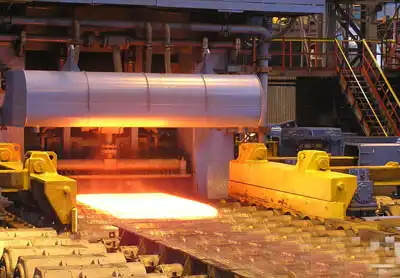
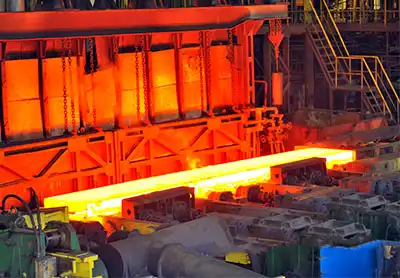
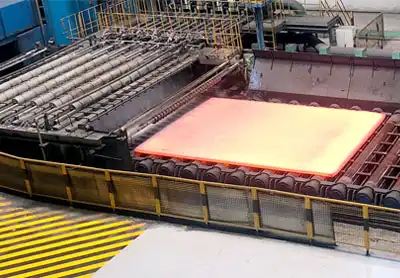
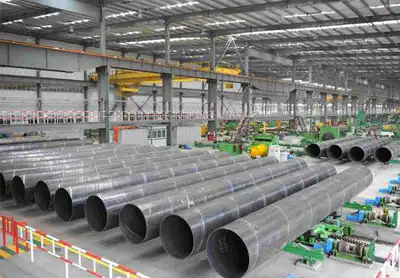
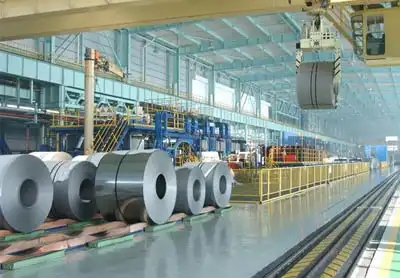
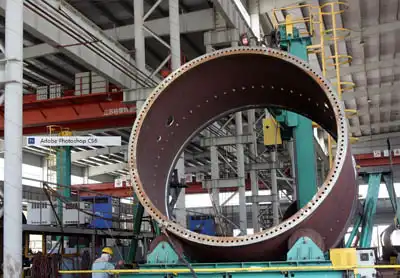
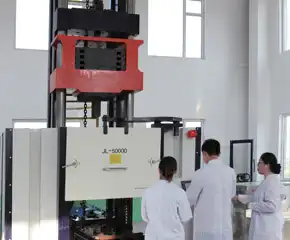
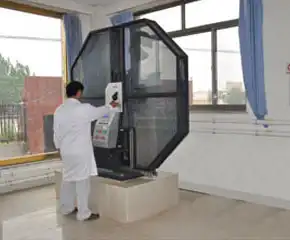
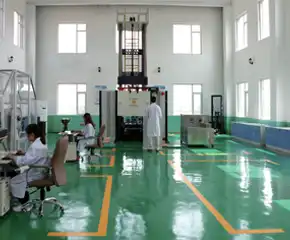
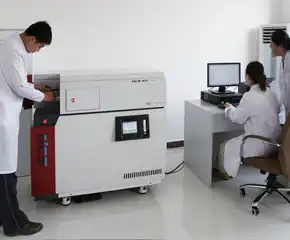
Description: BBN steel is a well-known steel manufacturer and service provider in China, Boiler and Pressure vessel steel plate is our superior product, we are favored by customers with high quality, competitive price and excellent service
Payment Terms: L/C, T/T, D/P, Western Union, Paypal, Money Gram
Boiler and pressure vessel steel plate is the plate that gets rolled into a shell course, pressed into a head and welded into equipment expected to hold pressure for decades — boilers, steam drums, reactors, separators, towers, heat exchangers, storage spheres and columns. What is bought with it is not simply a strength number: it is through-thickness soundness, toughness at the temperature the equipment really sees, and a certificate that can be stamped into a vessel nameplate.
The working window quoted for this category is unusually wide — generally −20 °C to +500 °C, with individual grades taken to 560 °C — and no single grade covers it. Carbon and carbon-manganese steel carries most of the tonnage at modest temperature; micro-alloyed fine-grain steel raises the ceiling without losing weldability; chromium-molybdenum grades take over where creep governs; nickel-bearing and low-temperature fine-grain grades hold the cold end. Sections 03 and 04 set out which families those are, section 05 spells out what each grade number actually measures, and section 09 covers what we can do with the plate once the grade is settled.
131Grade designations24 linked grade pages
24Standard familiesASTM · EN · JIS · GB · DIN
3–150 mmThickness range1220–4200 × 5000–18000 mm
−20 to 500 °CWorking temperature bandindividual grades to 560 °C
The number in the grade does not measure the same thing twice. In ASTM A285, A515 and A516 the number is the minimum tensile strength in ksi: A516 Grade 70 carries 70 ksi of tensile — about 485 MPa — but only around 260 MPa of yield. In EN 10028 (P235GH, P265GH, P355GH), GB 713 (Q245R, Q345R) and JIS G3115 (SPV235 to SPV490) the number is the minimum yield strength instead, while in JIS G3103 SB410 to SB480 it is tensile again. Treating a 355 in one system as a 355 in another is the most expensive mistake made with this category, and section 05 sets out family by family which is which.
02Thickness, Width, Length & Processing
Heavy, wide plate supplied in cut lengths rather than coil. Every dimension below is what this category is normally called for in; what can actually be rolled at your gauge is confirmed against the rolling programme when you enquire.
Product Form
Item
Range / Standard Specification
Remarks
Boiler and Pressure Vessel Steel Plate
Thickness
3–150 mm
Mechanical values step with thickness, so quote the actual plate thickness rather than a nominal one
Width
1220–4200 mm
Maximum width moves with thickness and with the alloy content of the grade
Length
5000–18000 mm
Cut lengths set to suit shell development or head blank
Product Form
Plate
Delivered as-rolled, normalized, quenched & tempered or otherwise heat treated, as the grade family and thickness require
Processing Service
Cutting · bevelling · rolling to radius · drilling · heat treatment
Flame, plasma or laser cutting to drawing, weld-edge preparation, rolling to shell course radius, and furnace treatment
Two limits worth knowing before you fix the bill of quantities. First, not every thickness is available in every width and length combination — the mill works to a rolling programme, and very wide plate at high thickness is the combination most often unavailable. Second, the delivery condition is not a free choice: carbon-manganese families normally normalize above a certain thickness, Cr-Mo grades are quenched and tempered, and the EN 10028 part a grade belongs to fixes its route. The condition shows on the mill test certificate for the heat you receive, so state the condition you need with the enquiry.
03The Steel Families Inside This Category
The list on this page covers five different kinds of steel, because “pressure vessel plate” spans every operating condition from a chilled gas separator to a superheater outlet header. The families below are how the range divides in practice.
1
Carbon & carbon-manganese steel
The largest tonnage by far, and the right answer whenever neither the temperature nor the strength demand anything exotic — A285 Grade C, A515 and A516 Grade 55 to 70, P235GH, P265GH, Q245R, SB410 and SPV235. In older Chinese practice these were the grades written A3R and 16MnR; they weld cleanly, cost least and carry the bulk of general vessel work.
2
Micro-alloyed fine-grain steel
Where a higher strength level is wanted without paying for alloy: niobium, vanadium or titanium microalloying plus normalizing or controlled rolling gives P295GH, P355GH, the EN 10028-3 P…N / P…NH family, GB 713 Q345R and Q370R, JIS SPV355 and SB480, and ASTM A299 and A662. Fine-grain practice is also what buys impact toughness at low temperature in the same grades.
3
Chromium-molybdenum steel for elevated temperature
Once the metal temperature runs high enough for creep to govern the design rather than short-time strength, this family takes over: 16Mo3 and 15Mo3, 13CrMo4-5 (13CrMo44) and 10CrMo9-10 (10CrMo910) in the EN system, ASTM A204 Grade A to C and A387 Grade 5, 11, 12 and 22, and GB 713 15CrMoR, 14Cr1MoR, 12Cr1MoVR, 12Cr2Mo1R, 13MnNiMoR and 18MnMoNbR. These are bought heat treated rather than as rolled.
4
Low-temperature steel
Below the −20 °C floor of ordinary vessel plate, toughness rather than strength decides the grade: the nickel-bearing ASTM A203 series Grade A to F, the EN 10028-3 low-temperature suffixes P275NL1 / NL2 and P355NL1 / NL2, and GB 3531 16MnDR, 15MnNiDR and 09MnNiDR. Impact testing at the specified temperature is part of the base requirement here, not an extra.
5
Quenched & tempered high-strength steel
Where the design wants its strength concentrated into a thinner wall — thick-wall reactors, high-pressure accumulators, transport tanks: A517 Grade A to S, A533, A537 Class 2 and 3, the TMCP A841 series, and the EN 10028-6 P355Q to P690Q family. Strength is bought out of heat treatment, which means tighter control of both welding procedure and post-weld heat treatment.
Older designation still found on drawings
Family
Where it stands in the current specifications
16MnR
Carbon-manganese
Superseded outright by Q345R when GB 713-2008 merged the old GB 713 boiler plate list with GB 6654 vessel plate; 16MnG and 19MnG went the same way into Q345R, and 20R / 20G into Q245R
A3R
Carbon
An obsolete writing, not carried in any current standard. Carbon vessel plate today is specified as Q245R; confirm it against your own drawing rather than adopting it on our say-so
18MnMoNb
Low-alloy, elevated temperature
Still current in its own right as GB 713 18MnMoNbR, alongside 13MnNiMoR and 14Cr1MoR for thick high-temperature shells
15MnVN
Micro-alloyed high strength
An older vanadium-nitrogen micro-alloyed writing, superseded in the same GB 713 revision that turned 15MnNbR into Q370R. The nearest strength level in today’s list is therefore the Q370R band
14CrMnMoVB
Low-alloy high strength
Older Cr-Mn-Mo-V writing; the current role is taken by the manganese-nickel-molybdenum grades — 13MnNiMoR in GB 713 and its EN and ASTM equivalents
06MnNb, 20Ni410Ni9
Low temperature
Older low-temperature and nickel-bearing writings. Today that duty belongs to GB 3531 16MnDR, 15MnNiDR and 09MnNiDR, and to the nickel low-temperature families of EN 10028-4
Treat the table above as a reading aid, not a substitution. These pairings are how the older names are mapped in everyday Chinese trade practice, and GB 713 has been revised more than once since the lineage began — the current issue of the standard is split, with GB/T 713 carrying the boiler and pressure vessel requirements. A legacy designation on a drawing has to be reconciled against the edition you are building to and signed off by whoever is responsible for the vessel; we will quote either the old name or the modern one, but we will not quietly swap one for the other.
04Available Grades & Standards
131 designations across 24 specifications, from ASTM A202 through DIN 17155. Click any linked grade to open its own page with composition, mechanical properties and supply detail.
Note the overlaps before you order. Several of these families are historical alternatives to one another rather than parallel lines: DIN 17155 was superseded by DIN EN 10028-2 in 1993, so 17Mn4 and P295GH, or HII and P265GH, are successive names for broadly the same position in the range. Likewise 16Mo3 answers to A204 Grade A to C, 13CrMo4-5 to A387 Grade 12 and 10CrMo9-10 to A387 Grade 22. This means the same plate can legitimately be offered under several designations — which is exactly why you should quote the standard with its edition together with the grade, and never the grade alone.
05What the Grade Numbers Mean
Five standard systems, five different ways of building a designation, and two different properties hiding behind the number. Read this chapter before you cross one specification against another.
1
ASTM A… / ASME SA… with a Grade suffix
The A number identifies the specification, not a property, so A515, A516 and A387 tell you nothing about strength on their own. Inside the carbon families A285, A515 and A516 the grade number is the minimum tensile strength in ksi — A516 Grade 70 = 70 ksi tensile, around 485 MPa, with roughly 260 MPa yield. In the alloy families the suffix means something else: A203 Grade A to F separate by nickel level, A387 Grade 5 / 11 / 12 / 22 name the nominal chromium-molybdenum content, their Class 1 and Class 2 switch heat treatment and strength level, and A537 Class 1 to 3 step from normalized up through quenched and tempered. SA is the same material listed in ASME Section II Part A for code construction; if the vessel is stamped to Section VIII, ask for the SA form.
2
EN 10028 — P, then a number, then the suffix letters
P for pressure purposes, the number is the minimum yield strength in MPa for thin product — P265GH clears 265 MPa — and thereafter each letter carries its own instruction: G that a further characteristic follows, H for verified elevated-temperature properties, N for normalized or normalizing-rolled, M for thermomechanically rolled, Q for quenched and tempered, and L1 / L2 for progressively lower specified impact-test temperatures. The part number tells you the family: part 2 non-alloy and alloy with elevated-temperature properties, part 3 normalized weldable fine grain, part 5 thermomechanically rolled, part 6 quenched and tempered.
3
JIS G3115 SPV and JIS G3103 SB
Two Japanese families pointing in different directions. In G3115 SPV235 to SPV490 the number is the specified minimum yield strength in MPa. In G3103 the prefix SB means steel for boiler use and the number is the minimum tensile strength — SB410 clears 410 MPa tensile — with a trailing M marking the molybdenum-alloyed variants SB450M and SB480M, which are the ones used where elevated-temperature strength matters. SB410, SB450 and SB480 therefore rank by tensile strength, not yield.
4
GB 713 and GB 3531
Q is the first letter of the word for yield, the number is the minimum yield strength in MPa, and R is the first letter of the word for vessel: Q245R is a 245 MPa carbon vessel plate and Q345R a 345 MPa one. The alloy members drop the Q prefix and write their chemistry instead — 15CrMoR, 14Cr1MoR, 12Cr1MoVR, 12Cr2Mo1R, 13MnNiMoR, 18MnMoNbR. In GB 3531 the trailing D marks low-temperature duty: 16MnDR, 15MnNiDR and 09MnNiDR.
5
DIN 17155 — superseded by EN 10028-2
The old German boiler plate specification was formally superseded when DIN EN 10028 Parts 1 and 2 replaced the October 1983 edition of DIN 17155. It is still named on drawings and still stocked, so here is the official correspondence given in the EN document itself. If your drawing still carries the DIN name, order it alongside its EN successor so there is no ambiguity about what will be certified.
DIN 17155 grade
EN 10028-2 successor
Material number
Family
HI
P235GH
1.0345
Non-alloy carbon
HII
P265GH
1.0425
Non-alloy carbon
17Mn4
P295GH
1.0481
Carbon-manganese
19Mn6
P355GH
1.0473
Carbon-manganese
15Mo3
16Mo3
1.5415
Molybdenum alloy
13CrMo44
13CrMo4-5
1.7335
Chromium-molybdenum
10CrMo910
10CrMo9-10
1.7380
Chromium-molybdenum
The one-line summary. Numbers in A285 / A515 / A516 and in JIS G3103 SB mean minimum tensile strength; numbers in EN 10028 P…, GB 713 Q…R and JIS G3115 SPV… mean minimum yield strength. A grade number by itself is never enough — quote the standard with its edition, the full grade including any class, type or heat-treatment suffix, and whether you are building to the ASTM or the ASME listing.
06Minimum Mechanical Properties
A selection of the figures these families have to clear as their standard minimum, taken from published standard data. They are the floor a heat is tested against — not a prediction of what your certificate will show, and not the allowable stress your vessel code permits.
Standard
Grade
Yield min (MPa)
Tensile (MPa)
Basis
ASTM A285/A285M
Grade C
205
380–515
Low and intermediate tensile carbon steel plate, thickness-limited to 50 mm by the specification itself
ASTM A516/A516M
Grade 70
260
485–620
The most widely used fine-grain C-Mn-Si vessel plate; note how far below its tensile figure the yield requirement sits
ASTM A515/A515M
Grade 70
260
485–620
Coarse-grain C-Si sister to A516, intended for intermediate and higher-temperature service
Standard
Grade
Yield min (MPa)
Tensile (MPa)
Basis
EN 10028-2
P235GH
235
360–480
Minimum yield for product up to 16 mm thick; the guarantee steps down as thickness rises, which is the whole point of the EN thickness tables
EN 10028-2
P265GH
265
410–530
EN 10028-2
P355GH
355
510–650
Standard
Grade
Yield min (MPa)
Tensile (MPa)
Elongation min (%)
JIS G3103
SB410
225
410–550
21
JIS G3103
SB450
245
450–590
19
JIS G3103
SB450M
255
450–590
19
JIS G3103
SB480
265
480–620
17
JIS G3103
SB480M
275
480–620
17
Two caution signs. These are standard minimum values that vary with product thickness and with the edition you are buying to, and the mill test certificate issued for your heat is the authoritative document. The second point is the one that catches people out: the figures above are not design allowables. What a vessel may be worked at comes from the applicable code — ASME Section II Part D, EN 13445 or GB/T 150 — after applying the code factors to elevated-temperature properties that are separately tested. Ask us for the elevated-temperature tables for a grade rather than deriving them from room-temperature figures.
07What Vessel Plate Has to Prove
This is where a boiler plate enquiry parts company with an ordinary structural steel order. Below are the six things a plate specification normally has to answer before it is accepted into a coded vessel.
UTinternal soundness
Ultrasonic examination
A shell plate has to be free of lamination and internal tearing through its full thickness, so ultrasonic examination — commonly to ASTM A435 or A578, or EN 10160 — is ordered as standard rather than as an exception. This is the single most frequently omitted line on an enquiry, and the one that matters most once the plate is welded into a seam that cannot be repaired from inside.
CVNtoughness at service temperature
Charpy V-notch impact testing
The test temperature is set by the lowest metal temperature the equipment will see, not by a default. It is why the low-temperature families exist: GB 3531 grades such as 16MnDR, 15MnNiDR and 09MnNiDR, the EN 10028-3 NL1 / NL2 suffixes, and the nickel-bearing A203 series all carry impact energy guarantees at temperatures well below the −20 °C floor of ordinary carbon-manganese plate.
PWHTafter heat treatment
Simulated post-weld heat treatment
Most vessel plate is welded and then stress relieved, formed hot, or both — and the mechanical properties have to survive it. Test coupons are therefore put through a simulated PWHT cycle and tested afterwards. This is mandatory territory for the Cr-Mo families: 15CrMoR, 14Cr1MoR, 12Cr2Mo1R, A387 Grade 11 and 22, 13CrMo4-5 and 10CrMo9-10.
Zthrough-thickness
Short-transverse reduction of area
Highly restrained joints — nozzle-to-shell connections, heavy-walled branches and large attachments — can tear the plate in the through-thickness direction, pulling it apart lamellar-fashion. Where the design has that kind of restraint, Z15, Z25 or Z35 through-thickness properties are called up, and they come out of steelmaking cleanliness and low sulphur rather than out of heat treatment.
HICsour service
Hydrogen-induced cracking resistance
In wet H₂S service — refinery separators, amine contactors, sour gas plant — plate is ordered with HIC and sulphide stress cracking testing to NACE MR0175 / ISO 15156 or NACE MR0103, on top of reduced sulphur and controlled inclusion shape. Say this at enquiry stage: it changes both the steel route and what can be certified.
3.2documentation
Traceability and EN 10204 certification
Standard supply is a mill test certificate to EN 10204 type 3.1 giving heat number, chemical analysis, tensile and impact results for the actual heat delivered, with the plate individually marked so it can be traced back through fabrication. Where the project asks for independent verification, type 3.2 with third-party inspection witness — SGS, BV, Lloyd’s, DNV or your own inspector — is arranged with the order.
One caveat worth repeating: nothing above turns this page into a code book. Which of these tests applies, at what acceptance level and to which sampling frequency, is set by the purchase specification and the vessel code you build to — not by us, and not by the grade table in section 04.
08Where These Plates End Up
The main applications behind this category — petroleum, chemical and gas process plant together with power generation. In practice the tonnage splits along these five lines.
Boilers, Steam Drums & Headers
Steam drums, boiler shells, headers and superheater components in power plant and industrial boiler houses — the original duty behind this whole category, and the reason the EN 10028-2 and DIN 17155 grade lists exist at all.
Petroleum & Petrochemical Process Plant
Reactors, separators, scrubbers, towers, desulphurisers, coke drums and converters in refineries and petrochemical complexes — where hot wall operation plus internal corrosion allowance pushes the specification towards the Cr-Mo families of section 03.
Chemical & Fertiliser Equipment
Heat exchangers, distillation columns, urea and ammonia plant vessels, synthesis loop equipment and process columns. Designs here are usually code-stamped, so the certification route in section 07 matters as much as the strength figures.
LPG Spheres & Low-Temperature Tanks
LPG storage spheres, gas holders, low-temperature separator and storage tanks, transport tankers and cryogenic-adjacent equipment. Below the −20 °C line these move onto the low-temperature families — GB 3531 16MnDR, 15MnNiDR and 09MnNiDR, and the EN 10028-3 NL1 / NL2 grades.
Sour Service & Hydrogen Equipment
Separators, absorbers, hydrogenators and hydrotreater-related vessels handling wet H₂S or high partial-pressure hydrogen, ordered with HIC and SSC testing to NACE MR0175 / ISO 15156 or MR0103 and with reduced sulphur.
A working rule for grade selection: pick the family from the metal temperature first, the grade from the load case second. Below roughly −20 °C go to the low-temperature families; from ambient up to around 425 °C carbon and carbon-manganese plate is normally the economical answer; above that, where creep begins to dictate wall thickness, go to the molybdenum and chromium-molybdenum families. Strength should then be bought as low as the design will allow, because every step up the ladder costs toughness, asks more of the welding procedure and shortens the list of mills able to certify it.
09Processing Services & Supply
Supplied as plate and prepared for a vessel fabrication shop rather than a steel erection yard.
1
Cutting & Edge Preparation
Flame, plasma or laser cutting to drawing, square or to a nesting layout, with weld-edge preparation bevelled to the joint detail you are fabricating. Column pipe and shell developments are cut so that rolling direction sits correctly in the finished shell.
2
Forming: Rolling & Pressing
Rolling to shell course radius and press forming of head blanks, cold where the thickness and grade allow and hot where they do not. Hot forming is carried out within the temperature window the grade permits and followed by the heat treatment that restores the properties.
3
Heat Treatment
Normalizing, quenching and tempering, stress relieving and post-weld heat treatment, with test coupons put through a simulated PWHT cycle where the specification calls for it. For Cr-Mo grades this step is what delivers the properties, not a formality.
4
Inspection & Certified Delivery
Ultrasonic examination, Charpy impact testing at the specified temperature, through-thickness testing where required, and surface inspection. Mill test certificate to EN 10204 3.1 with heat-number traceability to the plate marking; 3.2 or third-party witness — SGS, BV, Lloyd’s, DNV — arranged on request.
Ordering: payment terms L/C, T/T, D/P, Western Union, Paypal and Money Gram. Indicative lead time is 5 days for 1–10 tonnes, 10 days for 10–50 tonnes and negotiable above 50 tonnes, with the actual schedule confirmed against the rolling programme and the heat treatment route for your grade. Tell us the standard with its edition plus the full grade including class or type, the thickness, width and length, the quantity, the delivery condition and heat treatment required, which of tests listed in section 07 apply and at what acceptance level, any third-party inspection and certification requirement, and the destination port.
10Frequently Asked Questions
Q1How is this different from the ordinary structural plate you also list?
It is made to be welded into equipment that holds pressure, which brings requirements a structural grade is never tested for. Internal soundness is verified ultrasonically rather than assumed; impact energy is guaranteed at the metal temperature rather than merely at a default 20 °C; carbon and sulphur are held lower so the plate does not tear in the through-thickness direction when a nozzle is welded onto it; and every plate is traceable to a heat whose mechanical results were measured after simulating the heat treatment the vessel will get. A structural plate meeting the same yield figure can pass a tensile test and still fail every one of those.
Q2I need A516 Grade 70 — can I use Q345R or P355GH instead?
The three are commonly paired in cross-reference tables and sit at similar strength, but they belong to different specifications, and that matters for a coded vessel. The tensile and yield requirements differ, the chemistry limits differ, thickness ranges differ, and each of them reaches a given toughness level by a different combination of fine grain practice and heat treatment. Substituting one for another changes what the nameplate can claim and what the inspector can accept. Before we quote an alternative, tell us what the vessel is being built to — ASME Section VIII, EN 13445 or GB/T 150 — and let the responsible engineer sign off the substitution.
Q3Does the number in the grade mean the same thing everywhere?
No, and this trips up more enquiries than anything else on this page. In ASTM A285, A515 and A516 the grade number is the minimum tensile strength in ksi; A516 Grade 70 carries 70 ksi of tensile — around 485 MPa — against roughly 260 MPa of yield, so it has very little in common with a 690 MPa yield grade even though the two figures look comparable to anyone skimming a table. In EN 10028 P…, GB 713 Q…R and JIS G3115 SPV… the number is the minimum yield strength instead, while JIS G3103 SB410 to SB480 go back to tensile. Section 05 sets out the reading rules family by family and section 06 lists the figures side by side.
Q4My drawing still says DIN 17155 HII or 17Mn4. Can you still supply that?
The steel can be supplied, but the specification has been superseded: DIN 17155 was replaced by DIN EN 10028 Parts 1 and 2, so HII is now written P265GH and 17Mn4 P295GH, with 15Mo3 becoming 16Mo3 and 13CrMo44 becoming 13CrMo4-5. Section 05 gives the full correspondence. Our advice is to order the modern designation and carry the old name alongside it as a note — that way there is no argument later about which edition’s chemistry limits and testing regime you were actually buying.
Q5When do I need simulated post-weld heat treatment and through-thickness testing?
Simulated PWHT is expected whenever the vessel will be stress relieved, hot formed or normalized after welding, which in practice means almost every Cr-Mo grade — 15CrMoR, 14Cr1MoR, 12Cr2Mo1R, A387 Grade 11 and 22, 13CrMo4-5 — plus any heavy carbon-manganese shell that is going to see a furnace. Through-thickness testing belongs on restrained joints: thick nozzle-to-shell connections, reinforcement pads, highly constrained attachments, where the through-direction ductility can tear lamellar fashion. Neither is a standard extra, so specify both explicitly and name the acceptance level.
Q6What do you need in order to quote?
The standard with its edition plus the complete grade — A516 Grade 70 rather than “516 steel”, P355GH rather than “P355 vessel plate”, Q345R including whether you mean GB 713 or the current split issue of GB/T 713 — the thickness, width and length, the quantity, the delivery condition and any heat treatment, the tests from section 07 that apply with their acceptance levels, whether you need HIC resistance, third-party inspection or EN 10204 3.2 documentation, and the destination port. If you are replacing an older designation, tell us the vessel code you build to and we will quote both names so the substitution can be signed off.
Get Your Boiler & Pressure Vessel Plate Quotation
Send us your standard and grade, thickness, width and length, quantity and heat treatment requirement. We will reply with what the mill can roll and certify at that thickness, the tests and documentation available for your vessel code, plate or cut-length options, mill price and production lead time — and tell you plainly if a lower grade would let the plate be formed and welded more easily for the duty you are describing.
BBN Steel has established a complete set of production and supplier management system processes to ensure the improvement of product quality and better service to users.
Production Control
BBN Steel has established a complete production quality control process to ensure every link from research and development to mass production.
Supplier management
Our supplier selection will consider factors such as health and safety, ethics, environmental protection, price and quality to better serve customers.
Certification & Patent
We have successively won various international authoritative certifications, GB /T19001-ISO9001: 2000 quality management system was implemented.
After sales service
We provide booking space, shipping tracking service and after-sales service, we will always be first-class products and perfect pre-sale and after-sales service.
Get in Touch
Welcome to contact us through online consulting, emails and hotline if you are interested in our company or products. Our staff will reply you within 24 hours.
Address: HIGH-TECH DEVELOPMENT ZONE, ZHENGZHOU, CHINA