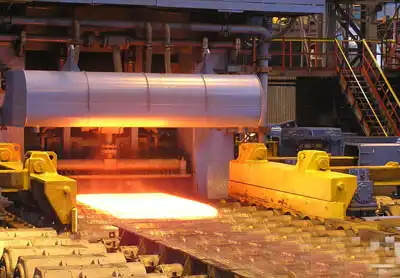
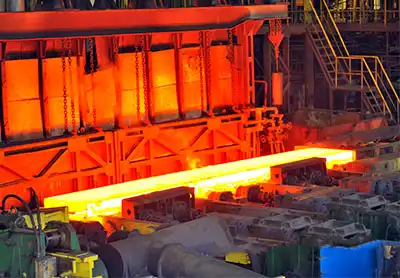
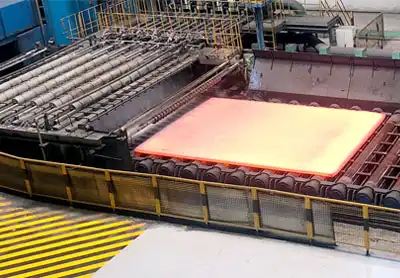
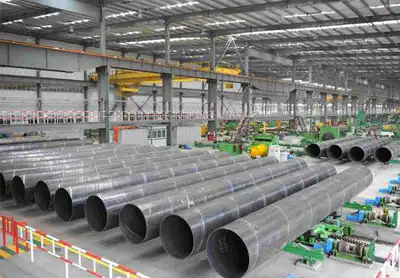
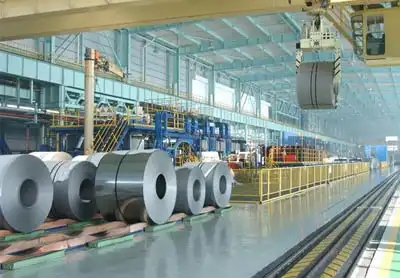
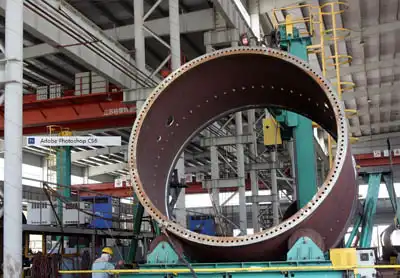
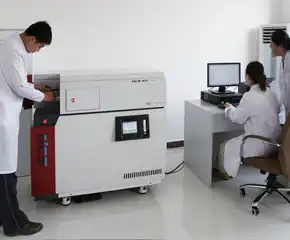
Description: BBN steel is a well-known steel manufacturer and service provider in China, ASTM A537 Class 2/CL2 steel is our superior product, we are favored by customers with high quality, competitive price and excellent service
Payment Terms: L/C, T/T, D/P, Western Union, Paypal, Money Gram
ASTM A537 Class 2 — written CL2 on drawings and enquiries — is a heat-treated carbon-manganese-silicon pressure vessel plate, supplied quenched and tempered. It is the same chemistry family as A537 Class 1 and gets its higher strength from a different thermal route: liquid quenching from the austenitizing temperature followed by high-temperature tempering, rather than normalizing. The plate is killed and made to a fine austenitic grain size, which is what lets the quenched structure stay tough instead of merely hard.
It is bought when the design wants more strength than normalized Class 1 can give, so that a shell course can be thinner, lighter and cheaper to weld: 415 MPa minimum yield up to 65 mm against Class 1’s 345 MPa, at the same 550–690 MPa tensile band. The trade is that Q&T plate is less forgiving in fabrication — the welding procedure, preheat and any subsequent post-weld heat treatment have to respect the condition the properties were produced in. Sections 04, 07 and 08 set out where that bites.
415 MPaMinimum yield, t ≤ 65 mm380 MPa at 65–100 mm · 315 MPa above 100 mm
550–690Tensile strength, MPa515–655 · 485–620 MPa by thickness band
5–150 mmSupply thickness range1000–4500 × 3000–18000 mm
Q & TDelivery conditiontempered at 595 °C minimum
The 537 in the name is not a strength number, and that is worth saying out loud. In ASTM A516 or A515 the grade number is the minimum tensile strength in ksi — A516 Grade 70 means 70 ksi of tensile, about 485 MPa, alongside only 260 MPa of yield. A537 is different: it is a specification serial number, and the strength lives entirely in the Class. So A537 Class 2 and A516 Grade 70 cannot be compared by their numbers — you have to read the yield and tensile lines, which is what section 06 does side by side with the other two classes.
02Thickness, Size & Commercial Terms
What we hold and roll for this grade, followed by the ordering terms published with it.
Product Form
Item
Range / Standard Specification
Remarks
ASTM A537 Class 2 Steel Plate
Thickness
5–150 mm
The mechanical values step down as thickness rises, so quote the actual plate thickness and not a nominal one
Width
1000–4500 mm
Maximum width moves with thickness and with what the mill can quench uniformly
Length
3000–18000 mm
Cut lengths set to suit shell development or head blank
Product Form
Plate
Supplied quenched and tempered, not as rolled; hot-rolled stock is the starting point, not the delivered condition
Processing Service
Cutting · bevelling · rolling to radius · drilling · heat treatment
Flame, plasma or laser cutting to drawing, weld-edge preparation, rolling to shell course radius, and furnace treatment
Commercial Item
Published Term
Remarks
Executive Standard
ASTM A537/A537M
ASME SA-537 is the same material under the boiler and pressure vessel code; state which one your drawing calls up
MOQ
1 PC
Single plates and small cut-length orders are accepted
Stock Status
Available
Stock is thickness-specific; confirm the gauge you need rather than assuming the whole range is held
Lead Time by Quantity
1–10 t: 5 days · 10–50 t: 10 days · >50 t: negotiable
The published quantity schedule, which assumes ex-stock or near-stock supply
Made-to-Order Lead Time
10–40 working days
Quenching and tempering is a furnace route, so a made-to-order plate carries the longer figure
Payment Terms
L/C, T/T, D/P, Western Union, Paypal, Money Gram
The product data line on this page reads T/T, L/C at sight — both are accepted, confirm which your contract requires
Certification
MTC available, third-party inspection supported
Standard supply is EN 10204 3.1; 3.2 with witness on request — see section 08
Two things to check before you fix the bill of quantities. Not every thickness is available in every width and length combination, and heavy gauge at maximum width is the pairing most often unavailable. And the two lead-time lines above measure different things: the 5 / 10 day schedule applies to what can be drawn from stock, while 10–40 working days is a made-to-order plate going through the quench and temper furnace — tell us the gauge and quantity and we will say which one your order falls under.
03Reading the Designation
Four tokens carry the whole specification. Getting them right on the enquiry is what stops a quote coming back for the wrong class.
1
A537 is a serial number, not a strength
ASTM numbers its pressure vessel specifications in sequence, so 537 tells you nothing about the properties. This is the single most common misreading of the grade, because the neighbouring specifications — A515 Grade 70, A516 Grade 70, A285 Grade C — all do put a strength figure in the name. With A537 the strength is in the class, and only there.
2
Class 2 means quenched and tempered
The class is the heat treatment, and the heat treatment is the strength. Class 1 is normalized, Class 2 and Class 3 are quenched and tempered. Ordering “A537” without the class is not an order — the three classes differ by 100 MPa or more of yield at the same thickness.
3
CL2 is shorthand for the same thing
Class 2, CL2, A537 Cl.2 and A537CL2 are four writings of one designation. Mill paperwork normally spells it out as Class 2; purchasing schedules and plate markings often abbreviate it. We quote either writing, but the certificate will carry the full form.
4
ASME SA-537 is the code designation
The identical material appears as SA-537 Class 2 in ASME Boiler and Pressure Vessel Code work, and that is the writing an inspector will expect on a code-stamped vessel. If your vessel is built to ASME Section VIII, order it as SA-537 Class 2 and say so — it changes the paperwork, not the steel.
Always quote the standard with its edition. A537/A537M has been revised more than once, and class limits, chemistry and supplementary requirements are edition-specific. “A537 CL2” on its own will get you a quotation; “A537/A537M-20 Class 2, ASME SA-537” will get you a quotation that matches what your inspector will check.
04A537 Class 1, Class 2 and Class 3 Compared
The three classes share a chemistry family and diverge on heat treatment. The figures below are the specification minimums by thickness band.
Class
Heat Treatment
Thickness
Yield min (MPa)
Tensile min (MPa)
Published Tensile Band (MPa)
Class 1
Normalized
t ≤ 65 mm
345
485
485–620
65 < t ≤ 100 mm
310
450
450–585
Maximum thickness 100 mm — Class 1 is not offered above it
Class 2 (this page)
Quenched & tempered, tempered at 595 °C minimum
t ≤ 65 mm
415
550
550–690
65 < t ≤ 100 mm
380
515
515–655
t > 100 mm
315
485
485–620
Class 3
Quenched & tempered, tempered at 620 °C minimum
t ≤ 65 mm
380
550
550–690
65 < t ≤ 100 mm
345
515
515–655
t > 100 mm
275
485
485–620
Two cautions on this table. First, the specification states minimums: the upper ends of the tensile bands come from published mill data sheets, not from the standard itself, and your certificate will show what the heat actually made. Second, and more useful: several commercial pages describe Class 3 as the strongest of the three. The ASTM A537/A537M scope table does not support that — it puts Class 3 below Class 2 on yield at every thickness band while holding the same tensile minimums, with Class 3 distinguished by its higher tempering temperature and its thicker-section uniformity. Where a Class 3 figure matters to your design, check it against the edition cited on your purchase order rather than against a supplier summary.
05Chemical Composition
Heat analysis limits in weight percent. Manganese is the one element that moves with thickness, and it moves at 40 mm.
Element
C max
Mn
P max
S max
Si
Cu max
Ni max
Cr max
Mo max
t ≤ 40 mm
t > 40 mm
A537 Class 2
0.24
0.70–1.35
1.00–1.60
0.035
0.035
0.15–0.50
0.35
0.25
0.25
0.080
Three notes on this table, one of them a correction. The chromium limit is published here as 0.25 max, which is what the specification and the mill data sheets carry; an earlier version of this page showed 0.025, which we read as a decimal error and have not reproduced. Manganese splits at 40 mm of thickness, not at a heat-treatment boundary — heavier plate needs the higher manganese to harden through its section during the quench. Copper, nickel, chromium and molybdenum sit at these ceilings as residual or optional elements rather than as deliberate additions, and phosphorus and sulphur are held to 0.035 by the specification; individual mills sometimes publish their own tighter product limits, so read the certificate for the heat you receive rather than the summary. Product analysis tolerances are governed by ASTM A20/A20M.
06Mechanical Properties
Minimum values by thickness band. Every figure here is a floor the heat is tested against — not a prediction of your certificate and not a code allowable.
Thickness
Yield min (MPa)
Tensile (MPa)
Elongation min, 200 mm gauge (%)
Elongation min, 50 mm gauge (%)
t ≤ 65 mm
415
550–690
—
22
65 < t ≤ 100 mm
380
515–655
—
22
t > 100 mm
315
485–620
—
20
Thickness
Yield min (ksi)
Tensile min (ksi)
Basis
t ≤ 65 mm
60
80
Minimums stated in the ASTM A537/A537M scope table. The two unit systems are not exact equivalents and are to be used independently
65 < t ≤ 100 mm
55
75
t > 100 mm
46
70
Why the 200 mm column is blank. Our source data table leaves the long-gauge elongation empty for all three thickness bands, and published summaries disagree on the value for Class 2, so we have not filled it in. The 50 mm gauge figures — 22 % up to 100 mm and 20 % above it — are the ones consistently published and are what we quote against. If your specification calls up the 200 mm gauge, tell us and we will confirm it against the edition on your order. Separately: none of these numbers is a design allowable. What a vessel may be worked at comes from the applicable code after the code factors are applied, and the mill test certificate for your heat is the authoritative document.
07Heat Treatment & Delivery Condition
The condition is not a free choice on this grade — Class 2 is defined by it.
Item
Requirement
Remarks
Delivery Condition
Quenched & Tempered
Plate is austenitized, liquid quenched, then tempered; it is not supplied as rolled or normalized as Class 2
Minimum Tempering Temperature
595 °C
The Class 3 requirement is higher at 620 °C, which is one of the differences between the two Q&T classes
Steelmaking
KilledFine austenitic grain size
Both are requirements carried through ASTM A20/A20M, which also governs product analysis tolerances and test sampling
Maximum Thickness
Limited by the capacity to meet the properties
The specification sets no hard ceiling; 150 mm is the commercial ceiling quoted for Class 2 and Class 3, and 100 mm for Class 1
The condition has to survive fabrication. Quenched and tempered plate has had its properties put in by a furnace cycle, and hot forming, stress relieving or post-weld heat treatment all take the plate back through a temperature range that can move those properties. Where the vessel will be hot formed or stress relieved, test coupons go through a simulated PWHT cycle and are tested afterwards, so the certificate reflects the condition the vessel will actually be in. Say at enquiry stage whether the plate will be hot formed or PWHT-treated — it changes what we have to certify.
Do not re-heat-treat Q&T plate on the basis of a carbon-steel habit. Normalizing or stress relieving at a temperature above the original temper will soften it, and the yield figure on the certificate will no longer be the figure the vessel was designed around. Any thermal cycle after delivery has to be agreed with whoever is responsible for the vessel.
08What This Plate Has to Prove
Six items come up again and again on a Class 2 enquiry. None of them is automatic — each has to be named on the order.
UTinternal soundness
Ultrasonic examination
A plate this thick and this highly stressed has to be sound through its full section, so ultrasonic examination to ASTM A435 or A578 is the norm rather than the exception. It is also the line most often left off an enquiry, and the one that matters most once the plate is welded into a seam that cannot be repaired from inside.
CVNtoughness at service temperature
Charpy V-notch impact testing
Quenching and tempering is what buys sub-zero toughness on this grade, but the energy guarantee only exists if you ask for it at a temperature. A common supplementary requirement for A537 Class 2 is 41 J at −40 °C on longitudinal specimens; other temperatures and values are ordered just as often, so state the temperature and the acceptance value.
PWHTafter heat treatment
Simulated post-weld heat treatment
Almost every Class 2 shell is welded and then stress relieved, and the properties have to survive that. Coupons are put through a simulated PWHT cycle and tested afterwards, so the certificate shows the properties in the condition the vessel will actually see rather than in the as-delivered condition.
Zthrough-thickness
Short-transverse reduction of area
Heavy nozzle-to-shell connections and large restrained attachments can tear plate in the through-thickness direction, pulling it apart lamellar-fashion. Where the design has that restraint — and thick-wall Class 2 shells frequently do — Z15, Z25 or Z35 properties are called up. They come from steelmaking cleanliness and low sulphur, not from heat treatment.
HICsour service
Hydrogen-induced cracking resistance
A537 Class 2 is regularly specified for sour service — refinery separators, amine contactors, sour gas plant — where HIC and sulphide stress cracking testing to NACE MR0175 / ISO 15156 or NACE MR0103 is added on top of reduced sulphur and controlled inclusion shape. This has to be raised at enquiry: it changes the steel route as well as the testing.
3.2documentation
Traceability and EN 10204 certification
Standard supply is a mill test certificate to EN 10204 type 3.1 giving heat number, chemical analysis and mechanical results for the actual heat delivered, with the plate marked so it can be traced through fabrication. Where the project asks for independent verification, type 3.2 with third-party witness — SGS, BV, Lloyd’s, DNV or your own inspector — is arranged with the order.
None of this turns the page into a code book. Which of these tests applies, at what acceptance level and at what sampling frequency, is set by your purchase specification and the vessel code you build to — not by us, and not by the tables above.
09Where Class 2 Gets Used
The grade is chosen where the design wants strength concentrated into a thinner wall. Five duties account for most of the tonnage.
High-Pressure Reactors & Separators
The core duty for this grade: heavy-wall reactors, separators, scrubbers and process columns in refinery and petrochemical service, where the higher yield lets wall thickness come down against normalized plate.
Boilers, Steam Drums & Headers
Steam drums, boiler shells and headers in power plant and industrial boiler houses — the service the specification was written around, and the reason the material carries an ASME SA-537 designation alongside the ASTM one.
API 650 & API 620 Storage Tanks
Large welded storage tanks built to API 650 and API 620, where the strength of a Q&T plate is used to hold shell courses down to a buildable thickness on big-diameter shells.
LPG Spheres & Pressure Storage
LPG storage spheres, pressure storage vessels, gas holders and transport tankers — duty where the combination of high yield and guaranteed sub-zero impact energy is what the design is buying.
Heat Exchangers & Process Equipment
Shells, channels and pressure-containing components of heat exchangers and process equipment, generally code-stamped, which makes the certification route in section 08 as important as the strength figures.
10Processing Services & Supply
Supplied as plate and prepared for a vessel fabrication shop rather than a structural steel yard.
1
Cutting & Edge Preparation
Flame, plasma or laser cutting to drawing, square or to a nesting layout, with weld-edge preparation bevelled to the joint detail you are fabricating. Shell developments are cut so that rolling direction sits correctly in the finished course.
2
Forming: Rolling & Pressing
Rolling to shell course radius and press forming of head blanks, cold where the thickness allows and hot where it does not. Hot forming on Q&T plate is carried out inside the temperature window the grade permits and is followed by the heat treatment that restores the properties.
3
Heat Treatment & Simulation
Quenching and tempering to the specification, plus stress relieving and post-weld heat treatment, with test coupons put through a simulated PWHT cycle where the order calls for it. On this grade that simulation is what makes the certificate meaningful.
4
Inspection & Certified Delivery
Ultrasonic examination, Charpy impact testing at the specified temperature, through-thickness testing where required, and surface inspection. Mill test certificate to EN 10204 3.1 with heat-number traceability to the plate marking; 3.2 or third-party witness — SGS, BV, Lloyd’s, DNV — arranged on request.
What to put in the enquiry. The standard with its edition and the full grade including class — ASTM A537/A537M-20 Class 2, or ASME SA-537 Class 2 for code work — the thickness, width and length, the quantity, confirmation that quenched and tempered is the required condition, which of the tests in section 08 apply and at what acceptance level, whether the plate will be hot formed or post-weld heat treated, any HIC or through-thickness requirement, the certification type, and the destination port.
11Frequently Asked Questions
Q1What actually changes between A537 Class 1 and Class 2?
Heat treatment, and through it the strength. Class 1 is normalized and stops at 345 MPa minimum yield up to 65 mm and 310 MPa above it; Class 2 is quenched and tempered and carries 415 MPa and 380 MPa at the same bands, with tensile minimums 65 MPa higher at each step. Class 1 is also limited to 100 mm thickness while Class 2 is quoted to 150 mm. The chemistry is substantially the same apart from the manganese split at 40 mm, so the difference you are paying for is the furnace route. See section 04 for the three classes side by side, and ASTM A537 Class 1 for the normalized alternative.
Q2Is A537 Class 2 simply a stronger A516 Grade 70?
It is much stronger, but not in the way that lets you swap them on a drawing. A516 Grade 70 offers around 260 MPa of yield against Class 2’s 415 MPa — the tensile figures are closer together than the yield figures, which is exactly the trap in comparing grades by their numbers. A516 is normally normalized and is the general-purpose vessel plate; Class 2 is quenched and tempered, costs more, and is chosen when the wall thickness saving or the pressure rating justifies it. They are not interchangeable under a code without the responsible engineer signing the substitution off.
Q3Can I use it for an API 650 or API 620 tank?
Yes — A537 is explicitly named for fusion welded pressure vessels and structures and is widely used for API 650 and API 620 storage tanks, particularly where a large-diameter shell benefits from the higher yield. Two things to settle first: the tank standard’s own rules on which materials it permits and at what thickness, and the impact testing requirement for your site’s lowest design metal temperature, because that is ordered as a supplementary requirement rather than supplied by default.
Q4Why is the 200 mm gauge elongation blank on your table?
Because our source data leaves it empty and the published summaries do not agree on a value for Class 2, so we have not invented one. The 50 mm gauge figures — 22 % up to 100 mm and 20 % above — are consistently published and are what we quote against. If your specification calls up the long gauge, say so with the enquiry and we will confirm the figure against the edition you are buying to rather than against a supplier summary.
Q5Do I need simulated PWHT, and can I stress relieve the plate myself?
Simulated PWHT is needed whenever the vessel will be stress relieved, hot formed or heat treated after welding — which on a Q&T vessel is most of the time — because the properties have to be demonstrated in that condition, not just as delivered. You can stress relieve the plate yourself, but only inside the temperature window the grade allows: tempering above the original temper will soften Class 2 and the yield figure the vessel was designed around will no longer hold. Agree the cycle with whoever is responsible for the vessel before the plate goes in a furnace.
Q6I have seen Class 3 described as stronger than Class 2. Which is right?
The ASTM A537/A537M scope table puts Class 3 below Class 2 on minimum yield at every thickness band — 380 against 415 MPa up to 65 mm, 345 against 380 MPa from 65 to 100 mm, 275 against 315 MPa above it — while the tensile minimums are identical. What Class 3 adds is a higher minimum tempering temperature and better through-thickness uniformity on heavy section. Several commercial pages say otherwise; where the distinction matters, go by the edition cited on your purchase order.
Send us your standard and edition, class, thickness, width and length, quantity, delivery condition and testing requirement. We will reply with what the mill can roll and certify at that thickness, the tempering and impact testing available for your design temperature, plate or cut-length options, mill price and production lead time — and tell you plainly if a normalized Class 1 or an A516 grade would let the plate be formed and welded more easily for the duty you are describing.
BBN Steel has established a complete set of production and supplier management system processes to ensure the improvement of product quality and better service to users.
Production Control
BBN Steel has established a complete production quality control process to ensure every link from research and development to mass production.
Supplier management
Our supplier selection will consider factors such as health and safety, ethics, environmental protection, price and quality to better serve customers.
Certification & Patent
We have successively won various international authoritative certifications, GB /T19001-ISO9001: 2000 quality management system was implemented.
After sales service
We provide booking space, shipping tracking service and after-sales service, we will always be first-class products and perfect pre-sale and after-sales service.
Get in Touch
Welcome to contact us through online consulting, emails and hotline if you are interested in our company or products. Our staff will reply you within 24 hours.
Address: HIGH-TECH DEVELOPMENT ZONE, ZHENGZHOU, CHINA