ASTM A516 Grade 60 steel

ASTM A516 Grade 60 steel

FOB Reference Price: Get Latest Price

Description: BBN steel is a well-known steel manufacturer and service provider in China, ASTM A516 Grade 60 steel is our superior product, we are favored by customers with high quality, competitive price and excellent service

Payment Terms: L/C, T/T, D/P, Western Union, Paypal, Money Gram

Lead Time:

Quantity(Metric Tons) 1 - 10 10 - 50 >50
Est. Time(days) 5 10 Negotiable

E-mail: sales@bebonchina.com

Whatsapp: +8617398960706

Get QuotesLeave a Message

Product Introduction

01What A516 Grade 60 Is

THE 60 IN THE NAME IS TENSILE, NOT YIELD 55 75 60 80 65 85 70 90 GRADE 60 YIELD MIN 32 ksi TENSILE BANDS IN ksi · THE DOTTED LINE IS THE YIELD FLOOR GR.60 CARRIES 60–80 ksi OF TENSILE BUT ONLY 32 ksi OF YIELD — READ THE YIELD LINE, NOT THE GRADE NUMBER

ASTM A516 Grade 60 — written A516-60 or, in the SI form of the same specification, Grade 415 — is a killed, fine-grain carbon steel plate for welded pressure vessels in moderate and lower temperature service. It sits one step below Grade 70 in the family, and that step is exactly why it is bought: lower carbon and manganese mean easier welding with less preheat, which matters more than raw strength once a joint is thick, restrained or welded on site.

Two things about the name are worth getting straight before anything else, because both are routinely misread. First, the 60 is a tensile figure, not a yield figure: Grade 60 means 60–80 ksi of tensile strength, about 415–550 MPa, while the minimum yield is only 32 ksi [220 MPa] at every thickness. Second, Grade 60 and Grade 415 are one line of the same table — ASTM A516/A516M is issued in an inch-pound form and an SI form, and this grade simply carries both names, so a certificate printed Grade 415 is not a different material. Section 05 gives the mechanical values.

220 MPaMinimum yield32 ksi · the same at every thickness
415–550Tensile strength, MPa60–80 ksi · a floor and a ceiling
Grade 415The same grade in SI writingA516 Grade 60 ≡ Grade 415
NNormalized above 40 mmas-rolled at 40 mm and under

02Thickness, Size & Commercial Terms

What we hold and roll for this grade, followed by the ordering terms published with it.

Category Item Range / Specification
ASTM A516 Grade 60 Steel Plate Thickness Confirmed per rolling programme — not published as a fixed band
Width Confirmed per rolling programme
Length Confirmed per rolling programme
Product Form Plate
Processing Service Cutting · bending · welding · precision machining · surface treatment
Commercial Terms Executive Standard ASTM A516/A516M
MOQ From 1 ton — the lowest bracket of the quantity schedule below
Stock Status Available
Lead Time by Quantity 1–10 t: 5 days · 10–50 t: 10 days · >50 t: negotiable
Delivery Time 3–7 days for stock items · 10–30 working days for custom processing
Payment Terms L/C, T/T, D/P, Western Union, Paypal, Money Gram
Certification MTC, EN 10204 3.1, third-party inspection available

03Equivalent Grades

Nearest counterparts quoted against A516 Grade 60 in the other major pressure vessel systems.

System Nearest Grade
EN 10028-2 P295GH · P265GH
DIN 17155 (superseded) HII
GB 713 Q245R
JIS SB410 (JIS G3103) · SPV235 (JIS G3115) — no page on this site
Within ASTM A516 Grade 70 · A285 Grade C · A537 Class 1

04Chemical Composition

The specification limits from ASTM A516/A516M Table 1 for Grade 60, with the thickness bands that apply to carbon.

Element Heat Analysis Limit, % Product Analysis, %
C, max 0.21 — t ≤ 12.5 mm Applies to both heat and product analyses — the carbon limit carries the same figure in each
0.23 — 12.5 < t ≤ 50 mm
0.25 — 50 < t ≤ 100 mm
0.27 — 100 < t ≤ 200 mm
0.27 — t > 200 mm
Mn, t ≤ 12.5 mm 0.60–0.90 0.55–0.98
0.85–1.20 — permitted alternative, see note 0.79–1.30 — permitted alternative, see note
Mn, t > 12.5 mm 0.85–1.20 0.79–1.30
P, max 0.035 0.035
S, max 0.035 0.035
Si 0.15–0.40 0.13–0.45
Steelmaking Killed steel, fine austenitic grain size — a requirement carried through ASTM A20/A20M, which also governs product analysis tolerances, test sampling and the residual element ceilings below

Grade 60 is the one grade in this family whose manganese runs on two tracks. Table 1 carries a footnote reading that Grade 60 plates ½ in. [12.5 mm] and under in thickness may have 0.85–1.20 % manganese on heat analysis, and 0.79–1.30 % manganese on product analysis. In practice that means light-gauge Grade 60 can arrive at the narrow low-manganese band or at the same wide band every heavier plate uses, and both are in specification. If your welding procedure was qualified against one of them, say which one the MTC has to show — it changes preheat and heat input on thin plate more than most buyers expect.

Residual / Reported Element Figure on This Page A20/A20M Residual Ceiling
Cu 0.30 0.40
Ni 0.30 0.40
Cr 0.30 0.30
Mo 0.08 0.12
Nb 0.01 0.02
V 0.02 0.03
Ti 0.03 not listed separately
Al 0.02 —

05Mechanical Properties

The specification requirements from ASTM A516/A516M Table 2 for Grade 60, in both unit systems.

Property SI [MPa / %] Inch-pound [ksi / %]
Tensile strength 415–550 60–80
Yield strength, min 220 32
Elongation in 200 mm [8 in], min 21 21
Elongation in 50 mm [2 in], min 25 25
Maximum thickness 205 mm 8 in
Charpy V-notch Not a default requirement

06Heat Treatment & Delivery Condition

On this grade the condition is largely set by thickness, not chosen freely.

Item Requirement
t ≤ 40 mm As Rolled Normalized on request
t > 40 mm Normalized
Other conditions Stress Relieved Normalized + Tempered
Steelmaking Killed Fine austenitic grain size
Sour service variant HIC resistant

The 40 mm line decides more than any other number on this page. Below it the plate is normally as-rolled and cheaper; above it normalizing is mandatory, which changes price, lead time and what the certificate has to show. Plate at 40 mm and under is normally as-rolled, but shall be normalized where notch toughness testing is required at that thickness. If your design calls for impact testing on plate at or under 40 mm, say so at enquiry — it pulls that plate into the normalized route as well, and discovering it after the order is placed is the expensive way to find out.

07Where Grade 60 Gets Used

The welding-friendly middle of the family. Five duties account for most of the tonnage.

Boiler Shells & Steam Drums

Industrial boiler shells, steam drums and headers working at moderate pressure. Where the design does not need Grade 70’s allowable stress, Grade 60 buys the same fine-grain practice with a composition that is friendlier to weld and easier to form.

Moderate-Pressure Vessels & Separators

Separators, scrubbers, knockout drums and low-to-moderate pressure process columns. The 220 MPa yield and generous 21–25 % elongation suit vessels that are rolled and welded rather than pushed to a minimum wall.

Storage Tanks & API 650 Work

Atmospheric and low-pressure storage tanks built to API 650 and API 620, where the shell course is sized by hydrostatic load rather than by high allowable stress — and where the easier welding and lower preheat translate directly into field erection cost.

Heat Exchanger Shells & Channels

Shell-and-tube exchanger shells, channels and flanges machined from plate. The lower carbon and manganese make the machining cleaner and the welded seams less sensitive to heat input.

Restrained & Site-Welded Fabrication

Thick-section joints, heavily restrained assemblies and anything welded outdoors where preheat is expensive and hard to hold. This is the duty Grade 60 is chosen for over Grade 70, and it is usually a life-cycle cost argument rather than a material cost one.

08Processing Services & Supply

From enquiry to certified despatch, and the choices that have to be made before the order rather than after it.

1

Cutting & Forming

Flame, plasma and laser cutting to drawing, bevel preparation for the weld preparation your WPS calls up, and rolling or pressing to shell and head geometry. Thin-gauge Grade 60 forms more readily than Grade 70 for the same reason it welds more easily.

2

Welding & Machining

Fabrication by the usual arc processes, with preheat and heat input set against the plate thickness and the carbon equivalent actually shown on the MTC. Faces, bosses and holes finish machined to drawing.

3

Testing & Certification

Mill test certificate to EN 10204 3.1, with 3.2 and third-party inspection available. Ultrasonic examination, through-thickness Z15–Z35 testing, simulated PWHT coupons and HIC testing to NACE TM0284 can all be arranged — but each one has to be specified before rolling, not added to finished plate.

4

Packing & Despatch

Protected against handling damage, identifiably marked by heat and plate number so traceability survives into the vessel’s documentation package, and shipped against the schedule in section 02.

09Frequently Asked Questions

Q1Is A516 Grade 60 the same thing as Grade 415?
Yes — one grade under two unit systems. ASTM A516/A516M is published in an inch-pound form and an SI form, and the same line of the same table is named Grade 60 in one and Grade 415 in the other, because the tensile band it describes is 60–80 ksi in one and 415–550 MPa in the other. Whichever writing appears on your certificate, the guaranteed minimum yield is unchanged at 32 ksi [220 MPa]. What is worth checking is not the name but the rest of the line: standard, edition, and the supplementary requirements ordered with it. See sections 01 and 05.
Q2Does the 60 mean 60 ksi of yield strength?
No, and this is the single most consequential misreading on the page. In ASTM A516 the grade number is the minimum tensile strength in ksi. Grade 60 means a tensile band of 60–80 ksi [415–550 MPa], while the guaranteed minimum yield is only 32 ksi [220 MPa] — about 37 % of the tensile floor. The same trap catches Grade 70, which offers 70–90 ksi of tensile but only 38 ksi of yield. If you size a wall off the grade number you will be designing to roughly two and a half times the yield the plate actually guarantees. See sections 01 and 05.
Q3Grade 60 or Grade 70 — which should I buy?
It is a trade between material volume and fabrication difficulty, not a question of which is better. Grade 70 carries 260 MPa of minimum yield against Grade 60’s 220 MPa, so where a shell is sized by allowable stress it lets the wall be thinner, with less weld metal and less weight to lift. Grade 60 carries less carbon and manganese, needs less preheat, tolerates more variation in heat input and is more forgiving in thick, restrained or site-welded joints — which is often the larger saving once erection labour is counted. Both are ordinary stocked grades. See ASTM A516 Grade 70 / ASME SA516 Grade 70 for the higher grade.
Q4Will my plate be normalized or as-rolled?
It depends on thickness. Plate above 40 mm is normalized as a requirement. Plate at 40 mm and under is normally as-rolled, but shall be normalized where notch toughness testing is required at that thickness unless you specify otherwise. So the two things that pull a thin plate into the normalized route are a thickness over 40 mm and an impact requirement — and both affect price and lead time, which is why they belong on the first enquiry rather than the final one. See section 06.
Q5Does A516 Grade 60 come with Charpy impact testing as standard?
No. Impact testing is a supplementary requirement — S5 under ASTM A20/A20M — and it does not apply unless it is stated on the order, together with the test temperature and the minimum absorbed energy. The plate is capable of low-temperature service because it is killed and made to fine grain size and, above 40 mm, normalized; that capability is not the same as a certified value. If your vessel has a design metal temperature, name it with the enquiry. Common values quoted on this family are −29 °C and −46 °C.
Q6Can I substitute P295GH, P265GH or Q245R for A516 Grade 60?
Not on the strength of a comparison table. These grades are named by different things: A516-60 by its minimum tensile, the EN P…GH grades and GB Q…R by their minimum yield, so their numbers are not comparable at a glance. P295GH yields 295 MPa against Grade 60’s 220 MPa, which makes it look stronger in a way that does not translate, while P265GH’s tensile band of 410–530 MPa is closer to Grade 60’s 415–550 MPa than P295GH’s 460–580 MPa is — and both pairings have supporters. Q245R, SB410 and P265GH are widely treated as one steel under three national numbers, which is the one equivalence here that is usually accepted without a redesign. Heat treatment, impact requirements and permitted stress under your design code all differ regardless. Substituting a material on a pressure-retaining part is a code appraisal the responsible engineer has to sign off; what we can do is supply either grade and certify it to the specification you actually name. See section 03.
Q7I have seen this page describe the steel as a nickel-chromium alloy for acid service — which version is right?
This one. ASTM A516 Grade 60 is a plain carbon-manganese pressure vessel plate: the specification limits carbon, manganese, phosphorus, sulphur and silicon and nothing else, and it sets no minimum for nickel, chromium, molybdenum, copper or titanium. The old text — “a nickel-iron-chromium alloy with titanium, copper, and molybdenum”, resistance to sulphuric and phosphoric acids, service to 538 °C — is a corrosion-resistant alloy description that does not belong to this specification, and the same sentence was carried into the page’s meta description and search listing. We have replaced it, so if you arrive here from an old search result or a cached page, the carbon-manganese description you see now is the one that governs. If you are after the alloy that description actually fitted, contact us with the service conditions and we will match you to the right grade.

Other boiler and pressure vessel grades we supply: ASTM A516 Grade 60 (this page) · A516 Grade 70 · A285 Grade C · A537 Class 1 · A537 Class 2 / CL2 · A387 Grade 11 Class 2 · EN 10028-2 P295GH · P265GH · P355GH · 16Mo3 · DIN 17155 HII · GB 713 Q245R · Q345R · 15CrMoR · EN 10028-3 P355NL2 · View all boiler and pressure vessel plate →

Get Your A516 Grade 60 Plate Quotation

Send us your standard and edition, thickness, width and length, quantity, delivery condition and testing requirement. We will reply with what the mill can roll and certify at that thickness — including whether your gauge falls under the low-manganese or the wide-manganese band — tell you plainly whether your plate falls under as-rolled or normalized, confirm the impact testing available for your design metal temperature, quote cut-to-length or full plate, and say whether Grade 70 would save you material or Grade 60 would save you preheat for the duty you are describing.

Related Steel Products+ See More

Our Factory & Workshopsales@bebonchina.com

2500mm Steel Plates Production Line

2500mm Steel Plates Production Line

3500mm Steel Plates Production Line

3500mm Steel Plates Production Line

4500mm Steel Plates Production Line

4500mm Steel Plates Production Line

Spiral Welded Pipe Production Line

Spiral Welded Pipe Production Line

1700mm Hot Rolled Coil Production Line

1700mm Hot Rolled Coil Production Line

Deep Processing Center

Deep Processing Center

R & D and Testing Centersales@bebonchina.com

Technical department

Technical department

Quality Control Department

Quality Control Department

100% UT test

100% UT test

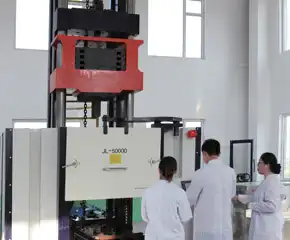
50000J DWT TEST

50000J DWT TEST

Impact test

Impact test

Mechanins Lab

Mechanins Lab

Metallurgical Microscope

Metallurgical Microscope

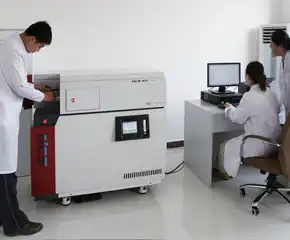
OES Chemical analysis

OES Chemical analysis

X-ray test

X-ray test

Vickers hardness tester

Vickers hardness tester

Our Service

BBN Steel has established a complete set of production and supplier management system processes to ensure the improvement of product quality and better service to users.

Get in Touch

Welcome to contact us through online consulting, emails and hotline if you are interested in our company or products. Our staff will reply you within 24 hours.


Contact Us