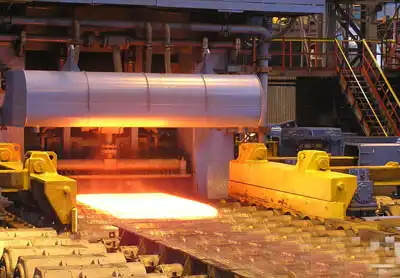
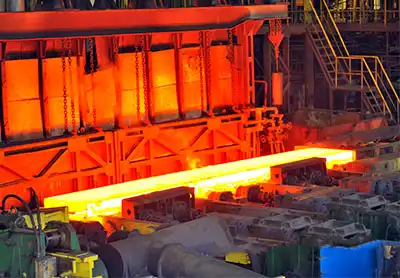
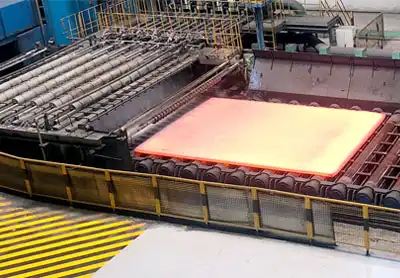
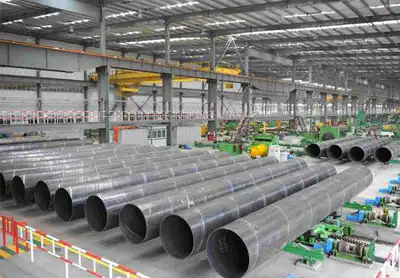
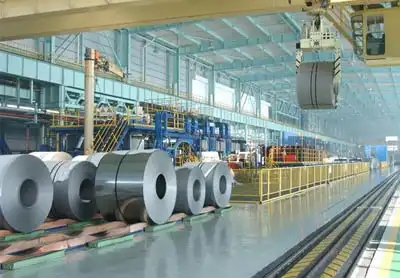
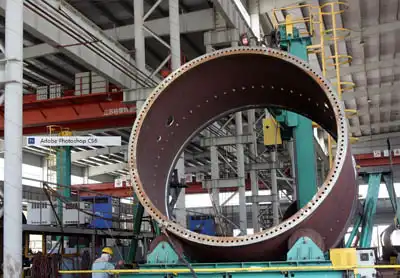
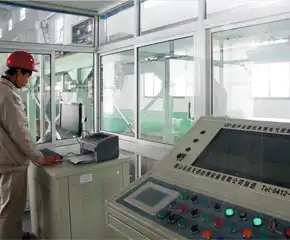
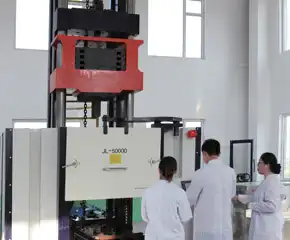
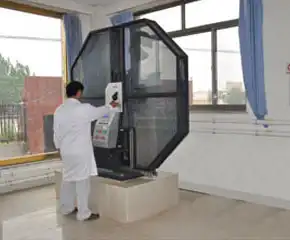
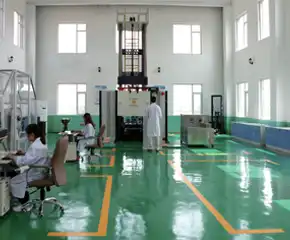
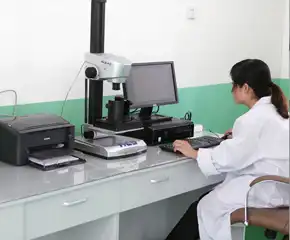
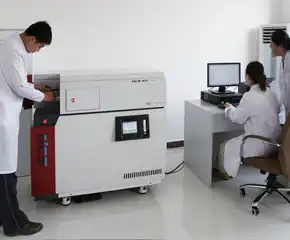
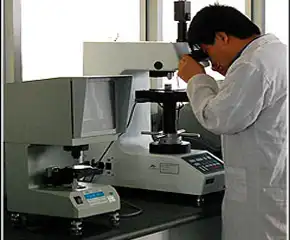
Description: BBN steel is a well-known steel manufacturer and service provider in China, EN10025-2 S275JR Non-alloy structural steel plate is our superior product, we are favored by customers with high quality, competitive price and excellent service
Payment Terms: L/C, T/T, D/P, Western Union, Paypal, Money Gram
EN 10025-2 S275JR is a non-alloy structural steel — a 275 MPa-yield European grade in the structural-steel family that sits one rung above S235JR and one below S355JR. Its name is a specification: S is structural steel, 275 is the minimum yield strength in MPa (up to 16 mm), JR is the impact toughness class — a Charpy V-notch test at +20 °C with a minimum of 27 J (longitudinal) — and the material number is 1.0044. It belongs to EN 10025-2, the part of the European structural-steel standard that covers non-alloy structural steels, so “non-alloy” is the correct description here (a fine-grain correction, which applies to grades such as S355N, does not).
S275JR is supplied as plate, sheet, section and bar for welded and bolted structures — buildings, bridges, machinery, storage tanks, agricultural and transport equipment and general fabrication. The “JR” matters: it is the entry toughness class, tested at room temperature (+20 °C), so it is the right choice for normal-climate, non-safety-critical structures but not for sub-zero service (for that, step up to S275J0 at 0 °C or S275J2 at −20 °C). Because it is low-carbon with a carbon equivalent CEV of ≤ 0.40 %, it welds with ordinary consumables and normally needs no preheat in ordinary thicknesses.
410-560 MPaTensile Strengthmin-max band, not a single value
275 MPa minYield Strengthup to 16 mm; steps down with thickness
+20 °CImpact Test Temperature≥ 27 J longitudinal (the ‘JR’ grade)
What this page publishes, and what must be confirmed on the mill certificate when you enquire.
Item
Specification
Executive Standard
EN 10025-2 (European standard for hot-rolled products of structural steels — Part 2: technical delivery conditions for non-alloy structural steels).
Steel Grade
S275JR (material number 1.0044)
Steel Category
Non-alloy structural steel — the correct description for S275JR (unlike fine-grain grades such as S355N)
Product Forms Covered
Steel PlateSheetSectionBarhot-rolled plate and sheet on this page
Thickness Range
1.5 – 680 mm (rolling range published by the mill; EN 10025-2 mechanical values are given up to 250 mm)
Width Range
1 000 – 4 000 mm
Length Range
1 000 – 18 000 mm
Production Way
As-rolled (+AR) as standard; normalized (+N) and thermomechanically rolled (+M) offered — the condition is chosen with the order
Delivery Condition
+AR / +N / +M — see section 07
Impact Requirement
+20 °C, ≥ 27 J longitudinal Charpy V-notch — this is what the “JR” grade guarantees
MOQ
1 tsmall-batch orders supported
Lead Time by Quantity
Stock items shipped promptly; custom production typically 10 – 40 working days by quantity
Payment Terms
T/TL/C at sight
Processing Services
Cutting to length and width, profiling, bevelling, bending, drilling, welding, galvanizing and surface polishing
Certification
Mill Test Certificate to EN 10204 3.1, or 3.2 with third-party endorsement; heat analysis and mechanical test report
Two things worth clearing up about this table. First, S275JR is a non-alloy structural steel, and “non-alloy” is the correct label here — it is not a fine-grain (micro-alloyed) steel like S355N, so the correction sometimes needed for those grades does not apply. Second, the rolling range (1.5–680 mm × 1 000–4 000 mm × 1 000–18 000 mm) is the mill’s published rolling envelope; the EN 10025-2 property tables run to 250 mm. Confirm the exact thickness you need against the certificate — and note the “JR” only guarantees +20 °C impact, so for cold-climate duty specify J0 or J2.
03How to Read the Grade
Every part of S275JR is a specification, not a marketing name.
Part
Meaning
S
Structural steel — the European convention for structural-steel grades.
275
The specified minimum yield strength in MPa (up to 16 mm). As with all EN 10025 grades, the first number is a yield value, not a tensile one.
JR
Impact toughness class: the steel is Charpy V-notch tested at +20 °C with a minimum absorbed energy of 27 J (longitudinal). J = impact energy tested; R = room temperature (+20 °C). It is the entry toughness class — not for sub-zero service.
1.0044
The European material number (Werkstoffnummer) for S275JR — use it on drawings and certificates to remove any ambiguity about which grade is meant.
EN 10025-2
Part 2 of the European structural-steel standard — non-alloy structural steels. It is distinct from EN 10025-3 (normalized fine-grain, e.g. S355N) and EN 10025-4 (thermomechanically rolled / low-temperature grades).
The S275 toughness ladder at the 275 MPa level — the letter/temperature is what changes.
Grade
Standard
Min. yield
Impact test
S235JR
EN 10025-2
235 MPa
+20 °C, ≥ 27 J
S275JR (this page)
EN 10025-2
275 MPa
+20 °C, ≥ 27 J
S275J0
EN 10025-2
275 MPa
0 °C, ≥ 27 J
S275J2
EN 10025-2
275 MPa
-20 °C, ≥ 27 J
S355JR
EN 10025-2
355 MPa
+20 °C, ≥ 27 J
Pick by the coldest service temperature and the yield you actually need. At 275 MPa, S275JR is the as-rolled, room-temperature option — for the same yield but colder service, specify S275J0 (0 °C) or S275J2 (−20 °C); both keep the 275 MPa yield but change the impact. For a higher yield at the same +20 °C impact, step up to S355JR (355 MPa). The yield, tensile and thickness brackets are the same across the 275 MPa rung — only the impact temperature differs.
04Equivalent Grades
S275JR is the 275 MPa yield rung of the European structural family. The table maps it to its closest grades — a similar yield figure is not a licence to substitute; check chemistry, toughness, condition and thickness brackets before swapping. Linked grades open their own page.
Standard
Grade
Min. Yield
What to check before substituting
EN 10025-2 (this page)
S275JR
275 MPa
The European non-alloy grade — +20 °C, ≥ 27 J, material 1.0044 (this page)
EN 10025-2
S235JR
235 MPa
The rung below S275JR — cheaper where 275 MPa is not needed. Not published as a dedicated page here; cited for the strength ladder.
The S355 rung with −20 °C impact — for the higher yield plus colder-toughness service.
EN 10025-2
S275J0 / S275J2
275 MPa
The same 275 MPa yield with 0 °C / −20 °C impact — the cold-climate versions of this grade. Dedicated pages not published here; named for cross-reference.
ASTM A283 / A36
A283 Grade D / A36
250 MPa
The closest US plates by yield (~250 MPa). A36 is the structural workhorse; confirm impact — A36 does not mandate the +20 °C / 27 J test unless specified.
JIS G3101
SS400
~245 MPa (tensile-based)
The Japanese general-structural plate; its number is roughly a tensile value, so the true yield is below 275 MPa. A near, not exact, match.
The Chinese 345 MPa grade with −20 °C impact — a step up in yield, useful on Chinese-spec projects.
GB/T 700
Q275
275 MPa
The Chinese carbon-structural grade at the same 275 MPa yield — a close Chinese equivalent. Dedicated page not published here.
DIN 17100 (legacy)
St 44-2
275 MPa
The old German designation for S275JR — S275JR is the EN successor.
NFA 35-501 (legacy)
E 28-2
275 MPa
The old French designation; named for cross-reference.
BS 4360 (legacy)
43B
275 MPa
The old UK designation — S275JR is its modern EN replacement.
Strength proximity is not interchangeability. Chemistry limits, toughness classes, delivery conditions and thickness brackets all differ between these standards, and a substitution must be signed off by the designer against the governing code. Two traps to name: EN 10025-2 S275JR’s “JR” only guarantees +20 °C impact — do not use it where the structure sees sub-zero temperatures (use S275J0 / S275J2); and the frequently cited US grade A36 is about 250 MPa, so S275JR is the safe upward substitute but A36 is not a downward one. Where a US project needs the closest band, specify ASTM A572 Grade 50 (345 MPa) and add the +20 °C impact as a supplementary requirement, since A572 does not mandate it.
05Chemical Composition
Ladle (cast) analysis limits in weight percent, per EN 10025-2:2019 Table 2 for S275JR. S275JR is a non-alloy grade, so the table is short — the chemistry is what keeps the carbon equivalent low and the welding easy.
Read the certificate against this table, not against a one-line data sheet. S275JR is a non-alloy steel, so the chemistry is deliberately simple: carbon is capped at 0.21 % (or 0.22 % above 40 mm) to keep the heat-affected zone sound after welding, phosphorus and sulphur are held low so the +20 °C impact can be met, and copper is optional (it slightly improves atmospheric-corrosion resistance but is not a weathering steel). Two notes on variants you may meet: some data sheets quote silicon up to 0.55 % for the silicon-killed variant (the usual fully-killed supply is 0.21 %), and a few editions quote carbon up to 0.25 % above 40 mm (EN 10025-2:2019 gives 0.22 %). The carbon equivalent CEV — C + Mn/6 + (Cr + Mo + V)/5 + (Ni + Cu)/15 — is limited to ≤ 0.40 % up to 40 mm, which is why S275JR welds without preheat in ordinary thicknesses.
06Mechanical Properties
Minimum room-temperature values, read against nominal thickness, per EN 10025-2. The original listing for this grade buried these in raw Excel-style tables; here they are the correct thickness ladders.
Thickness (mm)
Yield ReH min (MPa)
Tensile Rm (MPa)
≤ 16
275
430 – 580
> 16 – 40
265
430 – 580
> 40 – 63
255
410 – 560
> 63 – 80
245
410 – 560
> 80 – 100
235
410 – 560
> 100 – 150
225
400 – 540
> 150 – 200
215
380 – 540
> 200 – 250
205
380 – 540
Elongation & impact — the properties the +20 °C / 27 J grade is defined by.
+20 °C, ≥ 27 J (the S275JR requirement — the “JR” grade)
Three points on reading the table. First, the yield is given in thickness bands (275 MPa up to 16 mm, stepping down to 205 MPa at 200–250 mm) because heavier plate receives less reduction during rolling. Second, the tensile band shifts from 430–580 / 410–560 MPa (up to 100 mm) to 400–540 / 380–540 MPa above 100 mm. Third, the impact is a guaranteed +20 °C / ≥ 27 J — this is the defining property of the “JR” suffix, and it is tested longitudinally; transverse values are 3 J lower by the standard. For any sub-zero duty, switch to S275J0 (+20°C → 0°C) or S275J2 (−20°C).
S275JR is normally supplied as-rolled; the order, not the grade, fixes the rest.
Item
Options
Delivery Condition
+AR — As rolled (usual)+N — Normalized+M — Thermomechanical rolled
Additional Conditions
UTCharpy V-notchZ15 / Z25 / Z35Third-party test (SGS)Coated or shot blasted and painting
Surface Treatment
As rolledShot blastedPrimedPainted
What the specification sets, and what has to be added by the order.
Item
Status in EN 10025-2
How it is obtained
Delivery condition
As-rolled (+AR) as standard
+N (normalized) or +M (thermomechanical rolled) can be agreed where a uniform structure or finer grain is wanted; the “JR” toughness class stays the same.
Heat treatment
As-rolled is the defined supply
Normalizing is an agreed add-on, not a default; S275JR is a non-alloy grade, so it does not carry the fine-grain alloying limits of EN 10025-3 grades.
Impact toughness
+20 °C / ≥ 27 J at the “JR” grade
Built into the grade; third-party witnessed impact on request.
Ultrasonic testing
Not specified
EN 10160 at an agreed acceptance level, by agreement.
Through-thickness (Z) properties
Not specified
Z15 / Z25 / Z35 by agreement where the joint pulls through the plate thickness.
Third-party inspection
Not specified
SGS, BV, TUV or Intertek at the mill before shipment.
Certificate
MTC per the specification
EN 10204 3.1 as standard, 3.2 with third-party endorsement on request.
Keep the condition and the standard in the enquiry. S275JR is normally delivered as-rolled (+AR) and tested per heat; anything beyond that — +N, +M, UT, Z-direction, third-party inspection — has to be written into the order before rolling, not added afterwards. Because the grade name already carries the toughness class (the “JR”), just name the standard (EN 10025-2) and the material number 1.0044 — the certificate reads S275JR either way. Remember the “JR” only covers +20 °C; for colder service, ask for J0 or J2.
08Typical Applications
Where a 275 MPa non-alloy structural steel carries the load.
Buildings & Construction
Building frames, beams, columns, roofing and cladding support, and general structural steelwork — the most common use of S275JR in normal-climate construction.
Bridges & Infrastructure
Bridge main girders, built-up sections and splice plates for pedestrian and medium-span bridges — S275JR gives a useful yield with easy welding for fabricated structures.
Machinery & Equipment
Construction and mining machinery frames, engineering-vehicle chassis, and fabricated machine bases — strength with weldability and formability for mobile and static duty.
Storage Tanks & Silos
Tank shells, silo walls and hoppers for non-pressure storage — S275JR’s ductility and weldability suit rolled and welded vessels that do not need pressure-vessel grades.
General Fabrication & Transport
Trailers, containers, agricultural equipment and transport structures — the mid-strength, economical rung between S235JR and S355JR for fabricated and welded goods.
Why specify S275JR rather than S235JR or S355JR: it gives 17 % more yield than S235JR (275 vs 235 MPa) at little extra cost, while staying a simple, weldable, non-alloy grade with no preheat in ordinary thicknesses. What it does not give you is sub-zero impact — that is S275J0 / S275J2 — or a higher yield; for 355 MPa at the same +20 °C impact, step up to S355JR.
09Processing, Testing & Supply
From mill plate to a cut, certified, ready-to-fit structural item.
1
Cutting & Profiling
Plate and sheet cut to length and width, profiled to drawing and bevelled for weld preparation on flame, plasma or laser equipment.
2
Forming, Bending & Welding
Bending and rolling to radius, cold forming to the radius the thickness allows, plus welded assemblies built under a qualified procedure — S275JR welds with ordinary consumables; preheat is normally unnecessary below ~25 mm because CEV ≤ 0.40.
3
Surface Treatment
Shot blasting to remove mill scale, then shop primer or full paint system, galvanizing where specified, followed by export marking and seaworthy packing.
4
Inspection & Certified Delivery
Chemical analysis and tensile testing per heat, +20 °C Charpy, UT and Z-direction testing when specified, then the MTC carrying the grade, the EN 10025-2 standard and any third-party report.
Mill Test Certificate to EN 10204 3.1, or 3.2 with third-party endorsement
MTC stating the grade (S275JR) and material number 1.0044
Heat analysis and mechanical test report (yield, tensile, elongation, +20 °C Charpy)
Carbon equivalent CEV reported (≤ 0.40 % up to 40 mm, ≤ 0.42 % to 150 mm, ≤ 0.44 % above)
Ultrasonic testing report to the agreed acceptance level (EN 10160)
Z-direction (through-thickness) test report where Z15/Z25/Z35 is ordered
Third-party inspection by SGS, BV, Intertek or another nominated agency
Export packing, marking and loading supervision
Quote checklist — you get a faster, comparable price if you send: thickness × width × length, quantity, product form (plate, sheet, section or bar), delivery condition (+AR / +N / +M), the +20 °C impact requirement, UT acceptance level and any Z-direction requirement, surface treatment, MTC type, destination port and payment terms. MOQ is 1 t.
10Frequently Asked Questions
Q1What does EN 10025-2 S275JR actually mean?
S275JR is a European non-alloy structural steel. S is structural, 275 is the minimum yield in MPa, and JR is the impact toughness class — a Charpy V-notch test at +20 °C with ≥ 27 J (longitudinal). The material number is 1.0044, and the standard is EN 10025-2 (Part 2: non-alloy structural steels), distinct from EN 10025-3 (fine-grain, e.g. S355N) and EN 10025-4 (TMCP / low-temperature grades).
Q2Is S275JR a non-alloy or a low-alloy / fine-grain steel?
S275JR is a non-alloy structural steel per EN 10025-2 Part 2 — “non-alloy” is the correct description here. Unlike fine-grain grades such as S355N, it carries no Nb/V/Ti/Al grain-refining alloying limits; its toughness and weldability come from a low carbon content and a low carbon equivalent (CEV ≤ 0.40 %), not from micro-alloying. The site category “Carbon and Low-alloy Steel” is kept for navigation.
Q3What is S275JR equivalent to in EN / ASTM / JIS / GB?
At 275 MPa, the rung below it is EN 10025-2 S235JR (235 MPa) and the rung above is S355JR (355 MPa), both in the same standard; for the same 275 MPa yield but colder impact, use S275J0 (0 °C) or S275J2 (−20 °C). In the US the closest is ASTM A283 Grade D / A36 (~250 MPa); in Japan SS400 (tensile-based, ~245 MPa yield); in China Q275 (275 MPa) or Q345C / Q355C (345 MPa, −20 °C). Legacy equivalents are DIN St 44-2, NFA E 28-2 and BS 4360 43B. All are procurement mappings; confirm against your governing code.
Q4Is the impact value +20 °C / 27 J, and what if I need colder?
Yes — EN 10025-2 specifies +20 °C with ≥ 27 J (longitudinal) for S275JR. The “JR” suffix is specifically the room-temperature (+20 °C) impact class, so it is the right grade for normal-climate, non-safety-critical structures but not for sub-zero service. If the structure sees cold temperatures, step up to S275J0 (0 °C) or S275J2 (−20 °C) — both keep the 275 MPa yield. For 0 °C / −20 °C impact with a higher yield, use S355J0 / S355J2.
Q5Can I substitute S235JR, S355JR, A36, SS400 or A572 for S275JR?
Only with the designer’s sign-off against the governing code. S355JR is the common upward substitute (355 MPa, same +20 °C impact); S235JR is the cheaper downward option (235 MPa). A36 is ~250 MPa and does not mandate the impact test, so S275JR is the safe upward substitute but A36 is not a downward one. SS400 is tensile-based (~245 MPa yield) and not a true match. A572 Grade 50 is ~345 MPa; add the +20 °C impact as a supplementary requirement. S275JR’s edge is the simple, weldable, low-CEV chemistry with a guaranteed room-temperature impact.
Q6How thick, how fast, what paperwork, and is the old page’s data right?
From 1 t, with stock items shipped promptly and custom production typically 10–40 working days by quantity. Each heat ships with an EN 10204 3.1 mill test certificate. The figures on this page re-organise and complete the older listing for this grade: the chemistry now carries the full EN 10025-2 ladle set (C ≤ 0.21 / 0.22 above 40 mm, Si ≤ 0.21, Mn ≤ 1.50, P / S ≤ 0.035, N ≤ 0.012, Cu ≤ 0.55, CEV ≤ 0.40 / 0.42 / 0.44) and the mechanical data is presented as the correct thickness ladders — the yield steps 275 → 205 MPa, tensile 430–580 / 410–560 / 400–540 / 380–540 MPa, elongation ≥ 23 % → 18 % and the +20 °C / ≥ 27 J impact the old sheet only stated in a sentence. We also name two source variants: silicon up to 0.55 % in some data sheets (usual fully-killed supply is 0.21 %) and carbon up to 0.25 % above 40 mm in a few editions (EN 10025-2:2019 gives 0.22 %) — confirm the exact value on the MTC.
Sources and limits: the figures on this page are reference information drawn from EN 10025-2:2019 (S275JR, material number 1.0044) and published steel data sheets. S275JR is a non-alloy structural steel; the chemistry limits and the tensile / yield / elongation / +20 °C / 27 J impact floors are the standard requirements, while actual heat values are recorded on the EN 10204 certificate of the lot supplied. Two source variants are named so you can verify them on the MTC: silicon is capped at 0.21 % for the usual fully-killed supply but some data sheets quote up to 0.55 % for the silicon-killed variant, and carbon above 40 mm is 0.22 % in EN 10025-2:2019 but a few editions quote 0.25 %. The old listing for this grade kept the same core values; we have re-organised them into the standard’s ladle-analysis and mechanical tables and added the grade-designation, equivalent-grade and delivery-condition chapters. BBN supplies, cuts and processes the plate.
Get Your EN 10025-2 S275JR Quotation Now
Send us your standard (EN 10025-2), material number (1.0044), thickness, width and length, quantity, product form, delivery condition (+AR / +N / +M), the +20 °C impact requirement and any UT / Z-direction requirement. We will reply with what the mill can roll and certify at that thickness, plate or cut-length options, mill price and production lead time — and tell you plainly if an as-rolled S235JR would do, or if a higher yield should step up to S355JR / S355J2, or a cold-climate duty to S275J0 / S275J2.
BBN Steel has established a complete set of production and supplier management system processes to ensure the improvement of product quality and better service to users.
Production Control
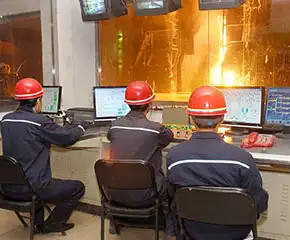
BBN Steel has established a complete production quality control process to ensure every link from research and development to mass production.
Supplier management
Our supplier selection will consider factors such as health and safety, ethics, environmental protection, price and quality to better serve customers.
Certification & Patent
We have successively won various international authoritative certifications, GB /T19001-ISO9001: 2000 quality management system was implemented.
After sales service
We provide booking space, shipping tracking service and after-sales service, we will always be first-class products and perfect pre-sale and after-sales service.
Get in Touch
Welcome to contact us through online consulting, emails and hotline if you are interested in our company or products. Our staff will reply you within 24 hours.
Address: HIGH-TECH DEVELOPMENT ZONE, ZHENGZHOU, CHINA