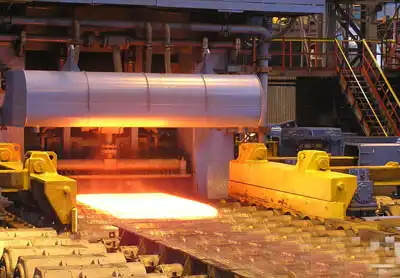
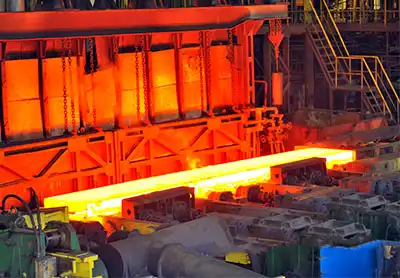
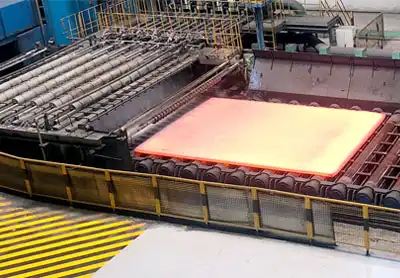
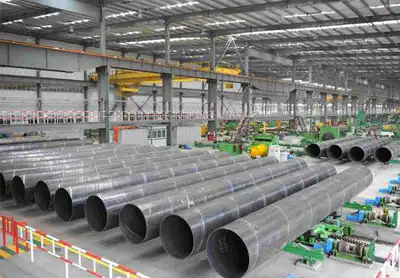
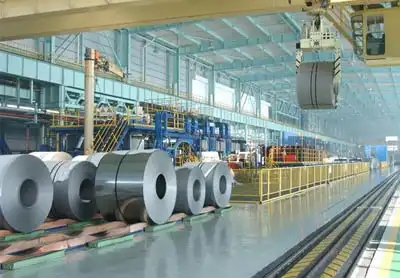
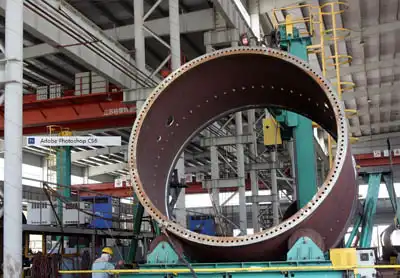
Description: BBN steel is a well-known steel manufacturer and service provider in China, ASTM A131 Grade FH32 shipbuilding structural steel is our superior product, we are favored by customers with high quality, competitive price and excellent service
Payment Terms: L/C, T/T, D/P, Western Union, Paypal, Money Gram
ASTM A131 Grade FH32 Shipbuilding Steel Plate | High Strength Hull Structural Steel, 315 MPa Min Yield, -60°C Impact Toughness
ASTM A131 Grade FH32 | High Strength Hull Structural Steel | Yield 315 MPa Min, Tensile 440–590 MPa, Elongation 19% Min | Thickness 4–260 mm, Width 1200–4000 mm, Length 3000–18000 mm | Guaranteed -60°C Charpy V Impact for Arctic, Ice-Class and Offshore Service
315 MPa Min Yield, High StrengthFH32 carries a 315 MPa minimum yield and 440–590 MPa tensile, so it is a high-strength hull structural plate for large ship hulls, decks and offshore structures.
Guaranteed -60°C ToughnessThe F in FH32 means a guaranteed Charpy V-notch impact energy at -60°C — the lowest test temperature of the A131 high-strength series, for arctic and ice-class service.
Weldable with Low Carbon EquivalentLow carbon with microalloying (Nb/V/Ti) and a typical carbon equivalent Ceq ≤0.40% keep the plate weldable in shipyard processes with controlled preheat.
01Product Overview
ASTM A131 Grade FH32 is a high-strength hull structural steel under ASTM A131, the American standard for structural steel for ships. The designation is a coded specification: A131 is the specification number, F is the impact-test temperature grade (a guaranteed Charpy V-notch energy at -60°C), and 32 is the minimum yield strength of 315 MPa (46 ksi).
Unlike a weathering (atmospheric-corrosion-resistant, no-paint) steel, FH32 is a marine structural steel whose corrosion resistance comes from controlled cleanliness and alloying rather than a self-protecting patina. It is made fully killed and grain-refined (aluminium treated, often with Nb/V/Ti microalloying) and is supplied normalized (N) or TMCP (thermo-mechanically controlled processed). It is used for ship hulls, decks, bulkheads and offshore structures, and is recognised by all IACS classification societies under the unified FH32 notation.
315 MPaYield Strength (Min)High strength
440–590 MPaTensile StrengthA131 FH32
19 %Elongation (Min)Longitudinal
-60 °CCharpy V ImpactGuaranteed (F grade)
02Technical Specifications
We stock full-size ASTM A131 Grade FH32 steel plates with complete certification, and custom cutting, edge preparation and forming is available to meet shipbuilding and offshore project requirements.
5 days (1–10 t); 10 days (10–50 t); Negotiable (>50 t)
Certification
Mill Test Certificate + IACS classification-society approval (ABS/LR/DNV/BV/CCS/KR/NK/RINA)
Custom Service
Custom size cutting, bevelling, bending, forming and deep processing to drawing
Payment Terms
L/C, T/T, D/P, Western Union, Paypal, Money Gram
Note: The thickness, width and length above are the typical supply range for FH32 — not every combination inside those limits rolls at every thickness. Send us your required thickness, width, length, quantity and delivery state (N or TMCP), and we will confirm stock status, the exact lead time and the certificate package before you order.
03Grade Designation & Standards
The A131 FH32 name is a coded specification. Understanding it tells you exactly what the steel is and where it sits in the shipbuilding-steel family.
Code Segment
Meaning
A131
The ASTM specification number for structural steel used in the construction of ships.
F
Impact-test temperature grade: a guaranteed Charpy V-notch impact energy at -60°C (the lowest of the A131 high-strength series).
32
Minimum yield strength of 315 MPa (46 ksi).
FH32 across societies
Under IACS unified rules the same grade is approved by ABS, LR, DNV, BV, CCS, KR, NK and RINA all as FH32 — so "ASTM A131 Grade FH32" and "ABS/LR/DNV FH32" refer to the same steel.
Note: Within the ASTM A131 high-strength family the impact grades are AH32 (0°C), DH32 (-20°C), EH32 (-40°C) and FH32 (-60°C) — all share the 315 MPa yield but differ in the guaranteed low-temperature toughness. Tell us which impact grade and which classification society your drawings call up (ABS, LR, DNV, CCS, BV, KR, NK, RINA) and we will supply the plate with the matching approval.
04Chemical Composition
ASTM A131 Grade FH32 is a low-carbon, grain-refined, microalloyed hull steel. The composition below is the as-supplied typical / maximum basis; the exact limits are confirmed on the mill certificate and per the approving classification society.
Grade
C (Max)
Si
Mn
P (Max)
S (Max)
Al (Min)
Nb
V
Ti (Max)
Cu (Max)
Cr (Max)
Ni (Max)
Mo (Max)
N (Max)
A131 FH32
≤0.16
0.10–0.50
0.90–1.60
≤0.025
≤0.025
≥0.015
0.02–0.05
0.05–0.10
≤0.02
≤0.35
≤0.20
≤0.40
≤0.08
≤0.009
Note: The figures above follow the BBN-supplied FH32 basis. Phosphorus and sulphur are shown at ≤0.025%, the stricter limit commonly required by classification societies (ABS/LR/DNV/CCS etc.); the ASTM A131 baseline permits up to 0.035%, and some mill specifications allow nickel up to 0.80%. Carbon is held to 0.16% max and aluminium grain refinement plus Nb/V/Ti microalloying give the strength without high carbon. Carbon equivalent is estimated as Ceq = C + Mn/6 + (Cr+Mo+V)/5 + (Ni+Cu)/15 (typically ≤0.40%, and ≤0.36% for TMCP ≤50 mm); the crack-sensitivity parameter is Pcm = C + Si/30 + Mn/20 + Cu/20 + Ni/60 + Cr/20 + Mo/15 + V/10 + 5B. The applicable figures for your item are confirmed on the mill certificate.
05Marine Corrosion Resistance & -60°C Toughness
FH32 is not a self-protecting weathering steel — it is a marine structural steel whose reliability in service comes from clean chemistry, grain refinement and a guaranteed low-temperature toughness.
1
Controlled Cleanliness
Low phosphorus and sulphur (commonly ≤0.025% each) plus aluminium grain refinement give a clean, fine-grained microstructure that resists lamellar tearing and hydrogen-induced cracking.
2
Microalloy Strengthening
Nb, V and Ti precipitates and grain refinement deliver the 315 MPa yield without raising carbon, so weldability and toughness are preserved.
3
Guaranteed -60°C Toughness
The F grade guarantees Charpy V-notch impact energy at -60°C, so the plate resists brittle fracture in arctic, ice-class and extreme-cold marine service.
4
Marine Corrosion Behaviour
In seawater service FH32 is protected by coating and cathodic protection like other hull steels; it is not left bare as a no-paint weathering grade. Proper design and coating give a long, safe service life.
Note: FH32 is intended for coated and cathodically protected marine structures — it should not be specified as a bare, no-paint weathering steel. For the lowest test temperature (-60°C) only the F grade qualifies; if your exposure is milder (e.g. -20°C or -40°C open-water service), the AH32 / DH32 / EH32 grades may be sufficient and more economical. Tell us the service temperature and we will confirm the right impact grade.
06Mechanical Properties
FH32 offers high strength and stable tensile properties, with impact energy guaranteed at -60°C. The values below are the room-temperature tensile figures for the as-supplied plate; impact sampling and energy levels follow the approving classification society.
Grade
Thickness (mm)
Yield Strength (MPa, Min)
Tensile Strength (MPa)
Elongation (%, Min)
Charpy V Impact
Impact Energy (J)
A131 FH32
t ≤ 50
315
440–590
19
-60°C
Transverse ≥34 / Longitudinal ≥24
A131 FH32
50 < t ≤ 70
315
440–590
19
-60°C
Per classification-society rules
A131 FH32
70 < t ≤ 100
315
440–590
19
-60°C
Per classification-society rules
Note: The -60°C impact is what defines the F grade. Impact energy is sampled and reported per the approving society (transverse and longitudinal values differ, as shown for t ≤ 50 mm); for thicker plates the society rules set the applicable sampling and minima. The carbon equivalent (Ceq ≤0.40%, lower for TMCP) drives the welding preheat. The values above are the standard room-temperature figures; if the plate is hot-formed or supplied heavier than the tested range, confirm the mechanical values from the mill certificate for your specific item.
07Processing & Fabrication Parameters
FH32 is produced for efficient shipyard fabrication. All common processing methods are applicable, with the standardised parameters shown below.
Processing Item
Technical Parameters & Operation Notes
Hot Forming
Avoid working in the normalizing-sensitive band; for heavy forming, re-normalize or use TMCP stock and confirm the mechanical recovery. Keep forming temperatures within the qualified procedure for the grade.
Flame / Plasma Cutting
Conventional cutting applies. For heavy thicknesses, control the cut-edge hardness; local preheat may be used where the carbon equivalent is high to avoid cut-edge cracking.
Edge Preparation & Bending
Balanced strength and ductility support moderate cold bending and bevelling for weld joints; observe the minimum bend radius for the thickness.
Welding Performance
Good weldability with a typical carbon equivalent Ceq ≤0.40%. Use low-hydrogen electrodes such as AWS E7018 / E7016 for manual metal arc, with submerged-arc (SAW) and gas-metal-arc (GMAW) widely used in shipyards. Select preheat and interpass temperature from the weld procedure and the plate's Ceq / Pcm; post-weld heat treatment is generally unnecessary for normal thicknesses.
Note: These are the shop parameters we work to for FH32. The preheat is the item most often missed — it is set by thickness and carbon equivalent, not by grade name alone. Where a weld procedure qualification is required, we supply the heat analysis so your Pcm and Ceq are calculated from the actual plate rather than from a typical value.
08Applications & Typical Uses
From arctic hulls to offshore topsides, FH32 is specified wherever high strength and proven low-temperature toughness are both required.
Ship Hulls & Decks
Hull plating, deck plates, bulkheads and superstructure of merchant vessels and specialised ships where high strength reduces weight.
Offshore Platforms
Offshore platform topsides, jackets and marine structures exposed to harsh, low-temperature sea environments.
Ice-Class & Arctic Vessels
Icebreakers, ice-class tankers and polar vessels that rely on the guaranteed -60°C impact toughness of the F grade.
LNG Carriers & Marine Engineering
Membrane-support and cryogenic-adjacent structures, plus general marine engineering where low-temperature reliability matters.
Heavy Marine Fabrication
Crane structures, leg structures and heavy fabrications in shipyards and offshore fabrication yards.
09Core Advantages
Five reasons shipyards and offshore fabricators specify FH32 for cold-environment work.
1
High Structural Strength
315 MPa minimum yield with 440–590 MPa tensile lets designers reduce plate thickness and structural weight without losing load capacity.
2
Proven -60°C Toughness
The F grade guarantees Charpy V-notch impact energy at -60°C — essential insurance against brittle fracture in arctic and ice-class service.
3
Excellent Weldability
Low carbon with a typical Ceq ≤0.40% and clean chemistry give reliable welding in SAW, GMAW and manual processes with controlled, modest preheat.
4
IACS Classification Approved
Recognised and approved by ABS, LR, DNV, BV, CCS, KR, NK and RINA under the unified FH32 notation, simplifying global project acceptance.
5
Full Size & Processing Service
A wide thickness/width/length programme with cutting, bevelling and forming to drawing, plus complete mill and classification certificates.
We supply high-quality ASTM A131 Grade FH32 shipbuilding steel plates with full specifications, complete IACS classification-society certification and strict factory inspection. We provide one-stop custom fabrication including cutting, bevelling, bending and surface treatment, plus deep processing to your drawings. All products are delivered with MTC documentation and third-party inspection is supported. Contact us for technical support and competitive wholesale pricing!
10Frequently Asked Questions
Short answers to the questions we are asked most often about A131 FH32. For anything not covered here, send us your drawings and specification.
Q1What is ASTM A131 Grade FH32, and how is it different from ordinary ship plate?
ASTM A131 Grade FH32 is a high-strength hull structural steel with a 315 MPa minimum yield and 440–590 MPa tensile. The F means a guaranteed Charpy V-notch impact energy at -60°C — the lowest test temperature in the A131 high-strength series. Ordinary (non-high-strength) ship plate such as A / B grade has no such strength or low-temperature requirement; FH32 is chosen for lightweight, cold-environment hulls and offshore structures.
Q2What does the FH32 designation mean, and is it the same as ABS FH32?
A131 is the ASTM specification, F is the -60°C impact grade, and 32 is the 315 MPa (46 ksi) minimum yield. Under IACS unified rules the same steel is approved by ABS, LR, DNV, BV, CCS, KR, NK and RINA all as FH32, so "ASTM A131 Grade FH32" and "ABS/LR/DNV FH32" denote the same material — we supply it with the classification-society approval your project requires.
Q3Is FH32 a weathering (no-paint) steel?
No. FH32 is a marine structural steel, not a self-protecting weathering grade. It is used in coated and cathodically protected hull and offshore structures and is not left bare as a no-paint atmospheric-corrosion-resistant plate. Confusing the two is a common error — if you need a bare no-paint weathering steel, that is a different grade family (e.g. ASTM A588 / Corten type).
Q4Which grades are equivalent to FH32?
FH32 is the unified IACS notation, so it is directly equivalent across ABS, LR, DNV, BV, CCS, KR, NK and RINA FH32. In European terminology the closest match is EN 10025 S355ML (though S355ML is a structural grade, not a ship-grade with the same approvals). Within the ASTM A131 high-strength family the related grades are AH32, DH32 and EH32 (same 315 MPa yield, impact grades 0°C / -20°C / -40°C). They differ in the guaranteed impact temperature, so verify against your design code before substituting.
Q5What are the mechanical properties and what sizes can you supply?
FH32 is supplied at 315 MPa minimum yield, 440–590 MPa tensile and 19% minimum elongation, with a guaranteed -60°C Charpy V impact (transverse ≥34 J / longitudinal ≥24 J for t ≤ 50 mm). The typical size programme is thickness 4–260 mm, width 1200–4000 mm and length 3000–18000 mm. Not every width and length combination rolls at every thickness, so send us the three dimensions and the quantity and we will confirm what is actually available.
Q6How is FH32 cut, formed and welded?
Conventional flame / plasma cutting and moderate cold bending and bevelling apply. It has good weldability with a typical carbon equivalent Ceq ≤0.40%; use low-hydrogen electrodes such as AWS E7018 / E7016, with submerged-arc and gas-metal-arc welding widely used in shipyards, and select preheat from the weld procedure and the plate's Ceq / Pcm. Hot forming should respect the qualified temperature band, with re-normalizing or TMCP stock for heavy forming. Post-weld heat treatment is generally unnecessary for normal thicknesses.
Get Your ASTM A131 Grade FH32 Shipbuilding Steel Plate Quotation
Send us your plate dimensions (thickness / width / length), quantity, delivery state (Normalized or TMCP) and classification-society approval requirement (ABS/LR/DNV/CCS/BV/KR/NK/RINA). We will reply with the latest stock status, competitive wholesale price and complete certification documents within 24 hours.
BBN Steel has established a complete set of production and supplier management system processes to ensure the improvement of product quality and better service to users.
Production Control
BBN Steel has established a complete production quality control process to ensure every link from research and development to mass production.
Supplier management
Our supplier selection will consider factors such as health and safety, ethics, environmental protection, price and quality to better serve customers.
Certification & Patent
We have successively won various international authoritative certifications, GB /T19001-ISO9001: 2000 quality management system was implemented.
After sales service
We provide booking space, shipping tracking service and after-sales service, we will always be first-class products and perfect pre-sale and after-sales service.
Get in Touch
Welcome to contact us through online consulting, emails and hotline if you are interested in our company or products. Our staff will reply you within 24 hours.
Address: HIGH-TECH DEVELOPMENT ZONE, ZHENGZHOU, CHINA