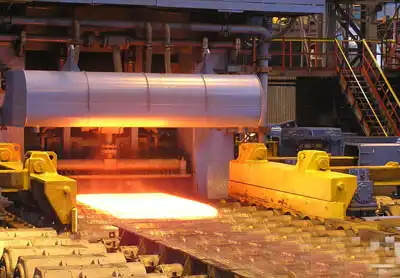
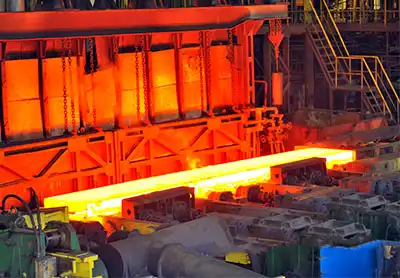
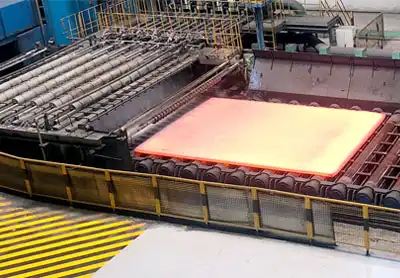
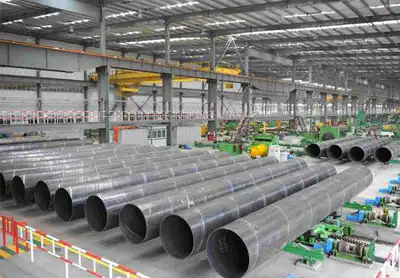
Description: BBN steel is a well-known steel manufacturer and service provider in China, ASTM A131 D Shipbuilding Steel Plate is our superior product, we are favored by customers with high quality, competitive price and excellent service
Payment Terms: L/C, T/T, D/P, Western Union, Paypal, Money Gram
ASTM A131 Grade D is an ordinary-strength (general strength) hull structural steel plate with a minimum yield point of 235 MPa and a tensile strength within 400–520 MPa. It sits in the same 235 MPa band as grades A, B and E of the ASTM A131 / A131M family, and what separates it is the Charpy impact test carried out at −20 °C — grade D is the level you specify once the hull structure has to stay tough well below freezing, on cold-water trades, winter service or any structure whose design temperature sits under 0 °C.
Grade D is supplied as shipbuilding steel plate and sheet for shipbuilding projects and ocean offshore structural projects. Because there is no "H" in the name it is not a higher-strength grade: the strength level is read from the standard’s mechanical table, not from the designation. That matters at enquiry stage — a line item written as "A131 Grade D" is asking for a 235 MPa plate that is impact tested at −20 °C, not for a 355 MPa plate, and quotes built on the wrong assumption will not reconcile at the mill certificate.
235 MPaYield Strength (Min)ASTM A131 Grade D
400–520 MPaTensile StrengthASTM A131 Grade D
21 %Elongation (Min)Same on every published bracket
−20 °CImpact Test TemperatureSource mechanical table
02Technical Specifications
ASTM A131 Grade D plate supplied to your drawing, with cutting, forming, blast cleaning, shop priming and marine certification handled on the same order.
Produced to order — thickness, width and length confirmed against your drawing and the rolling schedule
Thickness Coverage of the Published Data
The source mechanical table covers t ≤ 50 mm, 50 < t ≤ 70 mm and 70 < t ≤ 100 mmt ≤ 50 mm50 – 70 mm70 – 100 mm — this is the range the published figures apply to, not a rolling range
Low-Temperature Impact Requirement
Charpy V-notch at −20 °C on every thickness bracket; the source publishes 20 J transverse / 27 J longitudinal for t ≤ 50 mm and leaves the thicker brackets blank
Surface Condition
Not specified on the source data sheet — blast cleaning and shop priming are available as processing services and can be written into the order
Heat Treatment
Not published for this grade on the source data sheet — the condition is agreed on the order and stated on the mill certificate
Delivery Condition
Confirmed per order and stated on the MTC — ASTM A131 / A131M does not lock this grade to a single delivery condition As RolledNormalizedTMCPControlled RolledOther as agreed
Custom Production
Available — custom sizes, cutting and shaping to your drawings
MOQ
From 1 ton (the lowest bracket of the published quantity schedule), larger tonnages negotiable
Lead Time
1 – 10 t: 5 days · 10 – 50 t: 10 days · > 50 t: negotiable (stock and rolling schedule confirmed on enquiry)
Certification
MTC / EN 10204 3.1 / Classification society certificate — approval available from ABS, LR, GL, CCS, NK, DNV, BV, RINA and KR
Payment Terms
L/C, T/T, D/P, Western Union, Paypal, Money Gram
Note: The source data sheet for this product publishes no width or length range, so no size range is printed here — send us your required thickness, width, length, quantity and classification society and we will confirm stock status, the applicable delivery condition and the rolling slot against the item before you order. The thickness row above is the coverage of the published mechanical table, which is not the same thing as what the mill can roll; thicker plate is handled case by case. The source publishes no heat treatment line for grade D, so the delivery condition is whatever we agree with you and write on the certificate — ask for normalizing explicitly if your specification demands it, because −20 °C toughness is not something to leave implicit on thin or heavy sections alike. The quantity brackets are the published schedule; they are estimates, not a contractual lead time.
03Grade Designation
Grade D is named differently from the AH / DH / EH / FH grades you may be comparing it with — the letter is a strength category plus a toughness level, not a temperature code plus a kgf/mm² number.
Designation Segment
Meaning in ASTM A131 / A131M
A131
The ASTM specification for structural steel for ships — hull plate, sheet and sections surveyed under classification society rules
Grade D
The ordinary-strength category. There is no "H" in the name, so this is not a higher-strength grade, and there is no kgf/mm² number in the name — the strength level is read from the standard’s mechanical table, not from the designation
D = the −20 °C level
Within the ordinary-strength group the letter is what carries the toughness requirement. The letter D is the level whose Charpy V-notch test is carried out at −20 °C, which is why it appears on cold-water and winter-service hull structure rather than on tropical general-purpose plating
235 MPa
The minimum yield point the grade must meet, taken from the mechanical property table rather than from the grade name
A131/D
The short mill / trading notation for the same grade — you will see both "Grade D" and "A131/D" on certificates and inquiries
Note: The quickest way to read an A131 grade is to look for the H. Grade A / B / D / E (no H) are the ordinary-strength levels at 235 MPa, separated by impact test temperature; AH32 / AH36 / AH40 / DH36 / EH36 / EH40 and the rest are the higher-strength levels, where the number is the minimum yield in kgf/mm² (32 ≈ 315, 36 ≈ 355, 40 ≈ 390 MPa). Within the ordinary-strength group the ladder runs A → B → D → E into progressively lower test temperatures — our sibling pages publish 0 °C for grade B and −40 °C for grade E. That is why "Grade D" and "DH36" must never be read as two versions of the same thing: the first is a 235 MPa plate tested at −20 °C, the second is a 355 MPa plate. The designation explanation above is standard background for this grade family, not a figure published on your certificate — the version of ASTM A131 / A131M cited on your purchase order and the thermomechanical control used by the mill decide the actual requirement.
04Equivalent & Classification Society Grades
For global shipbuilding and repair bidding, ASTM A131 Grade D has matching grade-D equivalents under the major classification societies, so the same strength level can be procured across standards.
Standard System
Equivalent Grade
Note
ABS Standard
ABS Grade D
American Bureau of Shipping approval for ordinary-strength hull structures
LR Standard
LR Grade D
Lloyd’s Register approval
DNV Standard
DNV Grade D
Det Norske Veritas approval
GL Standard
GL Grade D
Germanischer Lloyd approval — GL has since been merged into DNV GL, so current projects are normally issued under DNV
CCS Standard
CCS Grade D
China Classification Society approval
Remaining IACS societies
NK Grade DBV Grade DRINA Grade DKR Grade D
Nippon Kaiji Kyokai, Bureau Veritas, RINA and Korean Register approvals — nine societies in total: ABS, LR, GL, CCS, NK, DNV, BV, RINA and KR
Note: Equivalent grade-D grades differ slightly in chemical composition and production process, and it is the toughness band rather than the strength figure that does the work here — verify welding parameters, the impact temperature actually certified and the inspection standard against your ship classification requirements before substituting one for another. Tell us which society your vessel or offshore unit is surveyed under and we will supply the plate with the matching certificate.
05Chemical Composition
Chemical composition for A131/D ship steel — heat analysis, % as published in the source data sheet. Values are maxima unless a range is shown.
Grade
C
Si
Mn
P
S
C + Mn/6
A131/D
0.21
0.10–0.35
0.60
0.035
0.035
0.40
Note: Carbon is capped at 0.21%, manganese at 0.60%, phosphorus and sulphur at 0.035% each, with a carbon-equivalent column of C + Mn/6 ≤ 0.40% and silicon given as a range of 0.10–0.35% rather than as a single cap. Three things to watch when you read a certificate against this table. First, three sibling pages in this family write their manganese column three different ways — this sheet gives a fixed 0.60 maximum, the grade B sheet gives 0.80, and the grade A sheet expresses it as 2.5 × C — so always compare a plate against the table belonging to its own grade. Second, this source publishes a C + Mn/6 column, which the grade B data sheet does not carry. Third, the source lists only these six columns: there is no micro-alloying or residual element column (Nb, V, Ti, Al, Cu, Cr, Ni, Mo, N), so no value is printed for them here — where a project or a classification society sets a cap on any of them it appears on the mill certificate.
06Welding Performance Parameters
Two indices are used to evaluate welding crack sensitivity and carbon equivalent for production and welding process guidance.
Note: Lower Pcm and Ceq mean better weldability and lower preheat demand. Both are calculated from the actual heat analysis of each plate, so we quote the values together with the MTC rather than as fixed numbers. With carbon capped at 0.21%, manganese at 0.60% and C + Mn/6 ≤ 0.40%, A131 Grade D sits at the easy-to-weld end of the shipbuilding range — ordinary-strength hull plate is welded daily in every yard in the world. Two practical cautions remain. The plate has to hold toughness at −20 °C, so heat input, interpass temperature and consumable choice still have to keep the heat-affected zone from coarsening on heavy sections; and where normalizing or any other heat treatment is written into the order, the as-delivered microstructure changes and preheat should be re-confirmed against your welding procedure specification for that condition.
07Mechanical Properties
Mechanical property for A131 Grade D shipbuilding structural steel over the thickness brackets covered by the source table, together with the low-temperature impact test that defines the grade.
Grade
Thickness
Yield Strength Min
Tensile Strength
Elongation Min
Impact Test Temperature
Energy 1 (Transverse)
Energy 2 (Longitudinal)
A131/D
t ≤ 50 mm
235 MPa
400–520 MPa
21 %
−20 °C
20 J
27 J
A131/D
50 < t ≤ 70 mm
235 MPa
400–520 MPa
21 %
−20 °C
—
—
A131/D
70 < t ≤ 100 mm
235 MPa
400–520 MPa
21 %
−20 °C
—
—
Note: Three points about how to read this table. Strength does not fall away with thickness here — the source gives the same 235 MPa minimum yield, 400–520 MPa tensile and 21% minimum elongation on all three brackets, unlike higher-strength grades where yield steps down as the plate gets thicker. Energy 1 is the transverse impact test and Energy 2 is the longitudinal impact test, and the source publishes a figure for the t ≤ 50 mm bracket only — 20 J transverse and 27 J longitudinal; the two thicker brackets are blank on the source table, so they are printed as em dashes rather than filled with a value the source does not give. Nothing at all is published beyond 100 mm, so heavier plate is confirmed on enquiry. One conflict you should know about: the opening paragraph of our own source material states that the impact test "shall be done at zero centi degree", while the source’s own mechanical table gives −20 °C in the degree column for every bracket — and −20 °C is where the standard places grade D in the ordinary-strength ladder (grade B at 0 °C, grade E at −40 °C). We publish −20 °C as the governing figure for this page. Tell us the thickness, the bracket and the classification society and we will confirm the applicable temperature and energy from the mill certificate for your specific plate.
08Applications & Typical Components
A131 Grade D steel plate is mainly used for shipbuilding projects and ocean offshore structural projects — wherever a 235 MPa general-strength plate has to stay tough at −20 °C.
1
Shipbuilding Projects
Hull construction of vessels trading in cold water — shell plating, bottom and side shell, bilge strakes, bulkheads, decks and framing of general-strength ships, barges, tugs and workboats.
2
Ocean Offshore Structural Projects
Secondary and general-strength members of offshore structures — platform topsides, skirts, jackets internals, walkways, supports and bracing exposed to low sea and air temperatures.
3
Repair, Renewal & Cold-Climate Fabrication
Renewal plate for vessels whose original specification calls for a D-grade general-strength steel, plus brackets, seatings, foundations and general marine fabrication for winter service.
Application Field
Typical Application & Components
Shipbuilding Project
Hull structure of vessels — shell plating, bottom plating, side shell, bilge strake, bulkheads, decks, framing
Ocean Offshore Structural Project
Platform topsides and general-strength offshore members — supports, bracing, skirts, walkways, secondary structure
Repair & Fabrication
Renewal plate, brackets, seatings, foundations and general marine fabrication for cold service
Note: Choose grade D when the deciding factor is temperature, not strength. If your lowest design temperature is at or below freezing, the warmer sibling — ASTM A131 Grade B, tested at 0 °C — will not cover you, and if the vessel works in polar conditions you need ASTM A131 Grade E instead; ASTM A131 Grade A sits at the warm end of the group. If the section is limited by strength rather than temperature, move up to a higher-strength grade such as AH32, AH36, DH36 or EH36. Send us the design temperature and the required strength and we will confirm which grade your project actually needs — the two properties are decoupled, and picking the wrong one is the most common reason a class surveyor rejects general-strength plate.
09Processing & Fabrication Services
Every order can be cut, formed, blast cleaned, primed and independently inspected, so material arrives at the yard ready to fit.
1
Cutting
Custom sizes and shapes cut to your drawings, plate and profile.
2
Bending & Forming
Plate bending and shaping for hull sections and structural components.
3
Blast Cleaning & Shop Primer
Plate pre-treatment — shot blasting and painting with shop primer — applied before shipment on request, so the plate reaches you clean and temporarily protected.
4
Inspection & Certified Delivery
MTC and EN 10204 3.1 with every shipment; UT, Z-direction test and third-party inspection (SGS) can be arranged on request.
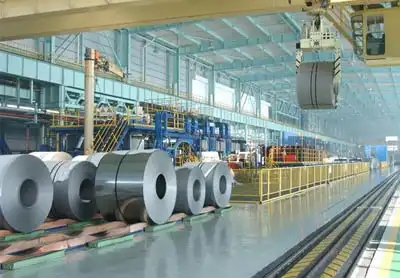
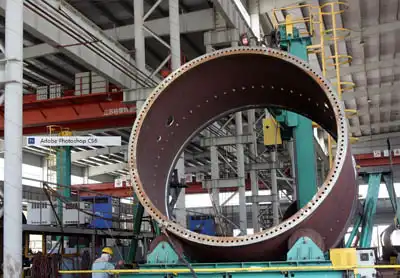
We supply high-quality ASTM A131 Grade D shipbuilding steel plates with strict marine standard inspection and full traceability. BBN Group operates stock warehouses at Shanghai and the port city of Tianjin, holding thousands of tons of shipbuilding steel plate across many grades — including ordinary-strength grades B and D alongside higher-strength grades DH36, EH36 and FH32 — so mixed-grade inquiries can often be shipped together. We provide one-stop customized processing services including cutting, bending and forming, plus shot blasting and shop priming to your surface specification. All products are equipped with official MTC test reports and marine certification documents, and UT, Z-direction and third-party (SGS) testing can be arranged on request. Welcome to contact us for professional quotations and technical support!
Short answers to the questions we are asked most often about ASTM A131 Grade D. For anything not covered here, send us your drawings and specification.
Q1What does Grade D mean in ASTM A131?
It is one of the ordinary-strength categories of the specification. Unlike AH32 / AH36 / AH40, there is no H and no number in the name, so the grade carries no kgf/mm² figure — the 235 MPa minimum yield comes from the standard’s mechanical table, not from the designation. The letter D is what buys you the toughness: it is the level whose Charpy V-notch impact test is carried out at −20 °C. You will also see the same plate written A131/D on mill paperwork.
Q2What is the difference between Grade A, Grade B, Grade D and Grade E?
All four are ordinary-strength A131 grades at the same 235 MPa minimum yield and 400–520 MPa tensile — the only thing that separates them is the impact test temperature they are certified at. Grade D is tested at −20 °C; our sibling pages publish 0 °C for Grade B and −40 °C for Grade E, while Grade A sits at the warm end of the group. Substituting a warmer grade for a colder one is a classic reason for rejection at survey — quote the level that actually carries your design temperature.
Q3What impact energy does the source publish for Grade D?
For the t ≤ 50 mm bracket it publishes 20 J transverse (Energy 1) and 27 J longitudinal (Energy 2) at −20 °C. Those two columns are blank on the source table for the 50–70 mm and 70–100 mm brackets, so we print an em dash rather than inventing a figure. Nothing is published above 100 mm. Send us your thickness and the certificate you need it against and we will confirm the applicable value from the mill certificate.
Q4What sizes, delivery conditions and lead times can you supply?
Plate is produced to order — thickness, width and length are confirmed against your drawing and the rolling schedule, because the source publishes no size range; the mechanical table covers t ≤ 50 mm, 50–70 mm and 70–100 mm. The delivery condition is agreed per order and stated on the MTC, since the source publishes no heat treatment line for this grade — ask for normalizing explicitly if your procedure calls for it. The published quantity schedule is 1 – 10 t: 5 days, 10 – 50 t: 10 days, > 50 t: negotiable, with MOQ from 1 ton. Payment is by L/C, T/T, D/P, Western Union, Paypal or Money Gram and every shipment carries an MTC / EN 10204 3.1 certificate.
Q5Can A131 Grade D be supplied with classification society approval?
Yes. The mill holds approval from nine international classification societies — ABS, LR, GL, CCS, NK, DNV, BV, RINA and KR, so the equivalent grade-D plate can be delivered with the certificate your vessel is surveyed under. There are slight differences in chemical composition and production process between societies, so verify welding parameters, the impact temperature actually certified and the inspection standards against your classification requirements before material replacement. Note that GL has since been merged into DNV GL, so current projects are normally issued under DNV.
Q6I have seen "impact test at zero degrees" written for Grade D — which temperature really applies?
−20 °C applies. That phrase is the opening sentence of our own legacy source text for this product, and it is a reuse of the sentence written for Grade B, which is the 0 °C level of the same family. The source’s own mechanical table gives −20 °C in the degree column for every thickness bracket, and that matches where the standard places grade D on the ordinary-strength ladder. We publish −20 °C throughout this page, and every certificate is issued against the version of ASTM A131 / A131M named on your purchase order — so if your drawing calls for something else, flag it at enquiry rather than after rolling.
Get Your ASTM A131 Grade D Shipbuilding Steel Plate Quotation
Send us your plate dimensions (thickness / width / length), quantity, required impact test temperature, delivery condition and classification society requirement. We will reply with the latest stock status, competitive wholesale price and complete marine certification documents within 24 hours.
BBN Steel has established a complete set of production and supplier management system processes to ensure the improvement of product quality and better service to users.
Production Control
BBN Steel has established a complete production quality control process to ensure every link from research and development to mass production.
Supplier management
Our supplier selection will consider factors such as health and safety, ethics, environmental protection, price and quality to better serve customers.
Certification & Patent
We have successively won various international authoritative certifications, GB /T19001-ISO9001: 2000 quality management system was implemented.
After sales service
We provide booking space, shipping tracking service and after-sales service, we will always be first-class products and perfect pre-sale and after-sales service.
Get in Touch
Welcome to contact us through online consulting, emails and hotline if you are interested in our company or products. Our staff will reply you within 24 hours.
Address: HIGH-TECH DEVELOPMENT ZONE, ZHENGZHOU, CHINA