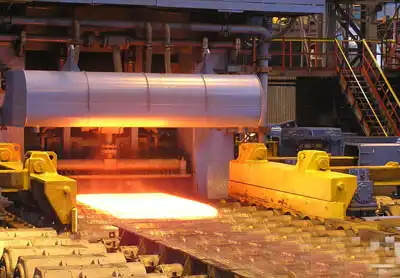
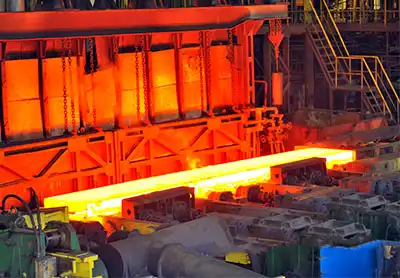
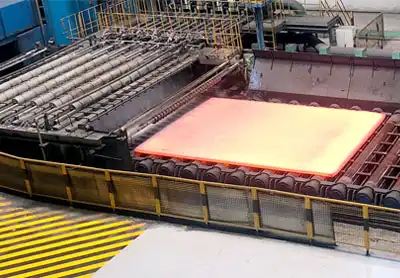
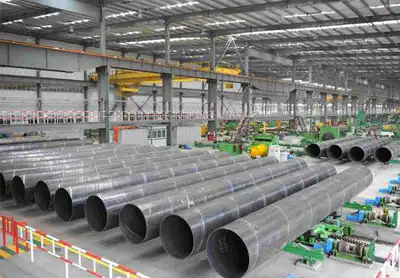
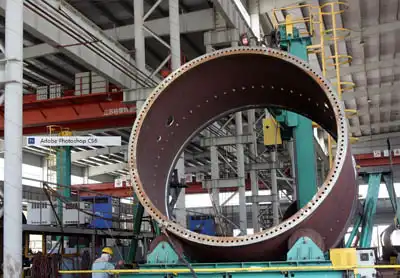
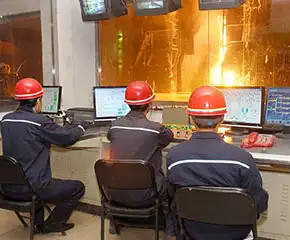
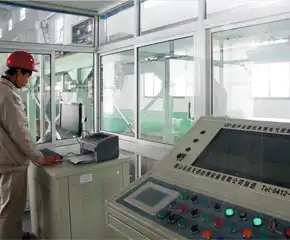
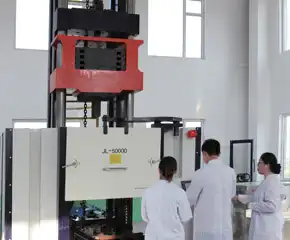
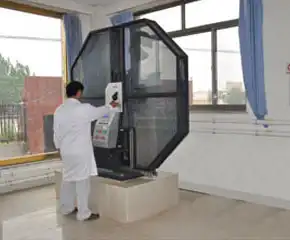
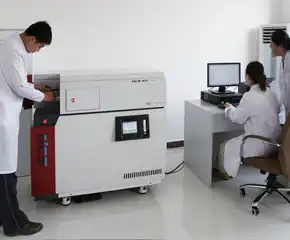
Description: BBN steel is a well-known steel manufacturer and service provider in China, Ramor 600 ballistic protection steel is our superior product, we are favored by customers with high quality, competitive price and excellent service
Payment Terms: L/C, T/T, D/P, Western Union, Paypal, Money Gram
Ramor® 600 is SSAB's ultra-high-hardness ballistic protection steel, supplied as cut-to-length sheet in 3.0 – 6.0 mm and delivered quenched. The number in the name is the nominal hardness, 600 HBW. What SSAB actually guarantees on delivery is the band either side of it — 570 – 640 HBW, measured per EN ISO 6506-1 on every heat-treatment individual or coil.
It gets specified for one reason: doing the same job with less steel. Inside the Ramor range it is the thinnest route to a given protection level, and SSAB groups it with add-on ballistic applications — protection added onto a structure rather than the structure itself. That grouping decides most of the engineering, so read section 06 before you fix a thickness.
570 – 640 HBWGuaranteed HardnessNominal 600; EN ISO 6506-1 per lot
3.0 – 6.0 mmCut-to-Length SheetQuenched, no further heat treatment
SSAB Ramor 600 data sheet; hardness to EN ISO 6506-1; surface to EN 10163-2; length and width to EN 10051
Thickness Range
3.0 – 6.0 mm0.118 – 0.236 in
Thickness Covered by the Published Data
The whole supply range — every figure on this page applies across 3.0 – 6.0 mm
Delivery Condition
Quenchednot intended for further heat treatment
Length & Width
Tolerances conform to EN 10051 or to SSAB standard after agreement
MOQ
From 1 tonlowest bracket of the quoted quantity schedule
Lead Time by Quantity
1 – 10 t: 5 days · 10 – 50 t: 10 days · > 50 t: negotiable
Payment Terms
L/CT/TD/PWestern UnionPaypalMoney Gram
Processing Services
Laser, plasma and water-jet cutting, cold bending against confirmed parameters, machining support
Certification
EN 10204 3.1 / 3.2 MTC with ladle analysis and hardness result; per-lot ballistic certification arranged on request
Note: two thickness ranges circulate for this grade. SSAB's Ramor 600 data sheet gives 3.0 – 6.0 mm; the Ramor range brochure prints 3.0 – 5.0 mm and stops its thickness table there. We quote against the data sheet and print the range we are actually supplying on your order.
03Grade Designation & Range Position
What the name tells you, and where the grade sits among the other Ramor numbers.
600
600 — Nominal Hardness
The digits are the nominal Brinell figure in HBW, not a strength value. What ships is the guaranteed band around it: 570 – 640 HBW.
Q
Quenched Delivery
Supplied hardened and ready to use. It is not intended for further heat treatment, so there is no annealing or re-quenching step in your process.
+
Add-On Application
SSAB lists Ramor 600 among its add-on ballistic applications — panels added over an existing skin, rather than the load-bearing hull.
t
Narrowest Window
Highest hardness in the range and the thinnest section per protection level, but also the shortest reach: it stops at 6.0 mm where Ramor 500 runs to 30 mm.
Grade
Thickness (mm)
Hardness HBW
Series Re (MPa)
Position
Ramor 300
3.0 – 6.0
260 – 320
820
Low hardness, low-threat civilian protection
Ramor 400
3.0 – 30.0
360 – 460
1100
Medium hardness, blast and ballistic balanced
Ramor 450
4.0 – 16.0
400 – 480
1200
Medium hardness armour with higher toughness
Ramor 500
2.0 – 30.0
490 – 560
1450
Main high-hardness grade, full thickness coverage
Ramor 550
3.0 – 15.0
540 – 600
1550
Weight-saving upgrade with more thickness headroom
Ramor 600
3.0 – 6.0
570 – 640
1650
This page — thinnest route per protection level
Reading the table: the Re column is the range-level reference SSAB prints for grade comparison, not a guaranteed value — the Ramor 600 data sheet guarantees hardness only. Ramor 450's window is also printed inconsistently, as 4.0 – 16.0 mm in the range brochure and 8.0 – 16.0 mm elsewhere.
04Chemical Composition
Ladle analysis from the SSAB Ramor 600 data sheet. Every figure is a ceiling, not a target.
Element
Max %
Role at this level
C (Carbon)
0.40
Hardenability and the hardness floor
Si (Silicon)
0.70
Deoxidation and solid-solution strength
Mn (Manganese)
1.5
Hardenability, keeps the core hard through quenching
P (Phosphorus)
0.015
Residual, kept low to protect toughness
S (Sulfur)
0.010
Residual, kept low to protect toughness
Cr (Chromium)
1.50
Hardenability and temper resistance
Ni (Nickel)
2.50
Toughness alongside very high hardness
Mo (Molybdenum)
0.80
Deep hardening, resists temper softening
B (Boron)
0.005
Trace hardenability boost in quenched steel
Two things worth knowing: the steel is grain refined, and phosphorus and sulphur are not intentionally added alloying elements — they arrive as residuals. Because every line above is a maximum, the analysis guarantees no minimum alloy content; the actual figures per heat are on the MTC.
05Mechanical Properties, Tolerances & Surface
What the data sheet guarantees, and how the sheet is dimensioned.
Item
Guaranteed Value
Thickness Range
3.0 – 6.0 mm
Brinell Hardness HBW
570 – 640
Hardness Standard
EN ISO 6506-1, on each heat-treatment individual / coil
Test Position
Milled surface, 0.3 – 2 mm below the plate surface
Delivery Condition
Quenched
Thickness tolerance
Thickness (mm)
Tolerance (mm)
3.00 – 4.00
-0.0 / +0.36
4.01 – 5.00
-0.0 / +0.40
5.01 – 6.00
-0.0 / +0.42
Shape, flatness and surface
Item
Requirement
Flatness
6 mm per 1000 mm ruler — SSAB standard, stricter than EN 10051
Shape Tolerance
EN 10051
Length & Width
EN 10051, or SSAB standard after agreement
Surface Quality
EN 10163-2, Class B, Subclass 3
Only hardness is guaranteed. The Ramor 600 data sheet publishes no yield strength, tensile strength, elongation or impact value, so any of those used in your calculation has to come from measurement on the delivered lot, not from the standard.
06Ballistic Protection Reference Thickness
SSAB's published suggestion of plate thickness against each protection level, with the other two high-hardness Ramor grades alongside for comparison.
EN 1522
Protection Level
Threat
Velocity (m/s)
Range (m)
Ramor 500
Ramor 550
Ramor 600
FB2
9 mm Luger FJ/CB/SC
415 ± 10
5
2.0
—
—
FB3
.357 Magnum
430 ± 10
5
2.3
—
—
FB4
.44 Mag FJ/FN/SC
440 ± 10
5
2.5
—
—
FB4+
7.62 × 39 AK47 (M43)
700 ± 10
10
4.0
3.7
3.5
FB6
5.56 × 45 SS109 / 7.62 × 51 NATO Ball
950 ± 10 / 830 ± 10
10
6.5
5.9
5.0
FB7
7.62 × 51 NATO AP
820 ± 10
10
14.5
13.0
outside range
NIJ 0108.01
Protection Level
Threat
Velocity (m/s)
Range (m)
Ramor 500
Ramor 550
Ramor 600
II
9 mm FMJ / .357 Magnum JSP
358 ± 12 / 425 ± 15
5
2.2
—
—
IIIA
9 mm FMJ / .44 Magnum SWC
426 ± 15 / 436 ± 15
5
2.5
—
—
III
7.62 × 51 FMJ
838 ± 15
15
6.0
5.0
5.0
VPAM PM 2007
Protection Level
Threat
Velocity (m/s)
Range (m)
Ramor 500
Ramor 550
Ramor 600
VPAM 6
7.62 × 39 Ball
720 ± 10
10
4.25
3.7
3.5
VPAM 7
5.56 × 45 SS109 / 7.62 × 51 NATO Ball
950 ± 10 / 830 ± 10
10
6.5
5.9
5.0
VPAM 8
7.62 × 39 API BZ
740 ± 10
10
12.2
10.1
outside range
VPAM 9
7.62 × 51 NATO AP
820 ± 10
10
14.5
13.0
outside range
What that means against Ramor 550
Protection Level
Ramor 550
Ramor 600
Section Saved
EN 1522 FB4+
3.7 mm
3.5 mm
about 5%
EN 1522 FB6 / VPAM 7
5.9 mm
5.0 mm
about 15%
NIJ 0108.01 Level III
5.0 mm
5.0 mm
none
Read the blanks as an answer, not as a gap. Ramor 600 tops out at 6.0 mm, so FB7, VPAM 8, VPAM 9 and NIJ Level IV carry no published figure — they need 10 – 14 mm and belong to Ramor 550 or heavier Armox grades. The saving over Ramor 550 is also threat-dependent: about 15% at FB6, nothing at NIJ III.
07Processing & Fabrication Guidelines
How the sheet behaves in the workshop, and where this page deliberately does not give you a number.
Topic
Guideline
Further Heat Treatment
Not intended. Supplied quenched; no annealing, normalizing or re-quenching step belongs in your process
Heat Input in Service
Anything beyond a low-temperature operation is outside the data sheet; agree it with us and re-verify hardness afterwards
Cold Bending
SSAB publishes no bending radii for this grade — request the parameter set for your thickness and validate on a sample before tooling is committed
Cutting
Laser, plasma and water-jet are the practical routes; water-jet best preserves the cut edge. Mechanical shearing needs heavy-duty equipment and hardened blades
Welding
Conventional processes apply. Austenitic consumables are the range standard — GMAW EN 12072 G 18 8 Mn / AWS A5.9 ER307, SMAW EN 1600 E 18 8 Mn B 4 2 / AWS A5.4 E307-15. Qualify the procedure for this thickness
Machining
Carbide-tipped tools, rigid clamping, adequate lubrication and an anti-vibration set-up
Workshop Safety
Cutting and grinding generate fine steel dust — wear suitable respiratory protection
This is the one chapter where we ask you not to take a number from a web page. SSAB's own range overview directs users to consult it for Ramor 600 processing parameters. Tell us the operation and thickness you plan, and we will get the parameter set before you cut steel.
08Typical Applications
Where a thin, very hard add-on panel earns its place.
Add-On Vehicle Armour
Bolted or bonded panels over an existing skin on SUVs and light tactical vehicles, where every millimetre and kilogram is accounted for.
Cash-in-Transit Vehicles
Door, bulkhead and side-wall liners for FB4+ and FB6 class protection that still has to fit the original envelope.
Doors & Window Frames
Thin sections that let protection sit inside normal frame depths, together with transfer trays and hatches.
Safe Rooms & Security Cabins
Wall, door and hatch liners assembled from cut panels where space behind the surface is limited.
Vault & Counter Reinforcement
Bank counters, cash-handling booths and valuables storage built up from flat cut blanks.
Shooting-Range Equipment
Target frames, baffles and backstop plates developed for the grade together with customers.
Selection advice: start from the threat, not from the hardness. Name the standard and level you must pass, then check whether the thickness it needs falls inside 3.0 – 6.0 mm. If it does not, the honest answer is a thicker range rather than a harder grade — FB7 and NIJ Level IV drain out of this range entirely.
09Processing, Testing & Supply
From mill sheet to a certified, cut-to-size panel.
1
Cutting
Laser, plasma or water-jet cutting to your nest, with edges cleaned and deburred ready for fitting.
2
Forming & Machining
Bending and drilling only against parameters confirmed for the lot, using carbide tooling and rigid clamping.
3
Inspection
Brinell hardness per EN ISO 6506-1 on each heat-treatment individual or coil, plus ladle analysis, recorded on an EN 10204 3.1 / 3.2 certificate.
4
Certified Delivery
Each heat ships with its certificate, packed for export, with per-lot ballistic certification arranged on request.
Quote checklist — faster if you send: the standard and protection level you must pass (EN 1522, NIJ 0108.01 or VPAM), thickness chosen from that table, panel dimensions or drawing, quantity, any bending or machining required, whether ballistic certification is needed, destination port and preferred payment terms.
10Frequently Asked Questions
Q1Is Ramor 600 the same thing as Hardox 600?
They share the nominal 600 HBW figure and even the same 570 – 640 HBW guarantee, but they are different products. Hardox 600 is wear plate supplied against wear properties; Ramor 600 is ballistic protection steel, tested on each heat-treatment individual or coil and used against certified threat levels. Do not swap one for the other in a protection application.
Q2Why does the table show nothing for FB7 or NIJ Level IV?
Because the grade stops at 6.0 mm. Those threats need around 13 mm of Ramor 550 or 14.5 mm of Ramor 500, roughly three times what Ramor 600 can supply. The answer is more thickness range, not more hardness.
Q3570 – 640 HBW, or nominal 600?
Both statements come from SSAB and both are true. Nominal 600 is the grade name and its position in the range; 570 – 640 HBW is what the data sheet guarantees on delivery, tested per EN ISO 6506-1 at 0.3 – 2 mm below the surface. Order against the guaranteed band.
Q4Is the thickness range 3.0 – 6.0 or 3.0 – 5.0 mm?
Both are in print. The Ramor 600 data sheet states 3.0 – 6.0 mm, while the Ramor range brochure prints 3.0 – 5.0 mm and stops its recommended-thickness table at 5.0 mm. We quote against the data sheet and print the range actually being supplied on your order and certificate.
Q5Can it be welded and bent like Ramor 500?
Not by rule of thumb. SSAB directs users to consult it for Ramor 600 processing parameters, so request the set for your thickness and operation and qualify a procedure sample. Austenitic consumables are the range-standard choice; the grade is delivered quenched and is not intended for further heat treatment.
Q6What quantity, how fast, and what paperwork comes with it?
From 1 ton, with published lead times of 5 days for 1 – 10 t, 10 days for 10 – 50 t and negotiable above 50 t. Every heat ships with an EN 10204 MTC carrying the ladle analysis and hardness result, and per-lot ballistic certification can be arranged with an accredited laboratory.
Sources and limits: the technical figures on this page are taken from SSAB's published Ramor 600 data sheet and the Ramor range literature, and are reference information for design. SSAB's suggested plate thickness carries no warranty and places responsibility for verifying the required thickness on the buyer, so final acceptance rests with the mill certificate and, where required, the per-lot ballistic test report. Ramor® is a registered trademark of SSAB; BBN supplies, cuts and processes the product.
Get Your Ramor 600 Ballistic Protection Steel Quotation Now
Send us your protection standard and level, required thickness, panel dimensions or drawing, quantity and any bending or machining. We will reply with availability, pricing and the lead time — and tell you plainly if your threat level falls outside what a 6.0 mm sheet can reach.
BBN Steel has established a complete set of production and supplier management system processes to ensure the improvement of product quality and better service to users.
Production Control
BBN Steel has established a complete production quality control process to ensure every link from research and development to mass production.
Supplier management
Our supplier selection will consider factors such as health and safety, ethics, environmental protection, price and quality to better serve customers.
Certification & Patent
We have successively won various international authoritative certifications, GB /T19001-ISO9001: 2000 quality management system was implemented.
After sales service
We provide booking space, shipping tracking service and after-sales service, we will always be first-class products and perfect pre-sale and after-sales service.
Get in Touch
Welcome to contact us through online consulting, emails and hotline if you are interested in our company or products. Our staff will reply you within 24 hours.
Address: HIGH-TECH DEVELOPMENT ZONE, ZHENGZHOU, CHINA