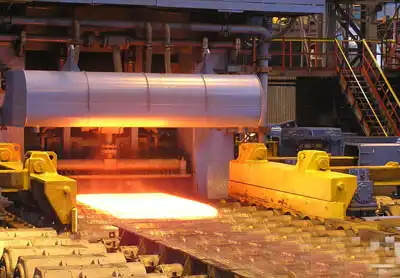
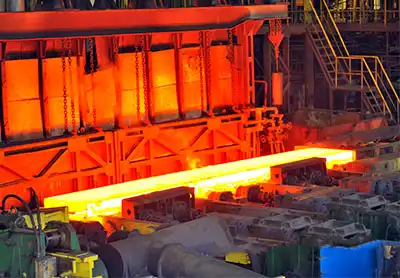
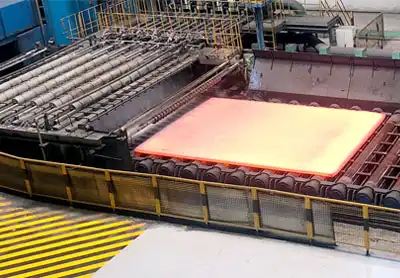
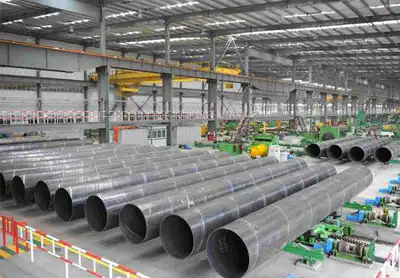
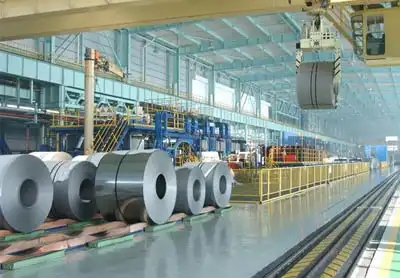
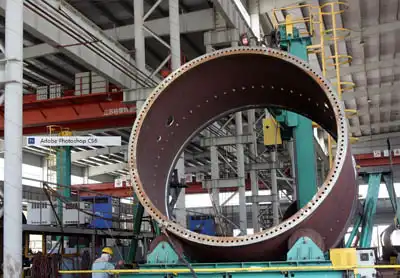
Description: BBN steel is a well-known steel manufacturer and service provider in China, ASME SA283/SA283M SA283Grade C,ASME A283/ A283M Grade C Structural Carbon Steel Plate is our superior product, we are favored by customers with high quality, competitive price and excellent service
Payment Terms: L/C, T/T, D/P, Western Union, Paypal, Money Gram
ASME SA283/SA283M Grade C is the ASME Boiler and Pressure Vessel Code version of ASTM A283 Grade C — the plain carbon structural plate that covers the middle of the low and intermediate tensile strength range. The two designations describe the same steel. The ASTM text carries the footnote that for ASME Boiler and Pressure Vessel Code applications the material is ordered to the related Specification SA-283/SA-283M in Section II of that Code, and the ASME edition is printed in BPVC Section II, Part A carrying the ASTM designation ASTM A283/A283M. Chemistry, tensile requirements and metallurgy are unchanged. What changes is the endorsement: an SA prefix means the material is produced, tested and documented under an ASME-compliant quality system and is a Code material.
Grade C is the third of four levels — A, B, C and D — set apart by nothing more elaborate than carbon and manganese. There is no deliberate alloy addition and no minimum alloy content: no niobium, no vanadium, no chromium, no nickel. That is exactly why the grade is economical and why it welds with ordinary carbon-steel consumables. Grade C sits at 205 MPa minimum yield point and 380–515 MPa tensile, which makes it the level most often specified where a designer wants more than Grade B but sees no reason to pay for A36 or a low-alloy grade. BBN supplies SA283 Gr.C hot rolled plate, sheet and coil cut to size, tested per heat and certified on the mill test certificate with the ASME designation and Code edition stated.
205 MPaMin. Yield Point30 ksi — one value, all thicknesses
380–515 MPaTensile Strength Rm55–75 ksi, a band with a ceiling
22 %Min. Elongation, 200 mm gauge25 % on the 50 mm gauge
0.24 %Max. Carbonplain C–Mn steel, Mn 0.90 max
How to read this page: every value below is an ASME SA283/SA283M requirement — a minimum or a specified limit, not a typical mill result. The grade sets only three tensile properties and deliberately leaves toughness, heat treatment, ultrasonic acceptance, through-thickness properties and even grain-size control to the purchaser as supplementary order items. That absence is the defining feature of the family: cheap and predictable, but with no built-in guarantees beyond drawing-pull. What is actually delivered is what appears on the MTC of the heat you buy, so quote thickness, width, product form, delivery condition, the ASME edition you need on the certificate and any extra testing together in the enquiry.
02Technical Specifications
Supply programme published for ASME SA283/SA283M SA283 Grade C on this product page.
Item
Specification
Executive Standard
ASME SA283/SA283M — adopted into ASME BPVC Section II, Part A; issued under the ASTM designation ASTM A283/A283M
Steel Grade
SA283 Grade C (SA283 Gr.C) the letter designation is the same in the metric edition SA283M — unlike some families, the "M" changes units, not the grade name
Steel Category
Low and intermediate tensile strength carbon steel plate of structural quality
Product Forms
Steel PlateSheetCoil
Thickness Range
4 – 400 mm
Width Range
1 000 – 4 000 mm
Length Range
4 000 – 12 000 mm
Production Way
Hot rolled
Delivery Condition
Hot rolled / as rolled (the normal route) — see section 07 for what the order can add
Impact Requirement
None in the base specification — Charpy is a supplementary order item, see section 06
Supply Ability
10 000 MT per month
Lead Time by Quantity
1 – 10 t: 5 days · 10 – 50 t: 10 days · > 50 t: negotiable
MOQ
Confirmed per order — not published on this product sheet
Loading Port
Confirmed per order — not published on this product sheet
Packaging
Standard export seaworthy packing, or as required
Certification
Mill Test Certificate stating the ASME designation and edition; EN 10204 3.1 / 3.2 and third-party inspection on request
Payment Terms
L/CT/TD/PWestern UnionPaypalMoney Gram
Processing Services
Cutting to length and width, profiling, bevelling, bending, drilling, welding, shot blasting and painting
Three things worth knowing about this table. First, the 4 – 400 mm thickness, 1 000 – 4 000 mm width and 4 000 – 12 000 mm length figures are the production range published for this product — not every thickness can be rolled in every width and length combination, so send the actual size. Second, the ASME endorsement is not automatic: if the material is going into Code work, write "ASME SA283/SA283M" plus the edition into the purchase order so the MTC carries it — it cannot be added after the heat is cast. Third, dimensional tolerances follow the general requirements specification (A6/A6M) and the agreed order, not the grade text. Minimum order quantity and loading port are not published on this sheet and are confirmed per order.
03Grade Designation & Position in the Family
What each part of the name buys you, and where Grade C sits in the four-level ladder.
Read the designation as three independent decisions. SA283/SA283M is the specification, and the dual numbering simply means one document published in both inch-pound and metric units. SA versus A is the endorsement: an SA prefix marks the specification as adopted into ASME BPVC Section II, Part A, which adds a quality-system and documentation obligation but not one unit of strength. Grade C is the strength level — the whole family is one chemistry family divided only by carbon.
Grade
Tensile strength, ksi [MPa]
Yield point min, ksi [MPa]
Elongation 200 mm, min %
Elongation 50 mm, min %
Grade A
45 – 60 [310 – 415]
24 [165]
27
30 see note
Grade B
50 – 65 [345 – 450]
27 [185]
25
28 see note
Grade C (this page)
55 – 75 [380 – 515]
30 [205]
22
25
Grade D
60 – 80 [415 – 550]
33 [230]
20
23
Two cautions on the ladder. First, the standard requires a yield point, not a 0.2 % proof stress: these low-carbon steels show a distinct yield phenomenon on the tensile machine, and that is what is measured. If your design code or calculation is written against a 0.2 % offset instead, say so in the order — the two are not interchangeable even though they are often within a few MPa of each other in practice. Second, the 50 mm gauge figures for Grades A and B above follow the same three-point step that the published Grade C and Grade D rows show; they are given for orientation and should be confirmed against the edition cited on your certificate. Only the Grade C row matters for a Grade C order — the rest tells you whether you should move up or down.
Choosing a level: higher carbon buys higher strength and costs ductility. Grade A is the forming grade; Grade C balances the two, which is why it is the most widely stocked level; Grade D is the load-carrying option. Weldability stays excellent across all four because even Grade D caps carbon at 0.27 % — but if your design needs guaranteed toughness at low temperature, moving between these four letters will not give it to you. None of them carries a Charpy requirement, and none controls grain size. That needs a different specification, such as A709 for bridge work or A588 for bare weathering service.
04Approximate Equivalents & Neighbouring Grades
No other standard publishes an exact match for a 205 MPa yield point with a 380–515 MPa tensile band. This is what people cross-reference it to, and why.
Substitution runs one way. Every comparator in the first table carries a higher minimum yield than Grade C’s 205 MPa, which means replacing Grade C with them is usually safe on strength and must still be signed off against the governing code. Replacing them with Grade C is not: A36 guarantees 250 MPa and Grade C does not. Treat these rows as starting points for a conversation with the designer, never as automatic alternates — toughness classes, thickness brackets and delivery conditions all differ, and the name match means nothing if the certificate does not.
05Chemical Composition
Heat analysis limits per ASME BPVC Section II, Part A for SA-283/SA-283M Grade C. Note that silicon is the one element that changes with thickness.
Element
Limit
Published on this product sheet
Carbon, C
0.24 % max
0.24 max
Manganese, Mn
0.90 % max
0.90 max
Silicon, Si — plates 40 mm and under
0.40 % max
0.40 max single value only
Silicon, Si — plates over 40 mm
0.15 – 0.40 %
— not listed
Phosphorus, P
0.030 % max
0.035 max differs — see note
Sulfur, S
0.030 % max
0.040 max differs — see note
Copper, Cu
0.20 % min, only when copper is specified
— not listed
Four discrepancies worth understanding before you check a certificate.Phosphorus and sulfur are published as 0.035 / 0.040 on this product sheet and as 0.030 / 0.030 in the ASME BPVC Section II tables; both figures trace to real editions of ASTM A283/A283M, so neither is a typo — you must read the value against the edition named on your order, and if your welding or through-thickness requirement depends on it, name the edition explicitly. Silicon is thickness-dependent: 0.40 % maximum up to 40 mm, but a range of 0.15 – 0.40 % above 40 mm, meaning heavy plate must contain a deliberate minimum as a deoxidation residue — the product sheet carries only the single 0.40 value. Copper 0.20 % is a minimum, not a maximum, and applies only when copper-bearing steel is specified; it is not a requirement otherwise and gives no corrosion guarantee. Finally, there is no alloy content of any kind — no Cr, Ni, Mo, Nb or V minimum — which is why this grade cannot be substituted for a weathering or low-alloy specification.
06Mechanical Properties
Minimum requirements in SI units. Grade C is the only level most buyers ever read, and it provides exactly three numbers.
Property
Requirement
Gauge / condition
Yield point
205 MPa min30 ksi
One value; no thickness bracket
Tensile strength, Rm
380 – 515 MPa55 – 75 ksi
A band with both a floor and a ceiling
Elongation
22 % min
200 mm (8 in.) gauge length
Elongation
25 % min
50 mm (2 in.) gauge length
Elongation, plates wider than 610 mm
20 % / 23 % min
Reduced two points per A6/A6M — see note
Impact test
—
Not a specification requirement; supplementary only
The same requirements in the inch-pound units the grade was written in.
Property
Requirement
Tensile strength
55 – 75 ksi / 380 – 515 MPa
Yield point
30 ksi / 205 MPa
Elongation
22 % (8 in.) · 25 % (2 in.)
Impact test (if any)
—
Four cautions, one of which changes your design numbers. First — and this is the one that gets missed — the elongation requirements are reduced by two percentage points for plates wider than 24 in. [610 mm]. Since almost every plate anyone buys is wider than that, the practical acceptance figures for Grade C are 20 % on the 200 mm gauge and 23 % on the 50 mm gauge; the headline 22 % / 25 % applies to narrow strip. Second, the requirement is a yield point, not a 0.2 % proof stress — if your calculation assumes offset yield, specify it. Third, tensile is a band, 380 – 515 MPa, with an upper limit: a plate that tests at 540 MPa is out of specification even though it sounds stronger. Fourth, impact testing is not a base requirement; the data sheet leaves that cell empty and marks it "if any". If service temperature or a code case needs Charpy V-notch, order it as a supplementary requirement and state both temperature and minimum absorbed energy, because the grade name implies neither.
What the specification sets, and what has to be added by the order.
Item
Status in SA283/SA283M
How it is obtained
Delivery condition
Not specified
As rolled is the normal route and keeps cost down; normalizing can be agreed where a more uniform structure is wanted.
Heat treatment
Not specified
Quenching and tempering is not an SA283 route. The strength comes from carbon and manganese, and a quenched-and-tempered plate belongs to a different family such as A514 / A517.
Grain size
Not specified
No fine austenitic grain size requirement exists in this specification; if coarse grain will hurt notch toughness in your service, specify a fine-grain grade instead.
Impact toughness
Not specified
Order as a supplementary requirement, naming temperature and minimum absorbed energy.
Ultrasonic testing
Not specified
ASTM A578 / A578M at an agreed acceptance level, by agreement.
Through-thickness (Z) properties
Not specified
Z15 / Z25 / Z35 by agreement where the joint pulls through the plate thickness.
Third-party inspection
Not specified
SGS, BV, TUV or Intertek at the mill before shipment.
Certificate
MTC per the specification
EN 10204 3.1 as standard, 3.2 with third-party endorsement on request.
Read the data sheet line carefully. It lists Normalized, Quenched, Tempered, HIC, Impact Test and then adds the qualifier "Optional if not provided in rules" — and that qualifier is the important part: none of these are SA283 requirements, they are order options. One deserves a specific warning. Quenching and tempering is not a route this grade takes. A Q+T plate is a different product family, and asking for it on plain carbon structural plate buys cost without meaning. Everything on that line has to be written into the order before rolling, not added afterwards.
08Typical Applications
Where SA283 Grade C plate and sheet are normally consumed — general structural work at mild strength.
Building Structures & Secondary Steel
General building frames, columns, beams, bracing, stairs, platforms, handrails and base plates — the bulk of the plate this grade is bought for, where loads are modest and nothing in the design calls for fine-grain toughness.
Atmospheric & Low-Pressure Storage Tanks
Tank shells, bottoms and roofs for atmospheric water, oil and air service, plus bins, hoppers, silos and ductwork — welded containment where the contents are not governed by a pressure vessel code.
Machine Bases & Equipment Frames
Machine beds, press frames, conveyor supports, guarding, housings and skid bases — parts chosen for stiffness, flatness and price rather than for strength per kilogram.
Infrastructure & Structural Attachments
Bearing plates, splice and connection plates, gussets, anchor plates, culvert and sign structures — auxiliary steel that carries load but is not the primary tension member.
ASME Code Auxiliary Parts
Structural and non-pressure-retaining parts of Code-stamped assemblies — saddles, skirts, supports, lugs and attachments where the drawing names an SA-listed material and the Certificate has to say so.
Where this grade stops. It is a structural quality plate, and the standard says so: low and intermediate tensile strength carbon steel plate for general applications. There is no Charpy requirement, no fine-grain requirement and no heat treatment in the base text, so anything cold, anything dynamic, anything through-thickness-loaded or anything pressure-retaining has to be reviewed against the governing code before Grade C is accepted — and the answer is often a fine-grain or low-alloy grade instead.
09Processing, Testing & Supply
From mill plate to a certified, fabrication-ready item.
1
Cutting & Profiling
Plate and sheet cut to length and width, coil cut to length, profiled to drawing and bevelled for weld preparation on flame, plasma or laser equipment.
2
Forming, Bending & Welding
Bending and rolling to radius plus welded assemblies built under a qualified procedure. At 0.24 % maximum carbon, preheat is generally not required at ordinary thickness; heavy sections and highly restrained joints call for low-hydrogen consumables and modest preheat.
3
Surface Treatment
Shot blasting to remove mill scale, then shop primer or a full paint system, followed by export marking and seaworthy packing.
4
Inspection & Certified Delivery
Chemical analysis and tensile testing per heat, plus Charpy, UT and Z-direction testing when specified, then the MTC carrying the ASME designation and Code edition together with any third-party report.
Mill Test Certificate to EN 10204 3.1, or 3.2 with third-party endorsement
MTC stating the ASME SA283/SA283M designation and the BPVC Code edition
Heat analysis covering C, Mn, Si, P, S and Cu where copper-bearing steel is specified
Tensile report showing yield point, tensile strength and elongation with the gauge length stated
Charpy V-notch results at the ordered temperature, where specified
Ultrasonic testing report to the agreed acceptance level
Third-party inspection by SGS, BV, Intertek or another nominated agency
Export packing, marking and loading supervision
Quote checklist — you get a faster, comparable price if you send: thickness × width × length, quantity, product form (plate, sheet or coil), delivery condition, whether the material is for ASME Code work and which edition the certificate must show, the required mechanical values plus impact temperature and energy if Charpy is needed, UT acceptance level and any Z-direction requirement, surface treatment, MTC type, destination port and payment terms. Please also state whether your design needs the narrow-plate elongation values or the wide-plate values, so the certificate is issued against the right figure.
10Frequently Asked Questions
Q1Is SA283 the same steel as A283?
Yes. The chemistry, tensile requirements and metallurgy are identical, and the two documents point at each other: ASTM A283/A283M carries the footnote that for ASME Boiler and Pressure Vessel Code applications the material is ordered to SA-283/SA-283M in Section II of the Code, while the ASME edition is printed in BPVC Section II, Part A under the ASTM designation. The difference is administrative. SA means adoption into the Code, so the material is produced, tested and documented under an ASME-compliant quality system. SA283 can always be supplied where A283 is asked for; the reverse is not true, because a certificate that says only "A283" does not carry the endorsement an inspector looks for.
Q2Is A283 Grade C the same as A36?
No, and it is weaker on every guaranteed number. Grade C offers 205 MPa minimum yield and 380 – 515 MPa tensile; A36 offers 250 MPa minimum yield and 400 – 550 MPa tensile. The overlap in the tensile bands is what makes people treat them as interchangeable, and for light structural work they often are — but if the drawing says A36, Grade C does not automatically satisfy it, and if the drawing says A283 Grade C, do not assume A36 pricing. A36 also carries mandatory minimums written into a different specification with its own thickness brackets.
Q3Is the elongation 22 %, 25 %, or something else?
All three on the right conditions. The specification requires 22 % minimum on a 200 mm gauge and 25 % minimum on a 50 mm gauge — different gauge lengths, not competing values. Then comes the part most pages leave out: for plate wider than 24 in. [610 mm] the requirement drops by two percentage points, so a normal-width Grade C plate is accepted at 20 % and 23 %. Always read the gauge length and the plate width off the certificate line and match them to the gauge your calculation assumes.
Q4Can SA283 Grade C be used for pressure vessels?
Not as a general answer — this needs a ruling, not a page. Grade C is a structural quality plate: it carries no mandatory Charpy requirement, no mandatory fine austenitic grain size control and no mandatory heat treatment, and those three gaps are exactly what a pressure-retaining part has to account for. Although SA-283/SA-283M is printed in ASME BPVC Section II, Part A, eligibility for a specific Code-stamped construction depends on the applicable construction code and its limitations. For dedicated pressure vessel service the purpose-written specifications — ASTM A285 or A516 families — are what gets specified. Put the question to the designer with the Code section named.
Q5One place says P 0.035 and S 0.040, another says 0.030 and 0.030. Which is mine?
Both, depending on edition. The product sheet here publishes 0.035 / 0.040; the tables in ASME BPVC Section II publish 0.030 / 0.030 for Grade C. Neither figure is a misprint — they come from different issues of ASTM A283/A283M. The one that binds your order is the edition named on the purchase order and the certificate, so name the edition rather than just the grade. If your welding procedure or through-thickness requirement is sensitive to sulfur, this distinction matters more than any other number on the page.
Q6Should I move up to Grade D or over to A572?
Move within A283 only if you need a little more strength and nothing else changes: Grade D buys 25 MPa more yield and 2 points less elongation. Move out of A283 the moment any of these appear in the duty — guaranteed low-temperature toughness, through-thickness loading, dynamic or cyclic loading, or a welded bridge specification. Those are not solved by a different letter in this family, because none of the four levels carries them. SA572 Grade 50 gives 140 MPa more yield through micro-alloying, and A709 Grade 50 adds the mandatory Charpy that bridge work requires.
Get Your ASME SA283/SA283M Grade C Steel Quotation Now
Send us your thickness × width × length, quantity, product form, delivery condition, whether the material is for ASME code work and which edition the certificate must show. We will reply with rolling schedule, competitive factory price, delivery time and the complete certification package within 24 hours.
BBN Steel has established a complete set of production and supplier management system processes to ensure the improvement of product quality and better service to users.
Production Control
BBN Steel has established a complete production quality control process to ensure every link from research and development to mass production.
Supplier management
Our supplier selection will consider factors such as health and safety, ethics, environmental protection, price and quality to better serve customers.
Certification & Patent
We have successively won various international authoritative certifications, GB /T19001-ISO9001: 2000 quality management system was implemented.
After sales service
We provide booking space, shipping tracking service and after-sales service, we will always be first-class products and perfect pre-sale and after-sales service.
Get in Touch
Welcome to contact us through online consulting, emails and hotline if you are interested in our company or products. Our staff will reply you within 24 hours.
Address: HIGH-TECH DEVELOPMENT ZONE, ZHENGZHOU, CHINA